

Saturday 08 March 2025
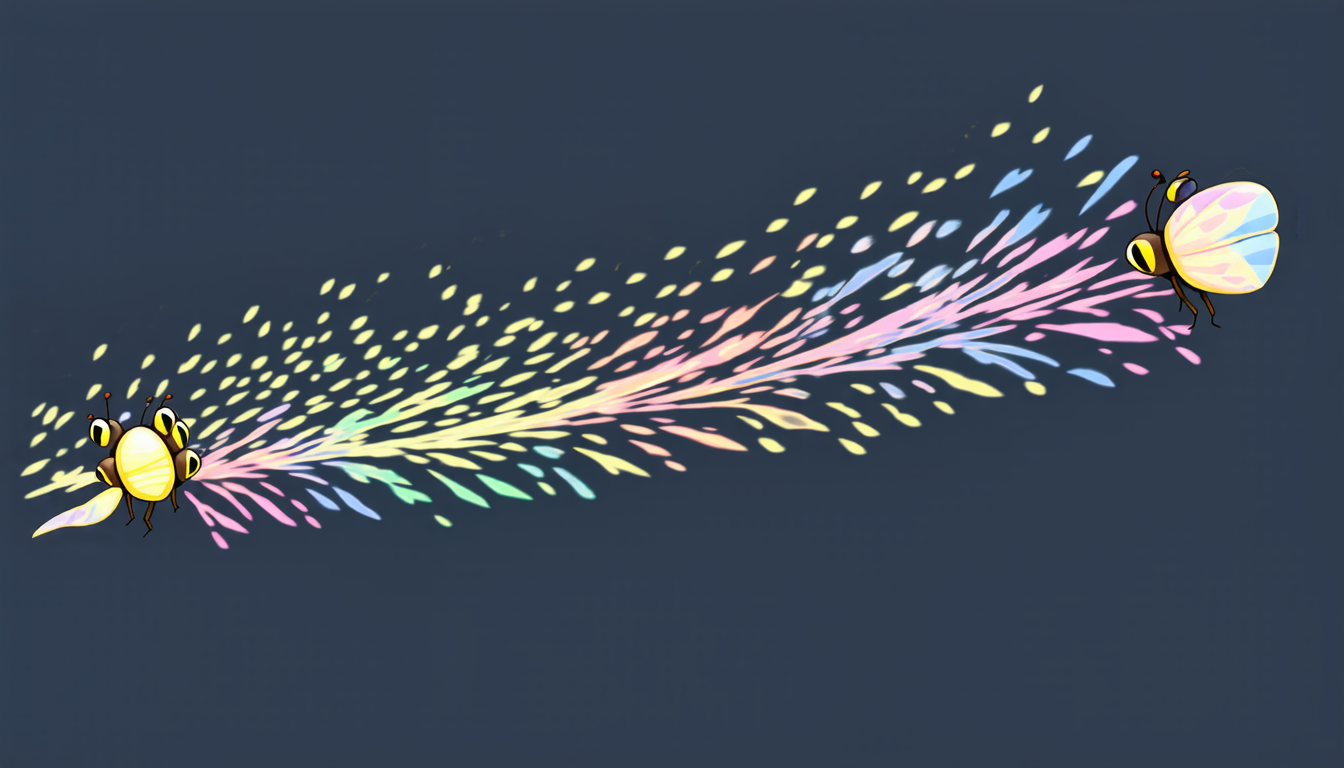
Scientists have made a significant breakthrough in understanding how complex systems, such as those found in nature, can synchronize and coordinate their behavior. This has important implications for our understanding of everything from the way fireflies flash their lights to the rhythms that govern the human body.
The key to this discovery lies in the use of mathematical models, specifically the Kuramoto model, which was originally developed to study the synchronization of oscillators in physics. However, researchers have now adapted this model to understand how complex systems can synchronize and coordinate their behavior.
One of the key challenges in understanding complex systems is that they often involve many different components working together in a highly coordinated way. This makes it difficult to predict how these systems will behave, as small changes in one component can have significant effects on others.
The researchers used computer simulations to model the behavior of complex systems, such as populations of coupled oscillators. They found that by using the Kuramoto model, they could accurately predict the synchronization and coordination of these systems.
This has important implications for our understanding of complex systems in general, and highlights the potential benefits of using mathematical models to study their behavior. It also raises interesting questions about the nature of complexity itself, and how it arises from the interactions between individual components.
The use of the Kuramoto model also opens up new possibilities for studying complex systems that are difficult or impossible to observe directly. For example, researchers could use this model to study the behavior of populations of neurons in the brain, which is difficult to observe directly due to their small size and complexity.
Overall, this research has significant implications for our understanding of complex systems, and highlights the potential benefits of using mathematical models to study their behavior. It also raises interesting questions about the nature of complexity itself, and how it arises from the interactions between individual components.
Cite this article: “Unlocking the Secrets of Complex Systems”, The Science Archive, 2025.
Complexity, Synchronization, Coordination, Mathematical Models, Kuramoto Model, Oscillators, Populations, Computer Simulations, Brain, Neurons





