

Saturday 08 March 2025
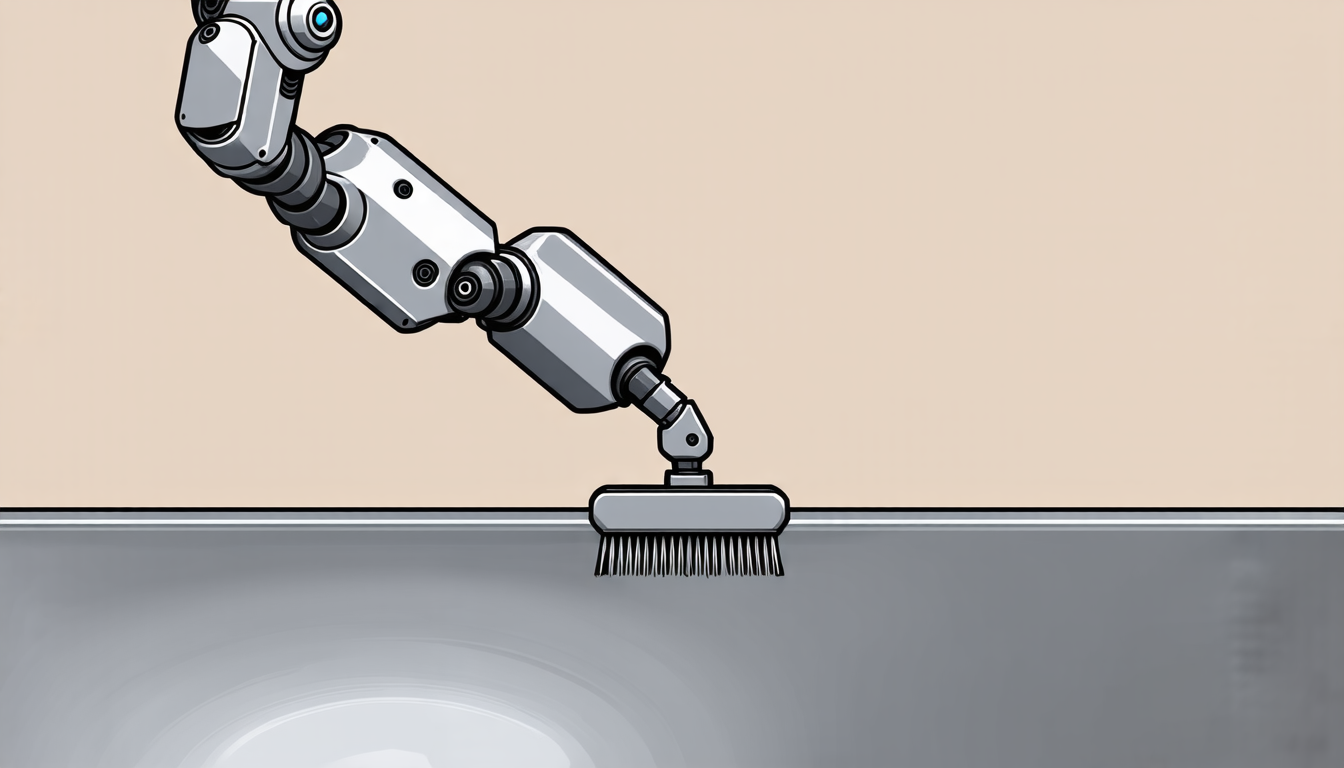
Scientists have made a significant breakthrough in the field of robotics, developing a new algorithm that enables robots to learn complex tasks on their own without requiring extensive human guidance or precise programming. The novel approach, called CHEQ, allows robots to adapt to changing situations and learn from their mistakes, making them more effective and efficient in performing tasks such as polishing and other contact-rich operations.
The development of CHEQ is particularly noteworthy because it addresses a long-standing challenge in robotics: how to enable robots to safely explore and interact with their environment while still achieving the desired outcome. Traditional approaches often require extensive programming and manual tuning, which can be time-consuming and limiting.
CHEQ works by combining elements of classical control theory and deep reinforcement learning. The algorithm uses a hybrid approach that blends the strengths of both methods, allowing it to learn from data and adapt to changing situations while also ensuring safe exploration and interaction with the environment.
One of the key innovations behind CHEQ is its ability to safely explore the environment without causing harm or damage. By incorporating constraints such as velocity and force limits, the algorithm ensures that the robot moves in a controlled manner, reducing the risk of accidents or malfunctions.
The effectiveness of CHEQ was demonstrated through experiments on both simulated and real-world environments. In simulations, the algorithm learned to polish a workpiece with high accuracy and precision, achieving results comparable to those obtained using traditional programming methods. On real hardware, the robot successfully polished a variety of surfaces, including metal and glass, without causing any damage or accidents.
The implications of CHEQ are significant, as it has the potential to revolutionize the way robots are designed and used in industries such as manufacturing, healthcare, and logistics. By enabling robots to learn and adapt on their own, CHEQ could lead to more efficient and effective production processes, improved patient care, and enhanced supply chain management.
The development of CHEQ also highlights the importance of interdisciplinary collaboration between robotics, control theory, and machine learning experts. The algorithm’s success is a testament to the power of combining different areas of expertise to achieve innovative solutions.
As research continues to advance in this area, it will be exciting to see how CHEQ and similar algorithms are applied in various fields and industries. With its potential to transform the way robots interact with their environment and perform tasks, CHEQ is an important step forward in the development of more intelligent and autonomous robotic systems.
Cite this article: “Robots Learn Complex Tasks on Their Own with Breakthrough Algorithm”, The Science Archive, 2025.
Robotics, Algorithm, Learning, Adaptation, Control Theory, Reinforcement Learning, Deep Learning, Robotics Development, Interdisciplinary Collaboration, Autonomous Systems





