

Saturday 08 March 2025
Artificial intelligence has made tremendous progress in recent years, particularly in the field of image generation. From generating realistic faces to creating entire scenes, AI models have been able to produce stunning results that often leave us wondering if they’re truly artificial.
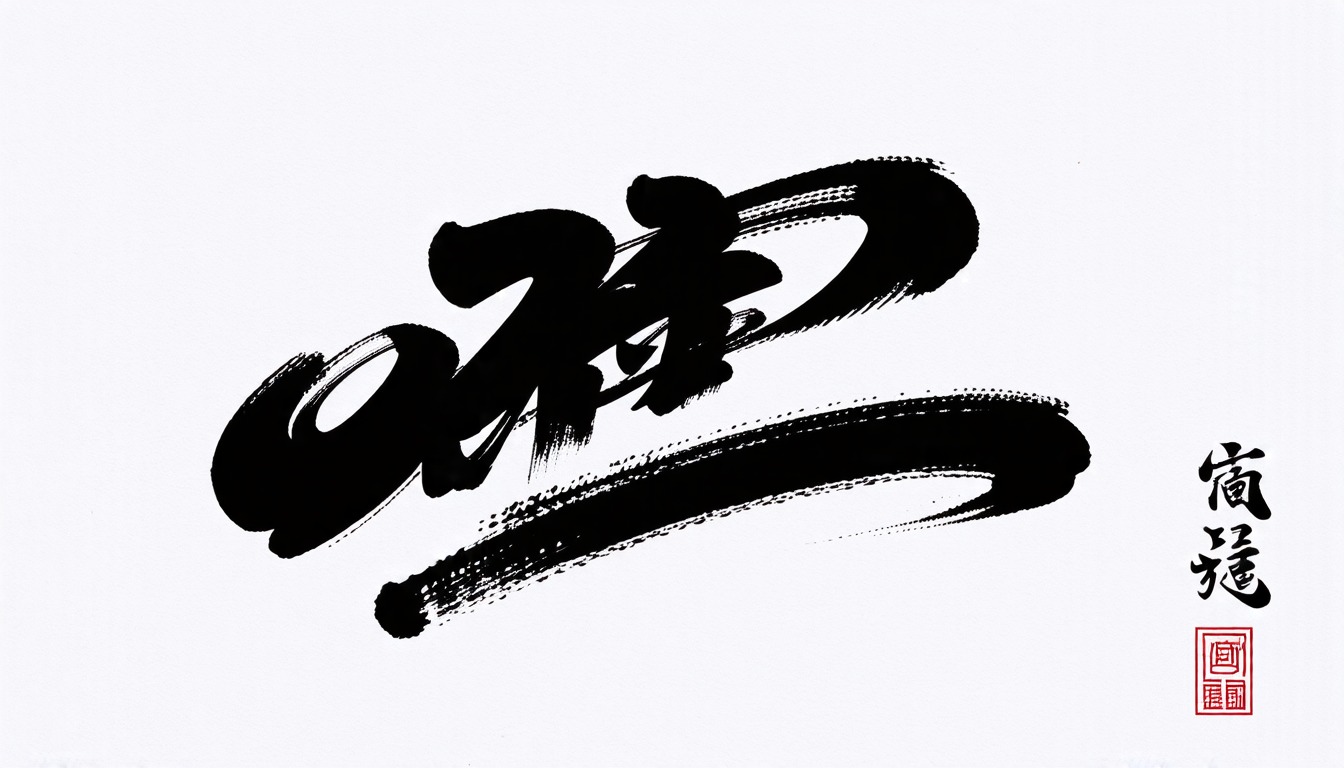
But what about writing Chinese characters? In a new study, researchers have developed an innovative approach to generate Chinese characters with remarkable accuracy. The technique uses a combination of radical analysis and font generation to create characters that are not only visually similar to their real-life counterparts but also contain subtle differences in structure and content.
The problem with generating Chinese characters is that they’re incredibly complex, consisting of thousands of individual strokes and radicals. Each character has its own unique combination of these components, making it difficult for AI models to accurately reproduce them.
To overcome this challenge, the researchers developed a radical analysis network (RAN) that breaks down each character into its constituent parts. This allows the model to learn the relationships between different radicals and how they’re combined to form individual characters.
Once the RAN has analyzed a character, it’s fed into a font generator that uses a transitive-attention mechanism to align the content and style features of the character. This means that the model can capture subtle variations in stroke order, thickness, and curvature that are essential for creating realistic Chinese characters.
The results are impressive: the AI-generated characters are so convincing that it’s difficult to tell them apart from their real-life counterparts. The researchers tested their approach on a range of tasks, including generating misspelled characters, rare characters, and novel characters – all with remarkable success.
One of the key benefits of this approach is its ability to learn from limited data. In other words, the model doesn’t need a massive dataset to generate accurate Chinese characters – it can learn from just a few examples. This makes it an attractive solution for applications where data is scarce or difficult to collect.
The potential applications of this technology are vast. For example, it could be used to create AI-powered tools for language learning, helping students master the complex strokes and radicals required to write Chinese characters accurately. It could also be used in advertising and branding, allowing companies to generate custom Chinese characters that reflect their brand identity.
Of course, there are still challenges to overcome before this technology becomes widely available. For instance, the model needs to be fine-tuned for specific fonts and writing styles – a task that requires significant expertise in both AI development and Chinese calligraphy.
Cite this article: “AI-Generated Chinese Characters: A Breakthrough in Radical Analysis and Font Generation”, The Science Archive, 2025.
Ai, Chinese Characters, Image Generation, Radical Analysis, Font Generation, Transitive-Attention Mechanism, Stroke Order, Thickness, Curvature, Language Learning, Branding.





