

Saturday 08 March 2025
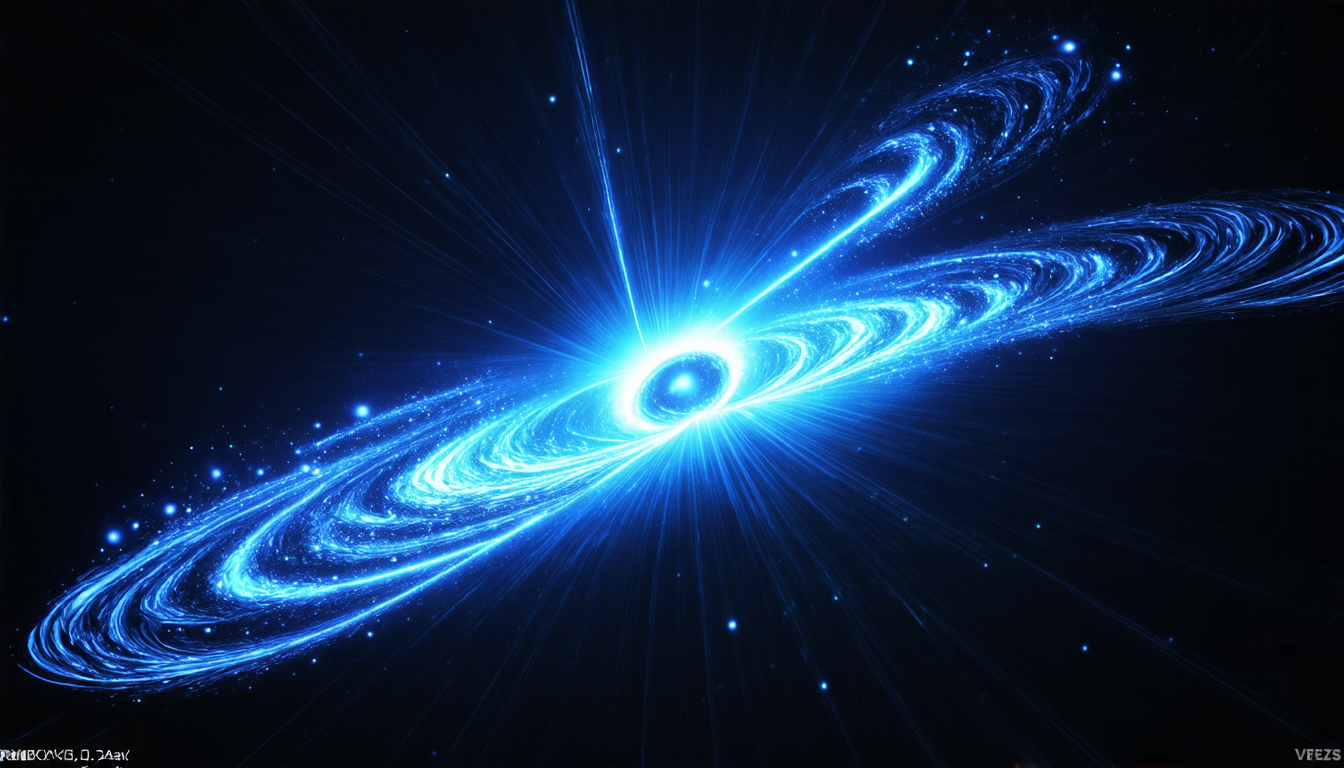
The intricate dance of magnetic fields and particles in pulsars has long fascinated scientists, and a new study sheds light on the complex interactions at play. Using advanced computer simulations, researchers have delved into the world of these celestial lighthouses, revealing the subtle effects of radiation on their behavior.
Pulsars are incredibly dense neutron stars that rotate at incredible speeds, emitting beams of electromagnetic radiation as they spin. This radiation is thought to be produced by particles accelerated in the pulsar’s strong magnetic field. However, the process by which this acceleration occurs remains poorly understood.
The new study focuses on the role of synchrotron radiation in this process. Synchrotron radiation is a type of electromagnetic radiation emitted by charged particles as they spiral around magnetic fields. In the context of pulsars, it’s thought to play a crucial role in accelerating particles and shaping their behavior.
Using complex computer simulations, the researchers recreated the environment within a pulsar, allowing them to study the interactions between magnetic fields, particles, and radiation in exquisite detail. By varying parameters such as the strength of the magnetic field and the density of particles, they were able to explore the subtle effects of synchrotron radiation on the pulsar’s behavior.
The results are fascinating. The simulations show that synchrotron radiation has a profound impact on the acceleration of particles within the pulsar. As particles spiral around the magnetic field, they emit radiation that interacts with other particles and the magnetic field itself, creating a complex web of interactions. This feedback loop can either amplify or dampen the acceleration process, depending on the specific conditions.
The researchers also found that the strength of the magnetic field plays a crucial role in determining the behavior of the pulsar. Stronger fields tend to accelerate particles more efficiently, while weaker fields lead to less efficient acceleration. This has important implications for our understanding of pulsars and their place in the universe.
One of the most striking findings is the way that synchrotron radiation affects the shape of the pulsar’s beam. As particles are accelerated by the magnetic field, they emit radiation that interacts with other particles and the field itself, creating a complex pattern of emission. This pattern can be influenced by the strength of the magnetic field, as well as the density of particles.
The study has important implications for our understanding of pulsars and their role in the universe.
Cite this article: “Pulsar Dynamics: Unraveling the Role of Synchrotron Radiation”, The Science Archive, 2025.
Pulsars, Magnetic Fields, Particles, Radiation, Synchrotron Radiation, Neutron Stars, Computer Simulations, Acceleration, Electromagnetic, Celestial Lighthouses





