

Saturday 08 March 2025
The intricate dance of political ideologies has long been a subject of fascination and study for social scientists. A recent survey aimed to shed light on this complex phenomenon, delving into the minds of individuals as they navigate the ever-shifting landscape of political beliefs.
The researchers behind the project set out to investigate how people perceive and assign ideological labels to themselves and others. They designed an experiment that asked participants to rate their own political leanings and those of others, as well as their agreement or disagreement with a series of statements on various issues.
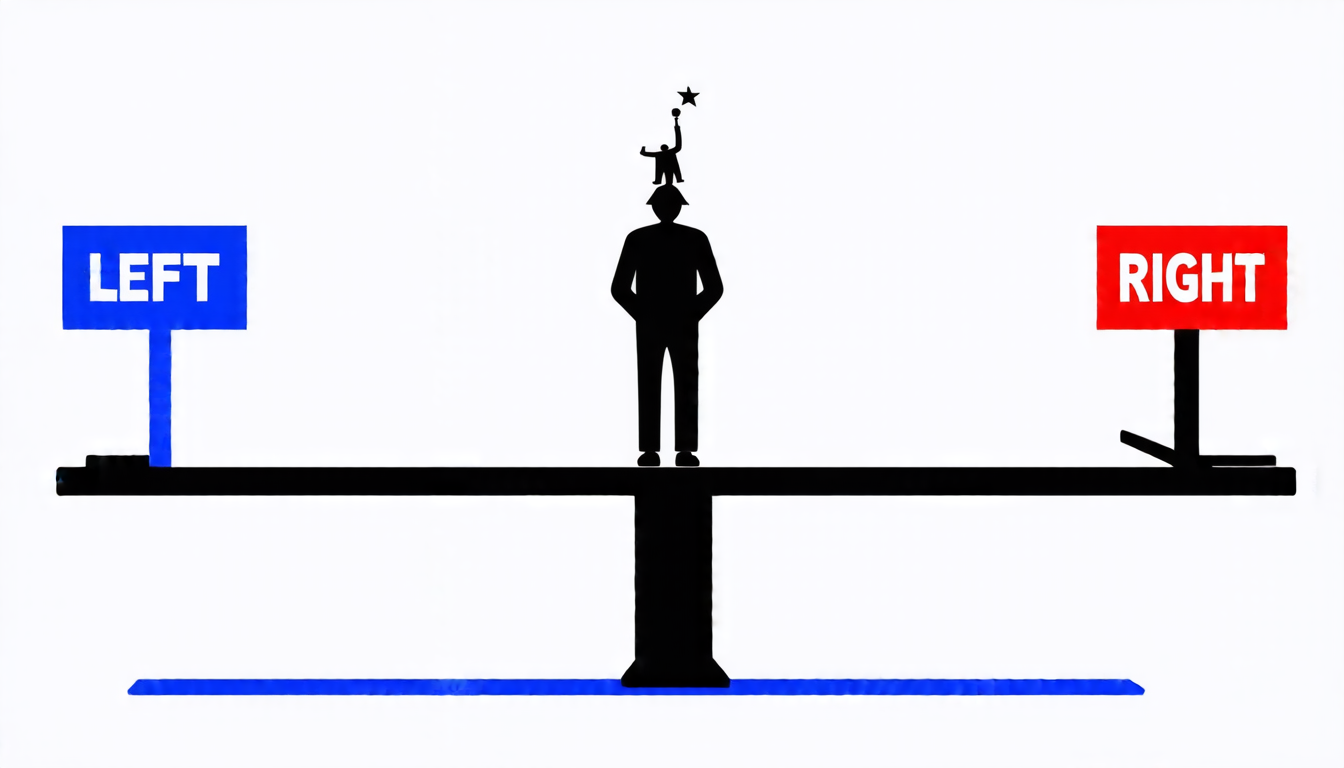
One of the key findings was that individuals tend to place themselves at the center of the political spectrum, while assigning more extreme labels to others. This phenomenon has been observed before, but the study revealed its persistence even when participants were presented with information about the ideological positions of others.
The researchers also discovered that people’s self-reported ideologies are surprisingly consistent across different issues and contexts. This suggests that individuals have a robust sense of their own political identity, which is not easily swayed by external factors.
Another intriguing aspect of the study was its exploration of how people assess the ideological positions of others. The results showed that individuals tend to underestimate the extremity of their opponents’ views, while overestimating the centrism of those they agree with. This bias may have significant implications for our understanding of political polarization and conflict.
The study also touched on the role of individual biases in shaping our perceptions of others’ ideologies. It appears that people’s own beliefs and values can influence how they interpret the beliefs of others, leading to a sort of echo chamber effect where like-minded individuals reinforce one another’s views while dismissing those of outsiders.
One of the most striking findings was the power law distribution observed in the frequency with which participants used extreme ideological labels. This suggests that there are a relatively small number of extremely polarized individuals who dominate online discussions and shape public opinion, while the majority of people fall somewhere in between.
The study’s authors also noted the intriguing differences between their results and those of previous surveys. For instance, they found that self-identified conservatives were more likely to be influenced by information about others’ ideologies than liberals. This disparity may have significant implications for our understanding of political persuasion and manipulation.
In addition to its theoretical implications, this research has important practical applications in the realms of politics, communication, and social media.
Cite this article: “The Political Mind: Uncovering Biases and Patterns in Ideological Perception”, The Science Archive, 2025.
Politics, Ideology, Political Beliefs, Survey, Research, Extremism, Polarization, Bias, Echo Chamber, Power Law Distribution





