

Saturday 08 March 2025
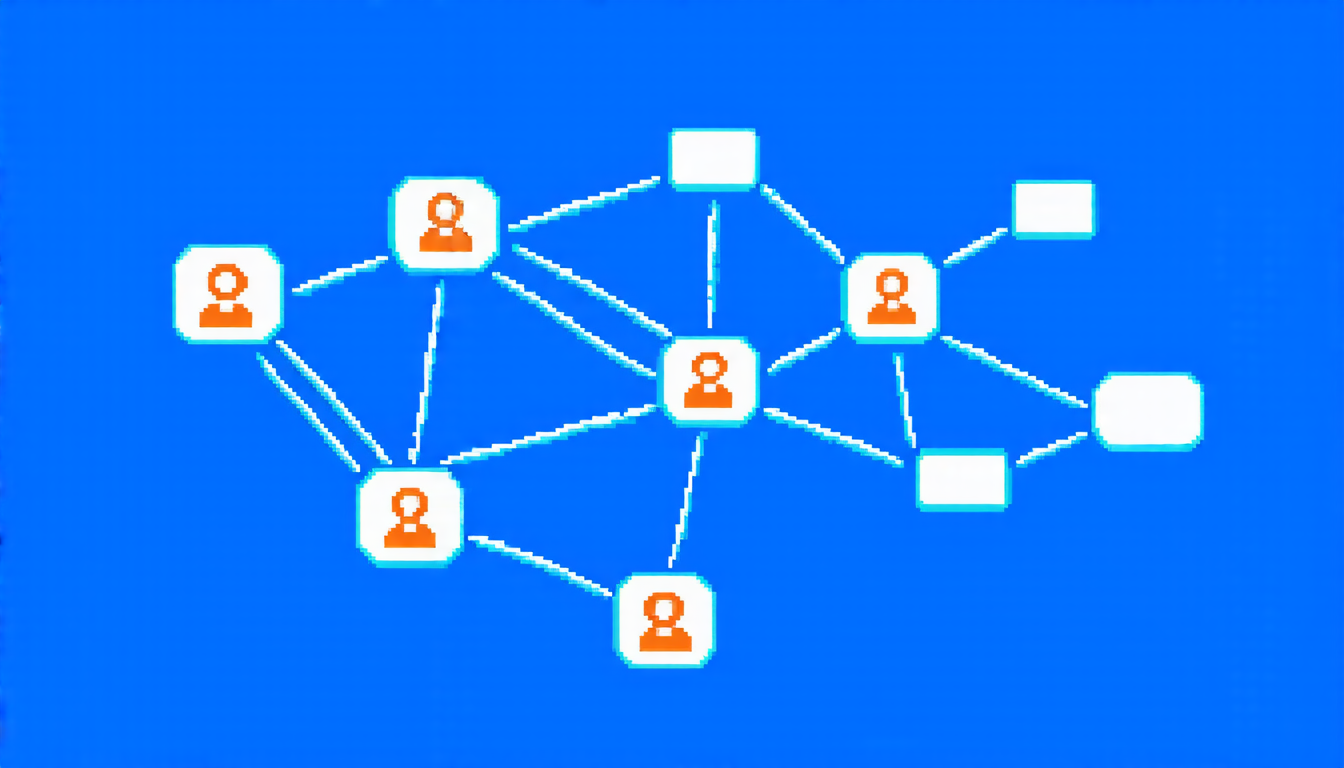
A novel approach has been developed for restoring missing node attributes in complex networks, such as social media and citation graphs. The technique, called Active Sampling Algorithm (ATS), uses a combination of graph structure and attribute information to select the most informative nodes for training.
Node attributes are crucial for understanding the properties and behavior of nodes in a network. However, these attributes are often missing or incomplete, making it challenging to analyze and predict node behaviors. Existing methods for completing missing attributes focus on either structural or attribute-based approaches, but fail to leverage both types of information effectively.
ATS addresses this limitation by introducing a representativeness metric that measures the importance of each node’s information based on its graph structure and attribute similarity. The algorithm then selects nodes with high representativeness scores as training samples for optimizing the missing attributes.
The effectiveness of ATS was demonstrated through experiments on four public benchmark datasets, including Cora, Citeseer, Ama Pho, and a custom dataset. The results showed that ATS outperformed existing methods in both profiling and node classification tasks.
One of the key advantages of ATS is its ability to adapt to different network structures and attribute distributions. By incorporating graph structure information into the representativeness metric, ATS can effectively handle networks with varying densities and node connectivity patterns.
The algorithm’s performance was evaluated using two metrics: recall at 20 (Recall@20) for profiling tasks and classification accuracy for node classification tasks. The results showed that ATS achieved higher Recall@20 scores and classification accuracies compared to existing methods.
ATS has potential applications in various fields, including social network analysis, recommendation systems, and bioinformatics. For example, it can be used to predict user preferences or behavior in social media platforms, or to identify genes with similar functions in biological networks.
The development of ATS highlights the importance of integrating both structural and attribute-based information for analyzing complex networks. By leveraging this combination of information, researchers and practitioners can develop more accurate and effective models for understanding and predicting node behaviors.
Further research is needed to explore the limitations and potential extensions of ATS. For example, it would be interesting to investigate the impact of different graph structure and attribute similarity metrics on the algorithm’s performance. Additionally, exploring applications beyond node classification and profiling tasks could reveal new insights and opportunities for this approach.
Cite this article: “Active Sampling Algorithm for Restoring Missing Node Attributes in Complex Networks”, The Science Archive, 2025.
Complex Networks, Node Attributes, Active Sampling Algorithm, Graph Structure, Attribute Information, Social Media, Citation Graphs, Node Classification, Profiling Tasks, Bioinformatics





