

Saturday 08 March 2025
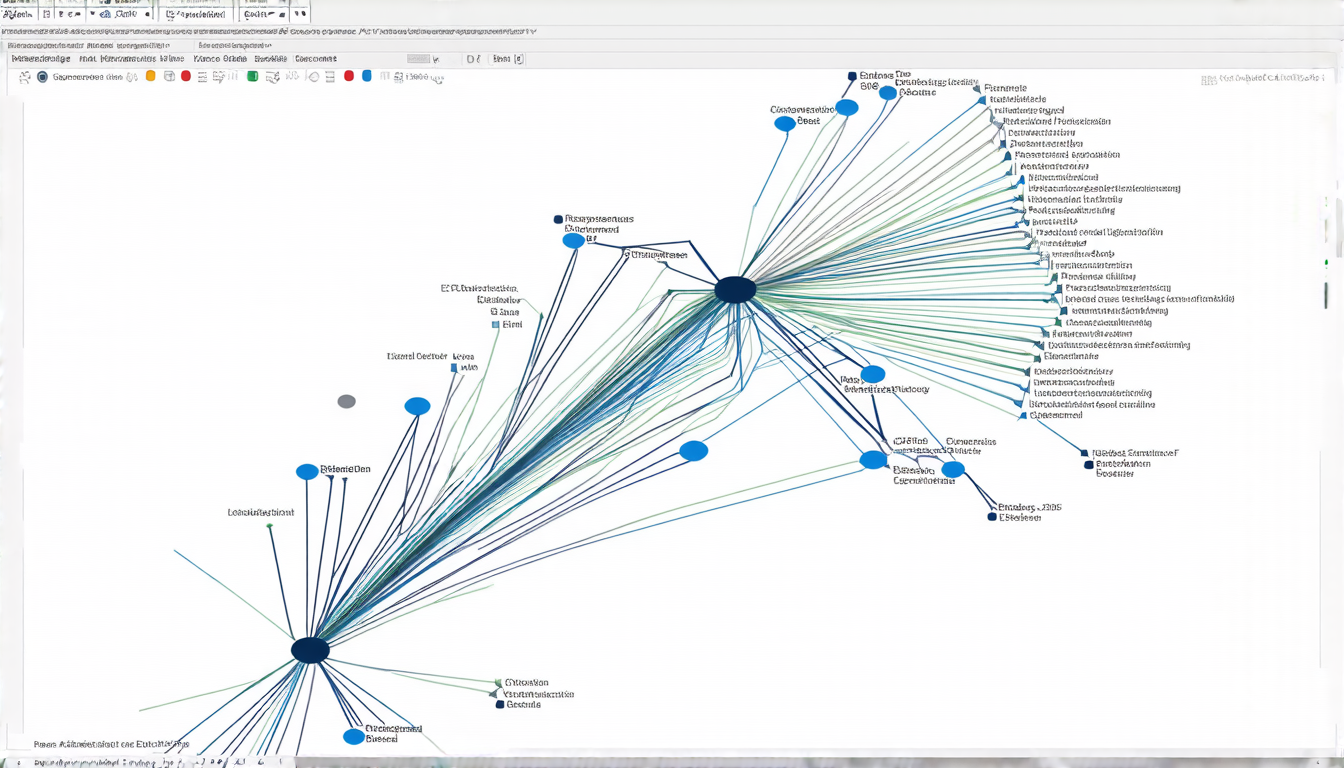
Scientists have made a significant breakthrough in the field of artificial intelligence, developing a new method for training AI models on complex data sets. The approach, known as homophily-aware heterogeneous graph contrastive learning, has been shown to greatly improve the performance of AI systems in a range of applications.
The key innovation behind this technique is its ability to take into account the relationships between different types of data points within a dataset. This can be particularly challenging when dealing with large and complex datasets that contain multiple types of information, such as text, images, and audio.
Traditionally, AI models have been trained using a single type of data or a limited number of types, which can lead to suboptimal performance when faced with more diverse datasets. The new approach addresses this issue by using a technique called contrastive learning, which involves training the model to distinguish between similar and dissimilar data points.
In addition to improving the accuracy of AI models, the homophily-aware heterogeneous graph contrastive learning method also enables them to better understand the relationships between different types of data. This can be particularly useful in applications such as natural language processing, computer vision, and recommender systems.
The technique has been tested on a range of datasets, including those containing text, images, and audio, and has shown significant improvements in performance compared to traditional AI models. The results have potential implications for a wide range of fields, from healthcare and finance to education and entertainment.
One of the key advantages of this approach is its ability to handle large and complex datasets, which can be a major challenge for many AI applications. By using contrastive learning to identify patterns in the data, the model can learn to recognize relationships between different types of information that would be difficult or impossible to detect using traditional methods.
The technique has also been shown to be highly flexible, allowing it to be applied to a wide range of datasets and tasks. This makes it a valuable tool for researchers and developers looking to improve the performance of their AI models.
As the field of artificial intelligence continues to evolve, it is likely that new techniques will emerge that build upon this approach. However, for now, homophily-aware heterogeneous graph contrastive learning represents a major step forward in our ability to train accurate and effective AI models on complex data sets.
Cite this article: “Breakthrough in Artificial Intelligence: Homophily-Aware Heterogeneous Graph Contrastive Learning”, The Science Archive, 2025.
Artificial Intelligence, Machine Learning, Homophily-Aware, Heterogeneous Graph Contrastive Learning, Ai Models, Complex Data Sets, Natural Language Processing, Computer Vision, Recommender Systems, Contrastive Learning.





