

Saturday 08 March 2025
The tiny, two-dimensional world of transition metal dichalcogenides (TMDs) has been causing a stir in scientific circles recently. These materials have captured the attention of researchers due to their unique properties and potential applications in electronics.
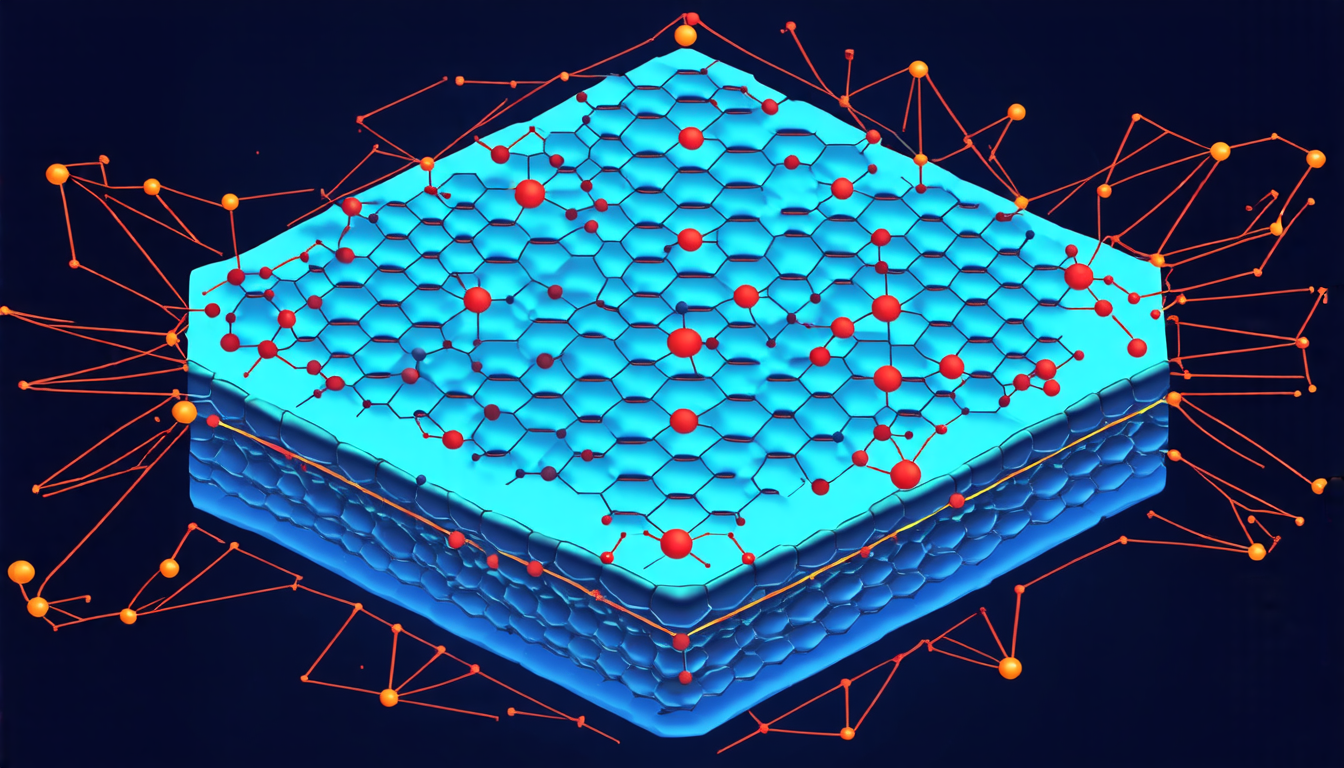
TMDs are made up of layers of atoms arranged in a specific pattern, which gives them some remarkable characteristics. For example, they have large band gaps, meaning that they can only conduct electricity under certain conditions. This makes them useful for creating transistors and other electronic components.
However, when TMDs are doped with electrons or holes (positively charged particles), the band gap shrinks significantly. This is because the added charge carriers interact with each other and the material’s lattice structure, causing the energy levels to shift.
Researchers have been trying to understand this process better in order to improve the performance of TMD-based electronics. One way they’ve been doing this is by using a technique called dynamical screening, which takes into account the interactions between the charge carriers and the material’s lattice structure.
A team of scientists has recently made a significant breakthrough in understanding the dynamics of TMDs. By using computer simulations and theoretical models, they were able to accurately predict the behavior of these materials under different conditions.
One of the key findings was that the band gap renormalization caused by doping is much more pronounced than previously thought. This means that even small changes in the amount of charge carriers can have a big impact on the material’s electrical properties.
The researchers also found that the dynamics of TMDs are influenced by the presence of plasmons, which are collective oscillations of electrons within the material. These oscillations can affect the way the charge carriers interact with each other and the lattice structure, leading to changes in the band gap.
The implications of this research are significant for the development of new electronic devices. By better understanding the dynamics of TMDs, scientists may be able to create materials that are more efficient and have improved performance.
For example, TMD-based transistors could potentially be used in future computers and smartphones. These devices would be faster, smaller, and more energy-efficient than current technology.
The study also highlights the importance of theoretical modeling in understanding complex physical systems. By using computer simulations to predict the behavior of TMDs, researchers can gain valuable insights into their properties and potential applications.
Overall, this research is an important step forward in our understanding of the tiny world of TMDs.
Cite this article: “Unlocking the Secrets of Transition Metal Dichalcogenides”, The Science Archive, 2025.
Transition Metal Dichalcogenides, Band Gap, Doping, Dynamical Screening, Plasmons, Charge Carriers, Lattice Structure, Electrical Properties, Electronic Devices, Theoretical Modeling.





