

Saturday 08 March 2025
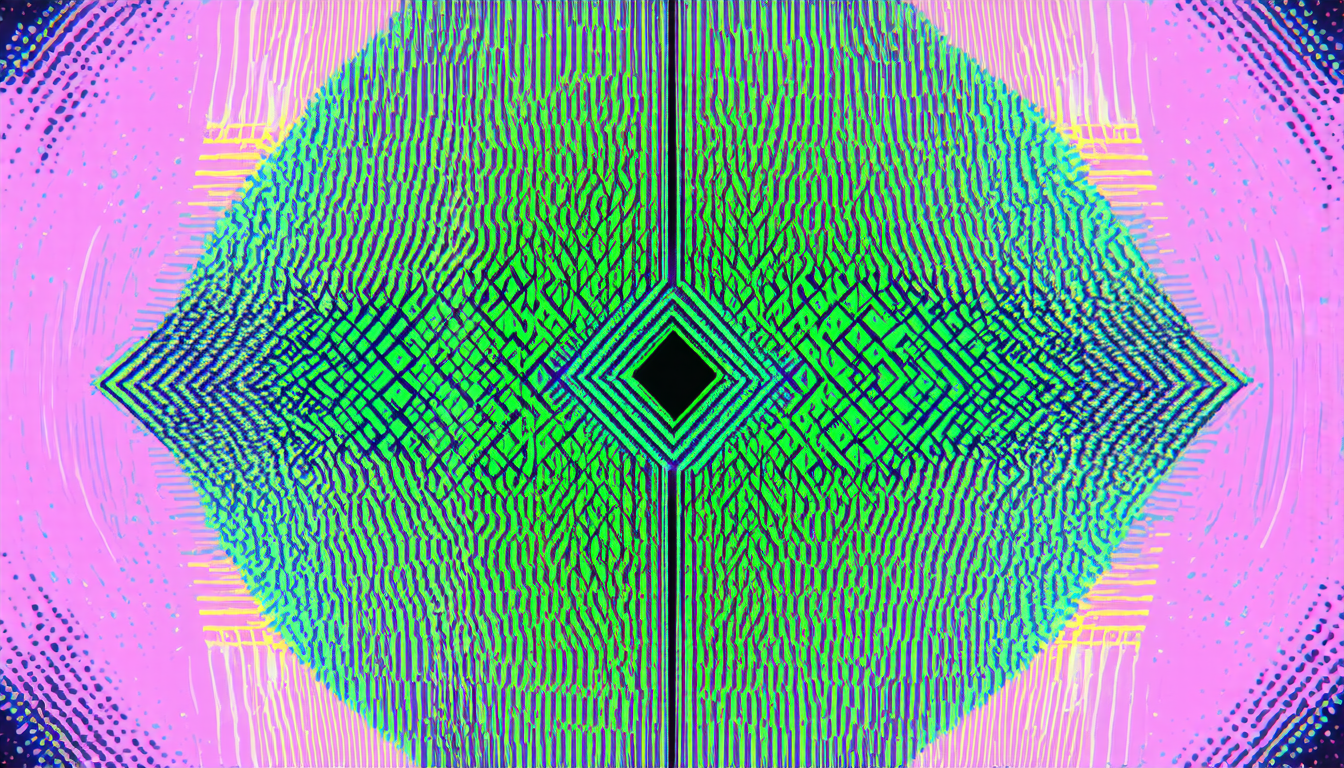
The human brain is a remarkable organ, capable of creating illusions that can deceive even the most skeptical of minds. One such illusion is the Expanding Hole Illusion, where a static pattern appears to expand and contract, creating a sense of motion.
Researchers have been studying this phenomenon for years, trying to understand what’s behind it. A recent paper has shed new light on the matter, proposing that the illusion arises from contrast-dependent lateral inhibition in early visual processing. In simpler terms, our brains are tricked into seeing movement because of the way our eyes process contrasting colors and patterns.
The study used a combination of computer simulations and psychophysical experiments to investigate the Expanding Hole Illusion. The researchers created synthetic versions of the pattern and applied filters that mimicked the responses of retinal ganglion cells – the neurons responsible for transmitting visual information from the eye to the brain.
By analyzing the output of these filters, the team found that increased lateral inhibition at higher contrast levels could account for the perceived expansion. In other words, our brains are more sensitive to changes in brightness and color when they occur near areas of high contrast, which can create the illusion of movement.
The findings support the idea that early visual processing plays a crucial role in creating illusions like the Expanding Hole Illusion. This is because retinal ganglion cells are highly sensitive to local contrasts and can amplify or suppress signals based on their surroundings. The researchers propose that this lateral inhibition is responsible for creating the illusion of expansion, as it enhances the contrast between different regions of the pattern.
The study also investigated the relationship between the Expanding Hole Illusion and physiological responses like pupil dilation. Previous research has shown that the illusion can trigger significant changes in pupil size, which suggests that it may be influencing other neural pathways beyond just visual processing.
Further analysis revealed that the model outputs closely mirrored the regions of the pattern that triggered pupil dilation in human participants. This suggests that the illusion is not just a product of visual processing, but also has an impact on other brain areas involved in attention and arousal.
The study’s findings have implications for our understanding of how the brain processes visual information and creates illusions. It highlights the importance of early visual processing in creating complex perceptual experiences and challenges traditional views of motion perception.
In the future, researchers may use this model to investigate other types of visual illusions, such as the Fraser-Wilcox illusion or the Cafe Wall Illusion.
Cite this article: “Unraveling the Mechanisms Behind the Expanding Hole Illusion”, The Science Archive, 2025.
Visual Illusions, Expanding Hole Illusion, Lateral Inhibition, Contrast-Dependent, Early Visual Processing, Retinal Ganglion Cells, Neural Pathways, Pupil Dilation, Motion Perception, Brain Function.





