

Saturday 08 March 2025
A recent study has shed new light on the impact of human bodies on wireless communication signals, specifically in indoor environments at millimetre wave (mmWave) frequencies.
Researchers have long been aware that human bodies can significantly attenuate mmWave signals, making them less effective for indoor wireless local area networks (WLANs). However, the exact nature and extent of this attenuation has remained somewhat unclear. To address this knowledge gap, scientists have conducted a series of experiments to measure the effects of human bodies on mmWave signal propagation in an indoor setting.
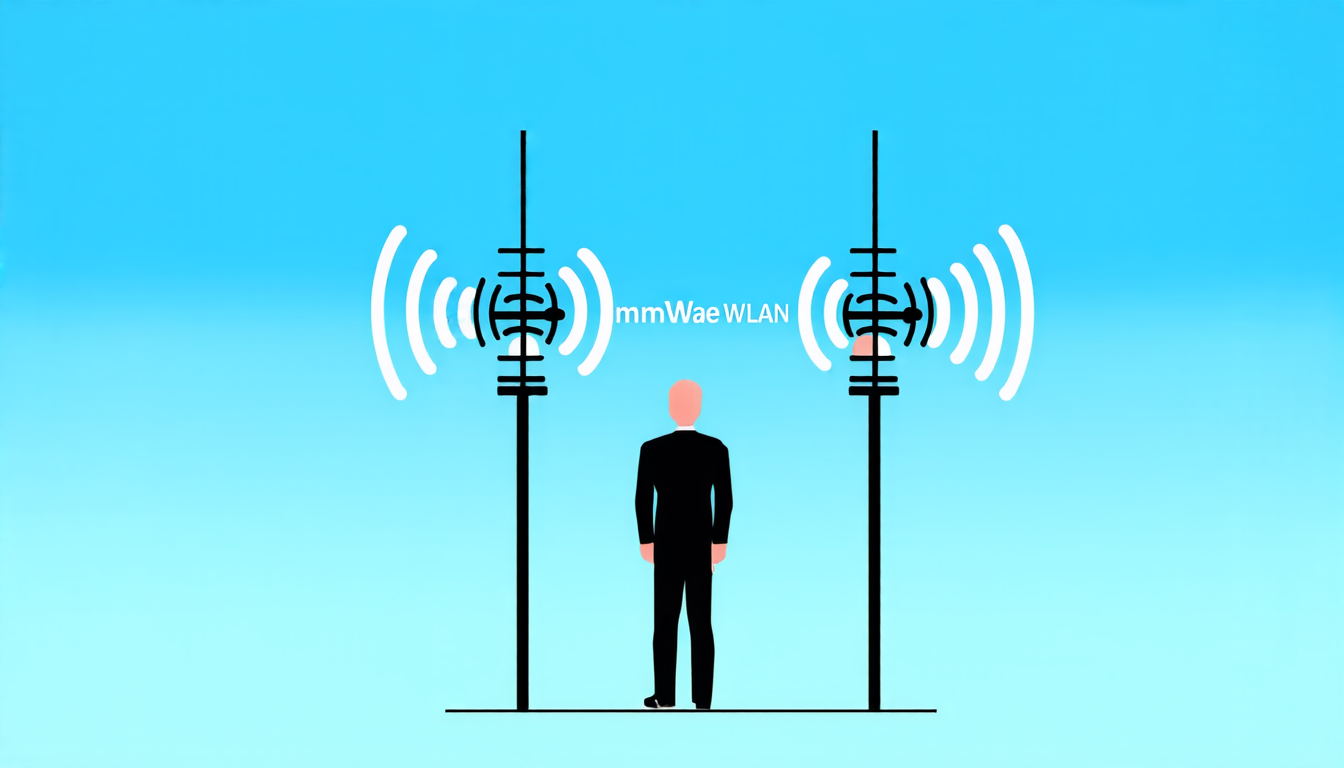
The study focused on a frequency range of 60 GHz, which is commonly used for WLANs and other wireless applications. The researchers used two antennas positioned 3 meters apart, with one antenna transmitting a signal while the other received it. A person was then placed between the antennas to simulate a common scenario in an indoor environment.
The results showed that when the person blocked the direct line of sight (LOS) between the antennas, the signal strength decreased by approximately 25 dB. This is equivalent to a reduction in signal power of about 99%, making it nearly impossible for devices to communicate with each other.
However, the researchers also found that the signal did not completely disappear when blocked by the person. Instead, a significant portion of the signal was reflected back towards the receiver antenna, resulting in a measurable signal strength even when the LOS was obstructed.
This phenomenon has important implications for the design and development of mmWave WLANs. By leveraging the reflected signals, engineers may be able to develop more robust and reliable wireless communication systems that can operate effectively even in the presence of human bodies.
The study’s findings also highlight the need for further research into the effects of human bodies on mmWave signal propagation. As indoor environments continue to become increasingly congested with wireless devices, it is essential to understand how these signals interact with their surroundings and develop strategies to mitigate any negative impacts.
Ultimately, this research has the potential to improve the performance and reliability of mmWave WLANs, enabling faster and more efficient data transfer in a wide range of applications.
Cite this article: “Human Bodies Impact on Wireless Communication Signals in Indoor Environments”, The Science Archive, 2025.
Wireless Communication, Mmwave Frequencies, Human Bodies, Indoor Environments, Signal Propagation, Wlans, Signal Attenuation, Reflection, Wireless Local Area Networks, 60 Ghz Frequency Range.





