
Saturday 08 March 2025
The quest for sparsity in optimization problems has led researchers down a fascinating path of geometric discovery. The concept of sparsity refers to the ability to achieve optimal solutions by selecting only the most relevant features or variables, while ignoring the rest. This approach is particularly useful in fields such as machine learning and signal processing, where noise and irrelevant data can hinder performance.
To tackle this challenge, mathematicians have turned to the world of polytopes – geometric objects defined by a set of vertices, edges, and faces. By studying the properties of these polytopes, researchers have been able to develop new norms that encourage sparsity in optimization problems. These norms are based on the idea of penalizing solutions that contain too many non-zero components.
One such norm is the k-support norm, which was first introduced by mathematicians Jean-Philippe Chancelier and Michel De Lara. This norm is defined as the sum of the absolute values of the k largest coefficients in a solution vector. In other words, it rewards solutions that have only a few non-zero components, while penalizing those with many.
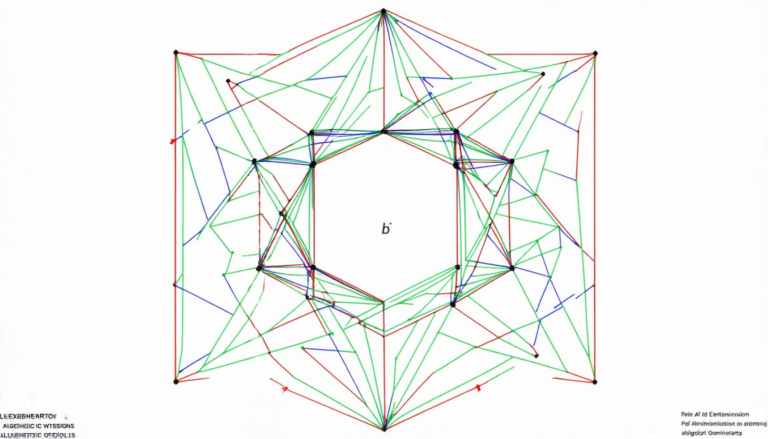
To better understand the properties of this norm, researchers have been studying its relationship to polytopes. One key finding is that the unit ball of the k-support norm can be decomposed into a union of hypersimplices – polytopes that are defined by a set of vertices and edges in a high-dimensional space.
This decomposition has far-reaching implications for optimization problems. For example, it allows researchers to develop more efficient algorithms for solving sparse optimization problems. It also provides new insights into the geometry of sparsity, which can be used to design better norms and regularization techniques.
Another important aspect of this research is its connection to the concept of orthant-monotonicity. This property refers to the way in which a norm changes when the coordinates of a solution vector are flipped from positive to negative or vice versa. In the case of the k-support norm, researchers have shown that it is orthant-strictly monotone – meaning that the norm increases more quickly when the coordinates are flipped than when they are not.
This property has important implications for optimization algorithms. For example, it allows researchers to develop new methods for solving sparse linear systems, which can be used in a wide range of applications including machine learning and signal processing.
The study of polytopes and norms is an active area of research, with many exciting developments on the horizon.
Cite this article: “Geometric Insights into Sparsity in Optimization Problems”, The Science Archive, 2025.
Sparsity, Optimization, Polytopes, Norms, Machine Learning, Signal Processing, K-Support Norm, Orthant-Monotonicity, Hypersimplices, Regularization Techniques