

Saturday 08 March 2025
Computer scientists have developed a new method for estimating human poses in images, which could lead to significant advancements in fields such as robotics and computer vision.
The technique, known as Pose-Constrained Continuous Surface Embeddings (PC-CSE), uses machine learning algorithms to estimate the pose of a person in an image. The pose is defined by the position and orientation of the body’s joints, such as the shoulders, elbows, and hips.
Traditionally, estimating human poses has been done using computer vision techniques that rely on detecting specific features in the image, such as edges or corners. However, these methods can be prone to errors and are often limited to specific scenarios or environments.
PC-CSE takes a different approach by using a combination of machine learning algorithms and geometric constraints to estimate the pose. The method first uses a machine learning algorithm to detect the body’s joints in the image, and then uses geometric constraints to refine the pose estimation.
The researchers tested their method on a large dataset of images and found that it outperformed traditional computer vision techniques in many cases. They also demonstrated the effectiveness of PC-CSE by using it to estimate human poses in videos taken from different angles and with varying lighting conditions.
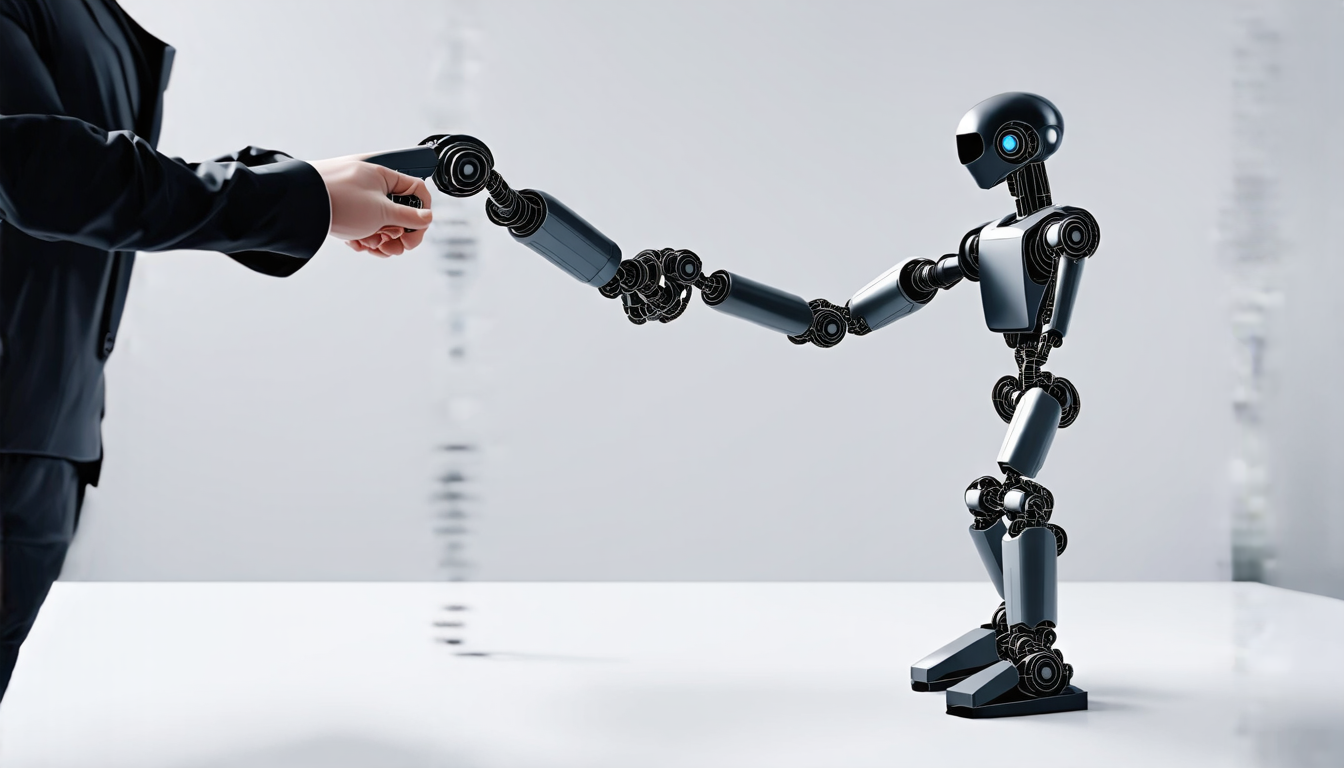
One potential application of PC-CSE is in robotics, where it could be used to enable robots to better understand and interact with their environment. For example, a robot might use PC-CSE to estimate the pose of a person it encounters, and then adjust its behavior accordingly.
Another potential application is in computer vision, where PC-CSE could be used to improve object recognition and tracking algorithms. By estimating the pose of objects in an image, researchers could develop more accurate and robust object detection and tracking systems.
The development of PC-CSE is a significant step forward in the field of computer vision and robotics, and has the potential to enable new applications that were previously impossible.
Cite this article: “New Technique Improves Human Pose Estimation in Images”, The Science Archive, 2025.
Machine Learning, Computer Vision, Pose Estimation, Robotics, Human Pose, Image Analysis, Machine Algorithms, Geometric Constraints, Object Recognition, Tracking Systems
Reference: Matej Suchanek, Miroslav Purkrabek, Jiri Matas, “Human Pose-Constrained UV Map Estimation” (2025).





