

Saturday 08 March 2025
The quest for a more efficient way to crunch numbers in quantum chemistry has led scientists to develop innovative methods that could revolutionize our understanding of the fundamental building blocks of matter.
Quantum mechanics is the foundation of modern physics, allowing us to describe the behavior of particles at an atomic and subatomic level. However, solving complex problems involving multiple particles and forces requires immense computational power and clever algorithms. In recent years, researchers have turned to wavelet analysis, a mathematical technique that breaks down functions into smaller components, as a way to speed up these calculations.
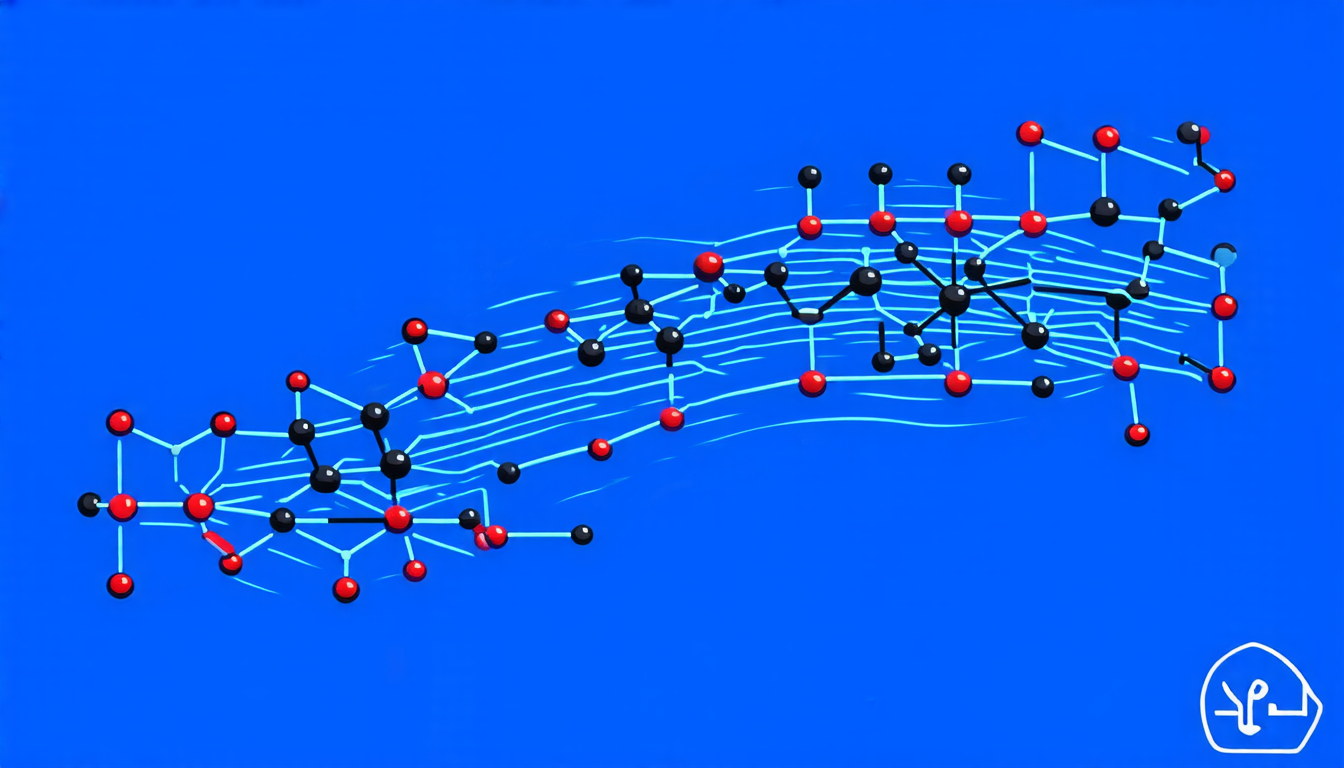
Wavelets are particularly useful in quantum chemistry because they can efficiently represent the complex patterns of electron density within molecules. By using wavelets, scientists can reduce the number of calculations required to solve a problem, making it more manageable and faster to solve.
The latest development in this field is the creation of a new way to discretize the Laplacian operator, a mathematical tool used to describe the distribution of electrons within a molecule. The Laplacian is crucial for calculating properties like energy levels and electron density, but traditional methods can be computationally expensive and inaccurate.
Researchers have developed a novel approach that represents the Laplacian as an infinite sum of heat operators, which are themselves approximated using wavelets. This new method allows for more accurate calculations with fewer computations, making it possible to tackle complex problems that were previously out of reach.
One of the key advantages of this new approach is its flexibility. Unlike traditional methods, which are often limited by their fixed grid size and resolution, the wavelet-based Laplacian can be easily adapted to different molecular structures and problem sizes. This means scientists can tackle a wide range of molecules, from simple organic compounds to complex biological systems.
The potential impact of this research is significant. It could enable faster and more accurate simulations of chemical reactions, helping us better understand the intricate mechanisms that govern our world. Moreover, it may lead to the development of new materials with unique properties, such as superconductors or nanomaterials.
While we’re still in the early stages of exploring this new approach, the possibilities are exciting. By harnessing the power of wavelets and heat operators, scientists may be able to unlock new secrets of quantum mechanics and push the boundaries of what’s possible in the field of quantum chemistry.
Cite this article: “Unlocking the Secrets of Quantum Mechanics with Wavelet Analysis”, The Science Archive, 2025.
Quantum Mechanics, Wavelet Analysis, Laplacian Operator, Heat Operators, Molecular Structures, Problem Sizes, Chemical Reactions, Simulations, Materials Science, Computational Power.
Reference: Evgueni Dinvay, “Heat semigroup representation of Laplacian” (2025).





