

Saturday 08 March 2025
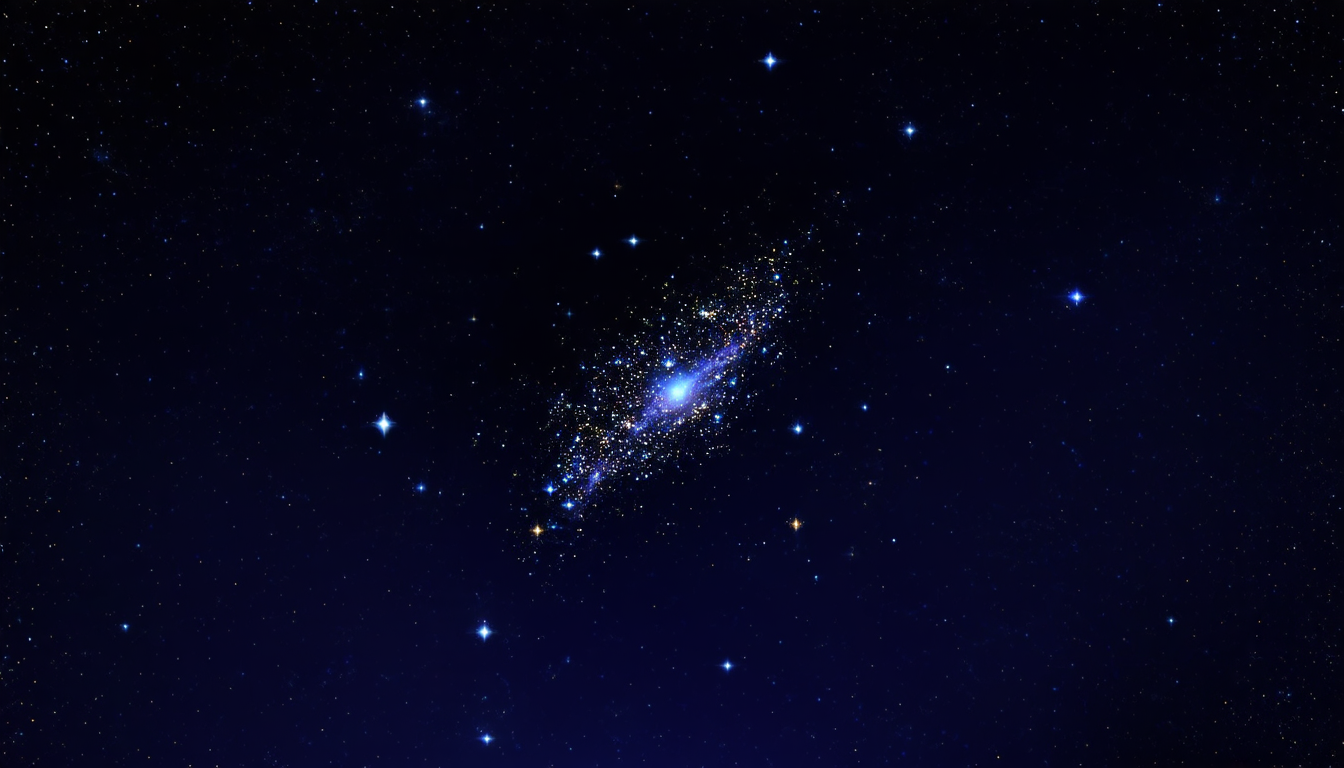
In a recent study, scientists have proposed a new theory on how open clusters may have formed in our galaxy. According to this theory, embedded clusters – groups of stars that are still surrounded by gas and dust – can coalesce over time to form larger, more stable star clusters known as open clusters.
The research team used advanced computer simulations to model the formation of these embedded clusters and their subsequent evolution into open clusters. They found that as the gas and dust within the cluster dissipate, the stars begin to move closer together due to gravity, eventually merging to form a single, massive star cluster.
This process is thought to occur over millions of years, with the initial embedded cluster slowly coalescing into an open cluster through a series of mergers and interactions between individual stars. The simulations also showed that this formation mechanism could explain many of the observed characteristics of open clusters in our galaxy, such as their sizes, shapes, and ages.
One of the key advantages of this theory is its ability to account for the diverse range of star masses within open clusters. By simulating the coalescence process over time, researchers were able to reproduce the observed distribution of star masses, which can vary significantly between different open clusters.
The study’s findings also have implications for our understanding of the early history of our galaxy. If embedded clusters are indeed the precursors to open clusters, then it’s possible that many of the stars in these clusters formed at the same time and place, potentially shedding light on the complex processes that shaped the Milky Way over billions of years.
The researchers used three different star-forming regions as test cases for their simulations: NGC 1893, NGC 6334, and Carina. Each region was chosen for its unique characteristics, such as varying levels of gas and dust, and the team’s results showed that these factors played a significant role in shaping the formation and evolution of embedded clusters.
By exploring the complex interplay between gas, dust, and gravity within these star-forming regions, scientists may be able to gain a deeper understanding of how open clusters came to be. This new theory could also have far-reaching implications for our understanding of galaxy evolution as a whole, potentially revealing clues about the formation and structure of galaxies beyond our own.
While more research is needed to confirm this theory, the study’s findings offer an exciting new perspective on the origins of open clusters in the Milky Way.
Cite this article: “New Theory Reveals How Open Clusters Formed in Our Galaxy”, The Science Archive, 2025.
Star Clusters, Galaxy Evolution, Embedded Clusters, Open Clusters, Star Formation, Simulations, Computer Modeling, Gravity, Gas And Dust, Milky Way





