

Saturday 08 March 2025
Researchers have made a significant breakthrough in understanding the behavior of biomolecular condensates, complex structures found within cells that play a crucial role in various cellular processes. By developing modified patchy particle models, scientists have been able to simulate the formation and dynamics of these condensates with unprecedented accuracy.
Biomolecular condensates are formed when proteins or other biomolecules come together to create liquid-like droplets within the cell. These structures have been implicated in a range of cellular processes, including stress response, gene regulation, and cellular organization. However, understanding how they form and function has proven challenging due to their complex behavior.
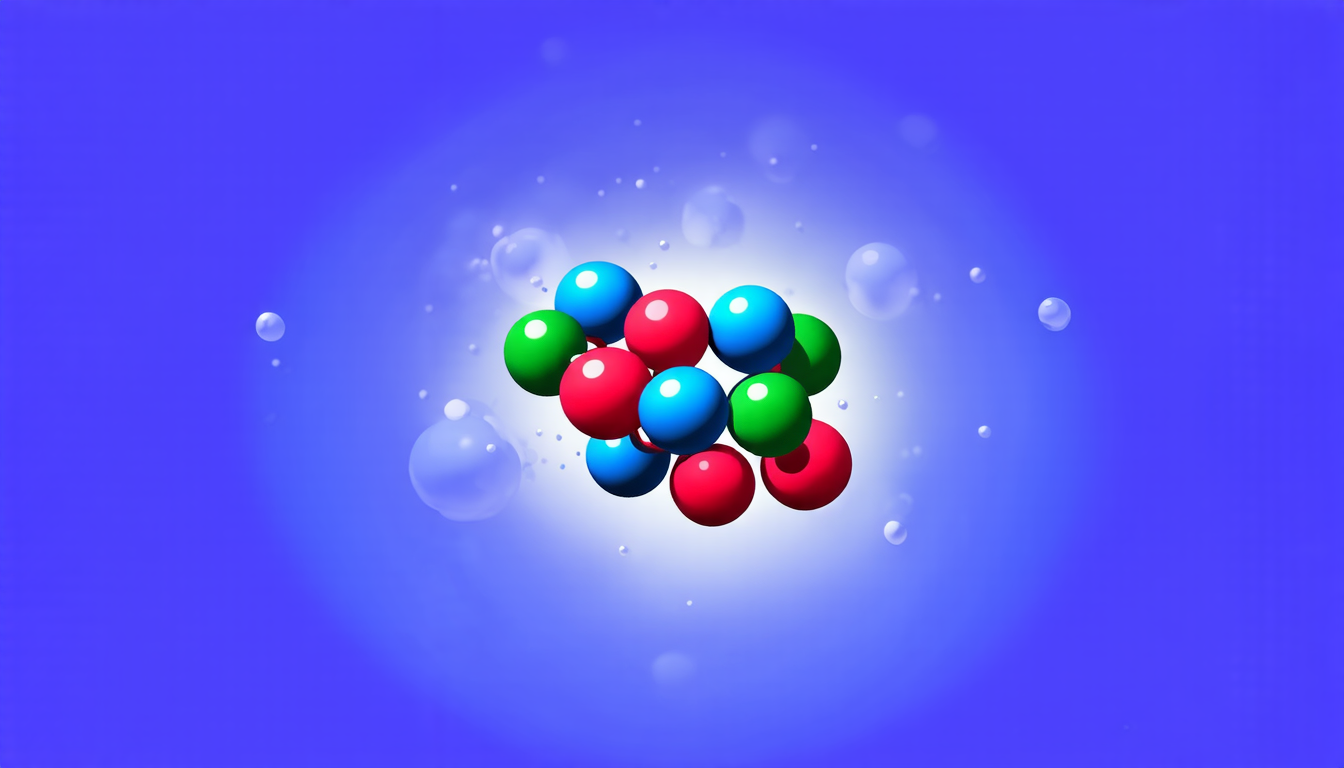
To tackle this challenge, researchers turned to computer simulations using patchy particle models. In these models, particles are represented as spheres with discrete attractive sites, allowing for the simulation of directional interactions between molecules. By modifying these models to include flexible patches and weak isotropic attractions, scientists have been able to capture the key characteristics of biomolecular condensates.
The modified patchy particle models were used to simulate the formation and dynamics of condensates at the molecular level. The simulations showed that the condensates exhibited a range of behaviors, including phase separation, liquid-liquid coexistence, and bond formation. These findings are in line with experimental observations and provide new insights into the behavior of biomolecular condensates.
One key finding was that the modified patchy particle models were able to capture the critical temperature at which the condensate forms. This temperature is a crucial parameter in understanding the behavior of biomolecular condensates, as it determines when the molecules will come together to form a droplet.
The simulations also revealed the importance of bond formation between molecules within the condensate. Bonds play a key role in determining the stability and composition of the condensate, and the modified patchy particle models were able to capture this behavior with high accuracy.
In addition to providing new insights into biomolecular condensates, the research has implications for our understanding of cellular processes more broadly. The findings suggest that biomolecular condensates may play a more significant role in cellular organization than previously thought, and could potentially be targeted as therapeutic targets.
The development of modified patchy particle models is an important step forward in understanding the behavior of biomolecular condensates. By providing new insights into the molecular-level dynamics of these structures, scientists are one step closer to unlocking the secrets of cellular biology.
Cite this article: “Deciphering the Dynamics of Biomolecular Condensates through Advanced Simulation Models”, The Science Archive, 2025.
Biomolecular Condensates, Patchy Particle Models, Molecular Dynamics, Cellular Processes, Stress Response, Gene Regulation, Liquid-Liquid Coexistence, Bond Formation, Critical Temperature, Computational Biology.





