

Saturday 08 March 2025
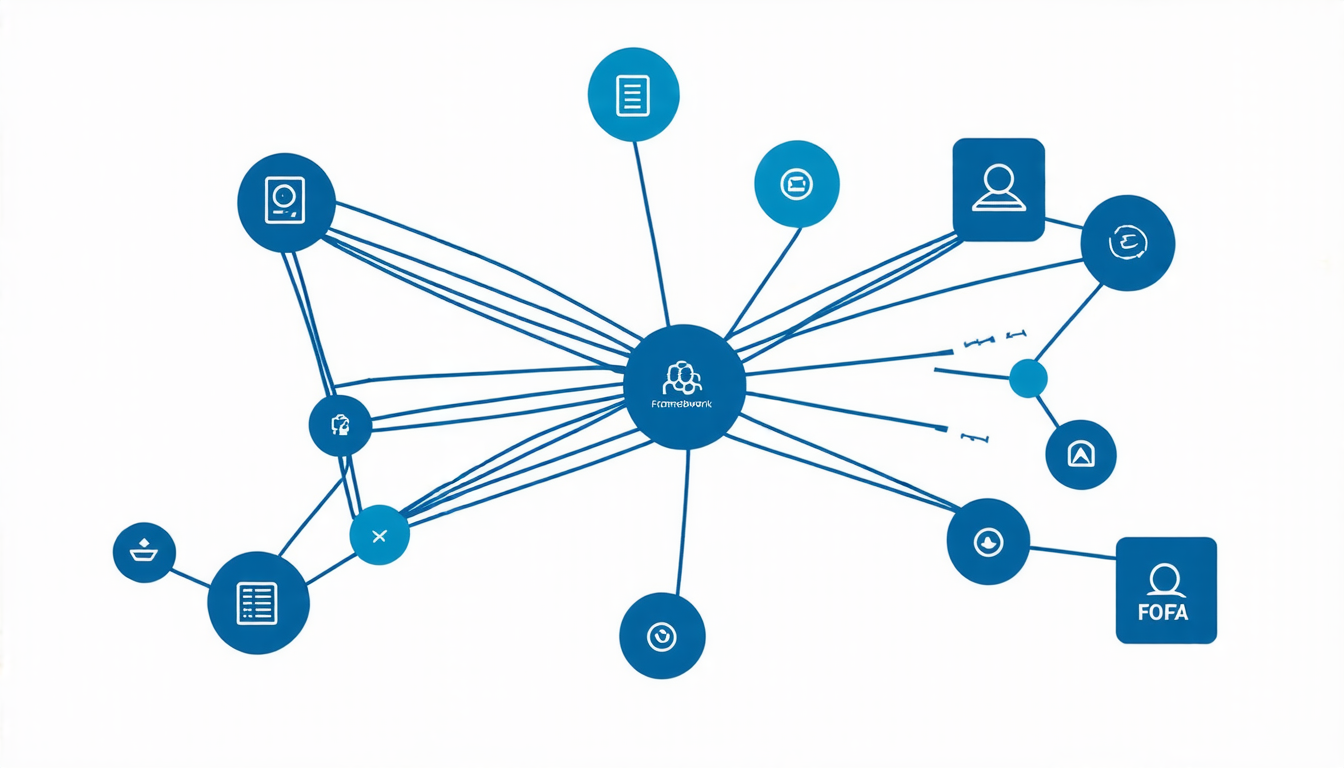
The quest for a universal knowledge distillation framework has been a long-standing challenge in the field of artificial intelligence. Researchers have made significant progress in recent years, but many approaches still suffer from limitations and biases. A new paper proposes a novel solution to this problem by introducing a feature-based one-for-all (FOFA) framework that can seamlessly transfer knowledge between heterogeneous architectures.
The FOFA framework is built upon two key components: region-aware attention (RAA) and adaptive prompt tuning (AFP). RAA allows the student model to learn how to blend features from different stages and regions, effectively mitigating the view mismatch problem that often occurs when distilling knowledge between models with different architectures. AFP, on the other hand, enables the teacher model to adapt its features based on feedback from the student model, ensuring that the knowledge transferred is relevant and effective.
The authors demonstrate the effectiveness of FOFA through a series of experiments on various image classification tasks. They show that FOFA outperforms existing knowledge distillation methods in terms of accuracy and efficiency, particularly when dealing with heterogeneous architectures. The framework’s ability to adapt to different models and datasets makes it a promising solution for real-world applications.
One of the most impressive aspects of FOFA is its ability to transfer knowledge between models with vastly different architectures. For example, the authors demonstrate that FOFA can successfully distill knowledge from a convolutional neural network (CNN) to a vision transformer (ViT), and vice versa. This highlights the framework’s flexibility and potential for widespread adoption.
Another notable aspect of FOFA is its ability to alleviate the catastrophic forgetting problem, which occurs when a model forgets previously learned tasks during training on new data. The authors show that FOFA can effectively mitigate this problem by incorporating feedback from the student model into the teacher model’s feature adaptation process.
The limitations of FOFA are largely related to its computational requirements and the need for careful tuning of hyperparameters. However, these challenges are not unique to FOFA and are common in many machine learning applications.
In summary, the FOFA framework represents a significant step forward in the field of knowledge distillation. Its ability to transfer knowledge between heterogeneous architectures, alleviate catastrophic forgetting, and adapt to different models and datasets makes it a promising solution for real-world applications. While there is still work to be done to further refine and optimize FOFA, its potential impact on the development of more efficient and effective machine learning systems is substantial.
Cite this article: “A Novel Framework for Knowledge Distillation Across Heterogeneous Architectures”, The Science Archive, 2025.
Artificial Intelligence, Knowledge Distillation, Feature-Based One-For-All Framework, Region-Aware Attention, Adaptive Prompt Tuning, Heterogeneous Architectures, Image Classification, Convolutional Neural Networks, Vision Transformers, Catastrophic Forgetting.





