
Sunday 09 March 2025
In a significant breakthrough, scientists have developed a new method for connecting complex biological and artificial systems remotely, allowing them to work together seamlessly over long distances.
The innovative approach uses a custom-designed UDP protocol to transmit event-based data between different setups, enabling the integration of disparate technologies such as analog neuromorphics, biological cell cultures, and memristors. This means that researchers can now study and experiment with biohybrid systems from their own labs, without having to physically transport the equipment.
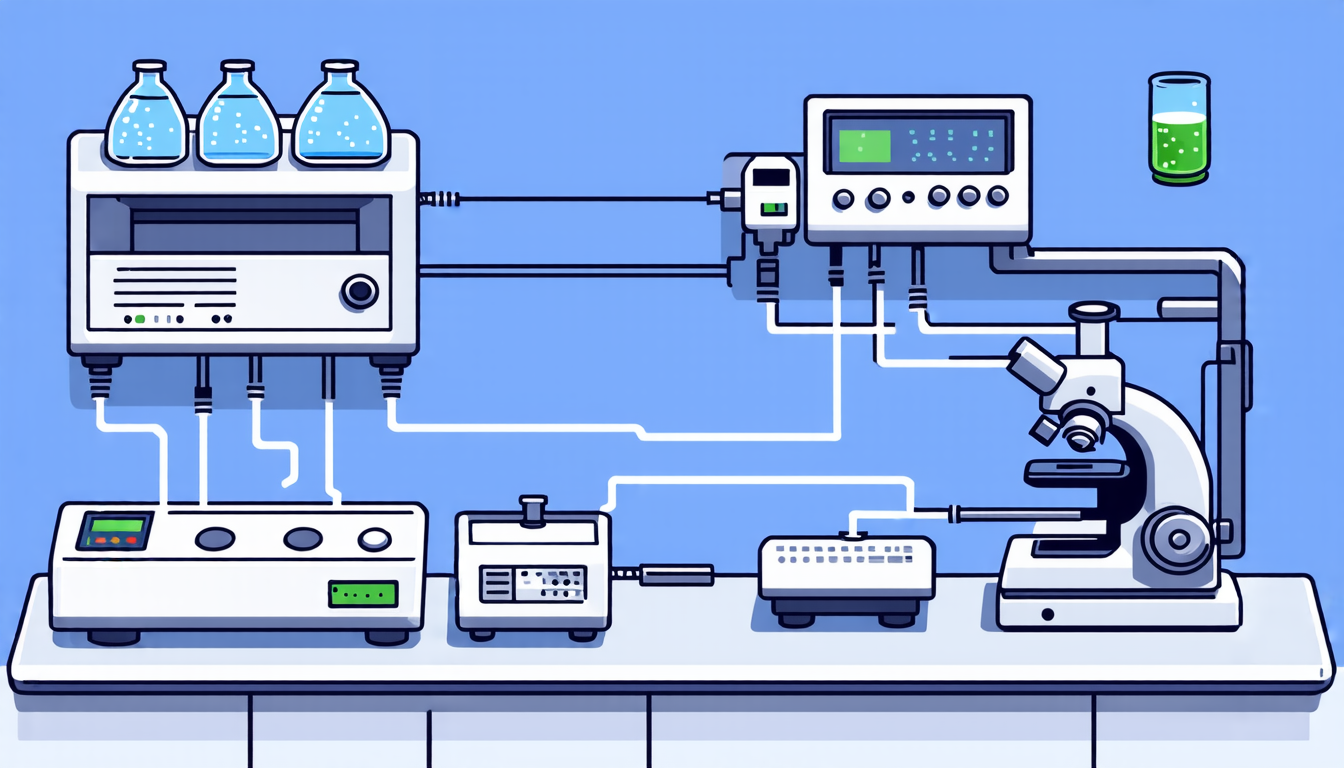
The new method has already been successfully tested in three European projects, where it was used to connect four different setups across the continent. The project involved linking an analog neuromorphic processor, a digital neuromorphic processor, a memristive setup, and a neurobiology lab together, allowing them to communicate and interact with each other remotely.
One of the key benefits of this approach is its flexibility and scalability. The UDP protocol can be easily adapted to connect different types of equipment, and it allows for high-speed data transmission over long distances. This makes it an ideal solution for researchers who need to collaborate with colleagues from around the world.
The biohybrid systems that are being developed using this technology have the potential to revolutionize our understanding of biological processes and how they can be used in medical applications. By combining the strengths of both biological and artificial systems, scientists may be able to develop new treatments for diseases, improve prosthetic devices, and even create new forms of sustainable energy.
The project has also opened up new possibilities for remote experimentation and data analysis. Researchers can now conduct experiments from their own labs, without having to physically transport equipment or personnel. This makes it easier and more cost-effective to conduct research, especially in fields where large-scale experiments are necessary.
In addition to its scientific applications, the technology has the potential to have a significant impact on our daily lives. For example, it could be used to create new forms of telemedicine, allowing patients to receive remote medical care from specialists around the world. It could also be used to develop more advanced autonomous vehicles, which would be able to communicate with each other and respond to changing situations in real-time.
Overall, the development of this new method for connecting biological and artificial systems remotely is a significant step forward for science and technology. It has the potential to open up new possibilities for research and innovation, and could have a major impact on our daily lives.
Cite this article: “Remote Biohybrid Systems: A Breakthrough in Interconnecting Complex Biological and Artificial Technologies”, The Science Archive, 2025.
Here Are The Keywords: Biotechnology, Artificial Intelligence, Remote Experimentation, Biohybrid Systems, Neuromorphic Processors, Memristors, Telemedicine, Autonomous Vehicles, Data Transmission, Scalability