

Sunday 09 March 2025
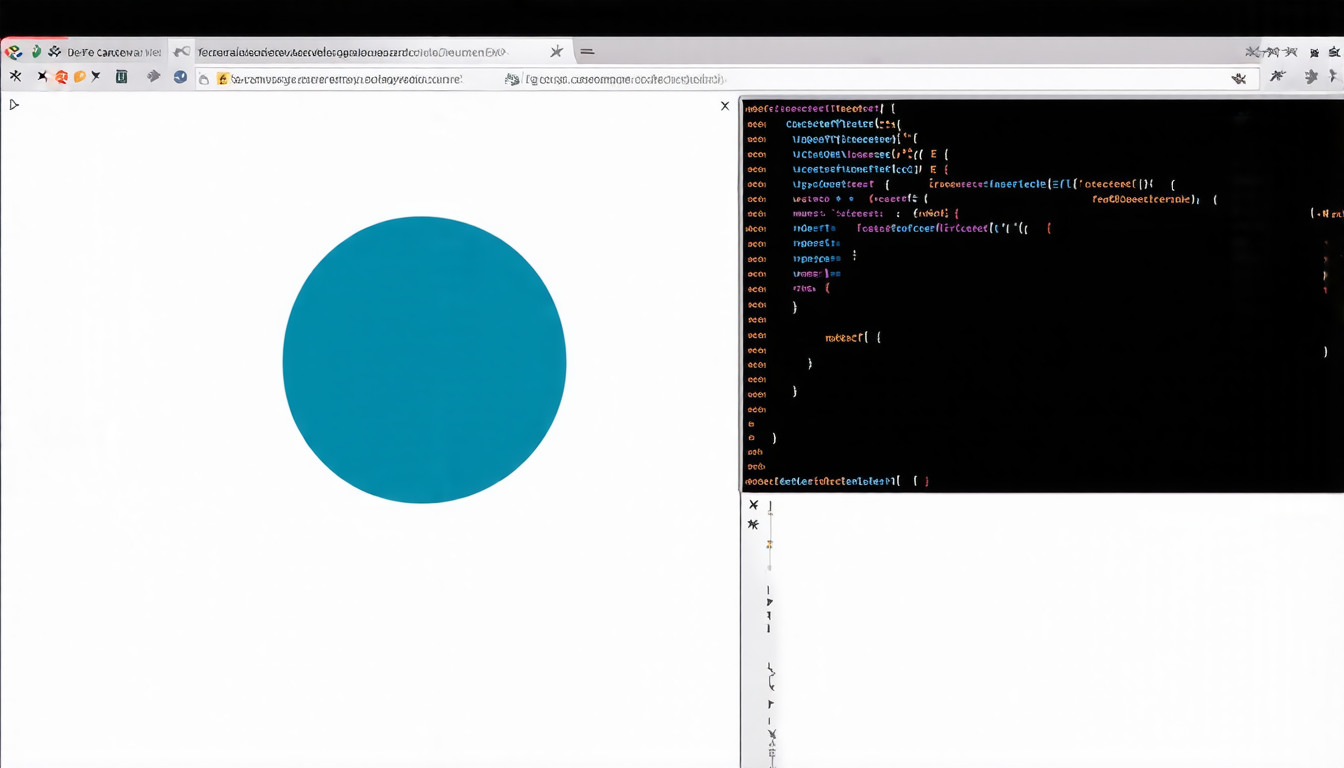
When you visit a website, there’s more going on behind the scenes than you might think. One crucial aspect is how the visuals are rendered, particularly when it comes to HTML5 Canvas applications. These types of websites use a bitmap to display images, which can lead to visual bugs if not properly tested.
Visual bugs occur when the expected and actual output don’t match up. In traditional web development, this isn’t as much of an issue since the Document Object Model (DOM) is used to analyze the website’s structure. However, with HTML5 Canvas applications, the DOM doesn’t apply, making it challenging for testers to identify visual bugs.
Researchers have been working on developing a solution to detect these visual bugs automatically. One approach involves using Vision-Language Models (VLMs), which can analyze images and provide feedback on whether they contain any visual bugs or not.
In this study, scientists explored the potential of VLMs in detecting visual bugs in HTML5 Canvas applications. They created a dataset consisting of 80 bug-injected screenshots across four different types of visual bugs: layout, rendering, appearance, and state. Additionally, they included 20 bug-free screenshots from various HTML5 Canvas applications.
The researchers trained a VLM using the provided context – including the application’s README file, a description of the expected functionality, and even a screenshot of the application in its ideal state. This approach allowed the model to learn what constitutes a visual bug and how to identify them.
Experiments revealed that by providing the correct context, the VLM could accurately detect visual bugs with up to 100% accuracy per application. The results were impressive, demonstrating the potential for VLMs in automated testing of HTML5 Canvas applications.
The study highlights the importance of considering the nuances of HTML5 Canvas applications when developing testing strategies. By leveraging VLMs and incorporating context-specific information, developers can create more effective test oracles that help identify visual bugs early on.
This research has significant implications for the development of web applications, particularly those that rely heavily on visuals. As the use of HTML5 Canvas continues to grow, it’s essential to develop robust testing strategies that can detect visual bugs efficiently and accurately.
The findings also underscore the potential for VLMs in various other areas, such as testing mobile apps or identifying issues with video game graphics. By exploring the capabilities of these models, researchers can unlock new possibilities for automated testing and improve the overall quality of digital products.
Cite this article: “Automated Detection of Visual Bugs in HTML5 Canvas Applications”, The Science Archive, 2025.
Html5 Canvas, Visual Bugs, Automated Testing, Vision-Language Models, Vlms, Web Development, Digital Products, Quality Assurance, Bug Detection, Machine Learning





