

Sunday 09 March 2025
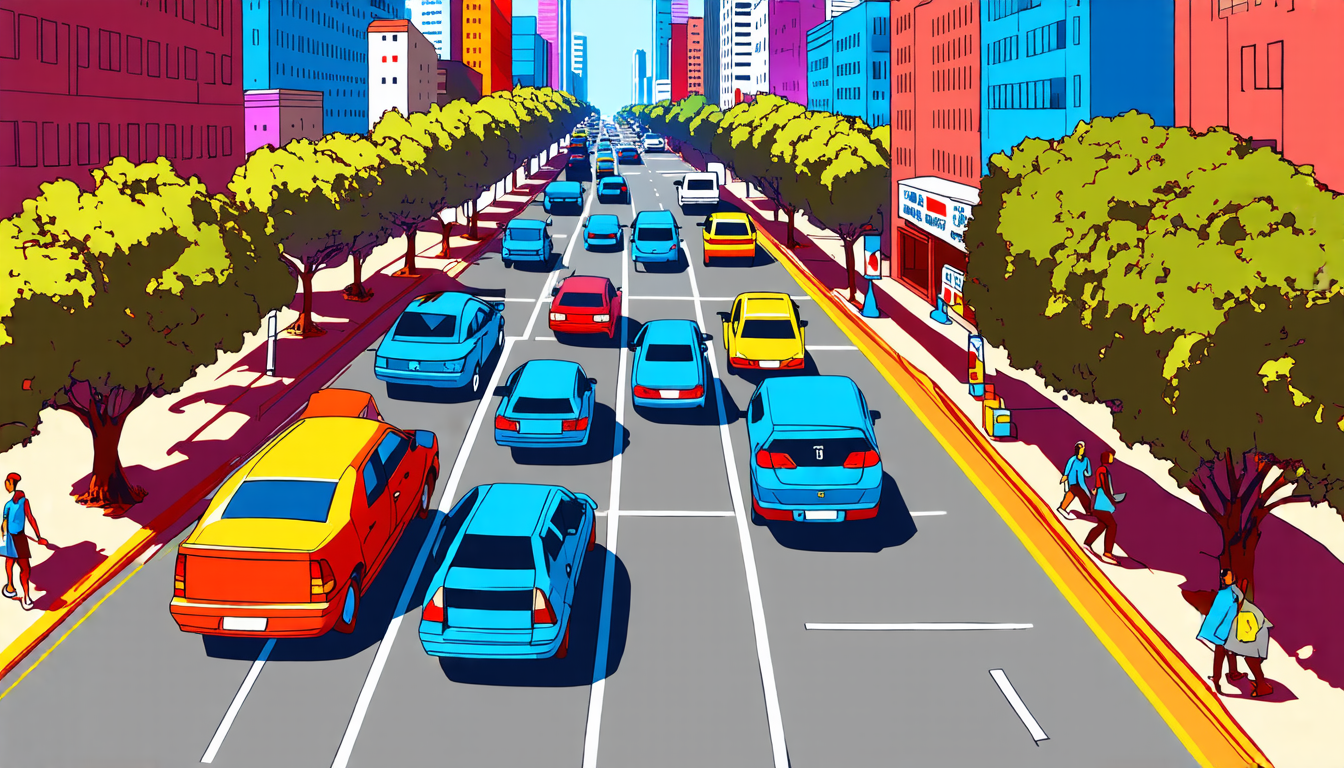
Urban traffic congestion is a ubiquitous problem that plagues cities worldwide. The constant flow of vehicles, pedestrians, and public transportation can lead to frustrating delays and wasted time for commuters. While traffic monitoring systems have improved over the years, they often rely on fixed sensors or manual observations, which are limited in their ability to capture the dynamic nature of urban traffic.
Enter a new approach that harnesses the power of unmanned aerial vehicles (UAVs) to monitor traffic flow in real-time. By deploying UAVs equipped with cameras and sensors, researchers have developed a system capable of tracking traffic patterns, identifying bottlenecks, and optimizing traffic flow.
The key innovation lies in the algorithm used to process the data collected by the UAVs. By analyzing the images captured by the cameras, the system can detect and track individual vehicles, allowing for accurate estimates of speed, direction, and position. This information is then combined with data from other sources, such as traffic lights and road infrastructure, to create a comprehensive picture of urban traffic dynamics.
One of the most significant advantages of this system is its ability to adapt to changing traffic conditions in real-time. By continuously monitoring traffic flow, the algorithm can detect sudden changes in volume or speed, allowing for swift adjustments to be made to optimize traffic flow. This not only reduces congestion but also minimizes the likelihood of accidents caused by sudden stops or unexpected lane closures.
The system has been tested in a simulated environment using data from a modified Sioux Falls network, a classic test case for traffic simulations. The results show that the UAV-based approach outperforms traditional methods in terms of accuracy and adaptability. By capturing complex patterns of traffic flow, including the interactions between different types of vehicles and infrastructure, the system is able to generate more accurate predictions and recommendations for traffic management.
The potential applications of this technology are far-reaching. In addition to optimizing traffic flow, UAV-based monitoring could be used to detect accidents or incidents in real-time, reducing response times and improving emergency services. It could also help urban planners design more efficient transportation systems, taking into account the dynamic interactions between different modes of transport.
While there are still challenges to overcome before this technology is widely adopted, the potential benefits are significant. As cities continue to grow and traffic congestion remains a pressing issue, innovative solutions like UAV-based traffic monitoring will be crucial in helping us navigate the future of urban transportation.
Cite this article: “Unmanned Aerial Vehicles Revolutionize Urban Traffic Monitoring”, The Science Archive, 2025.
Uavs, Traffic Monitoring, Real-Time Data, Urban Traffic Congestion, Algorithm, Camera Sensors, Traffic Flow Optimization, Accident Detection, Emergency Services, Transportation Systems.





