

Sunday 09 March 2025
The quest for better image anonymization has taken a significant step forward with the development of SVIA, a novel framework that can simultaneously generate high-quality images and protect privacy.
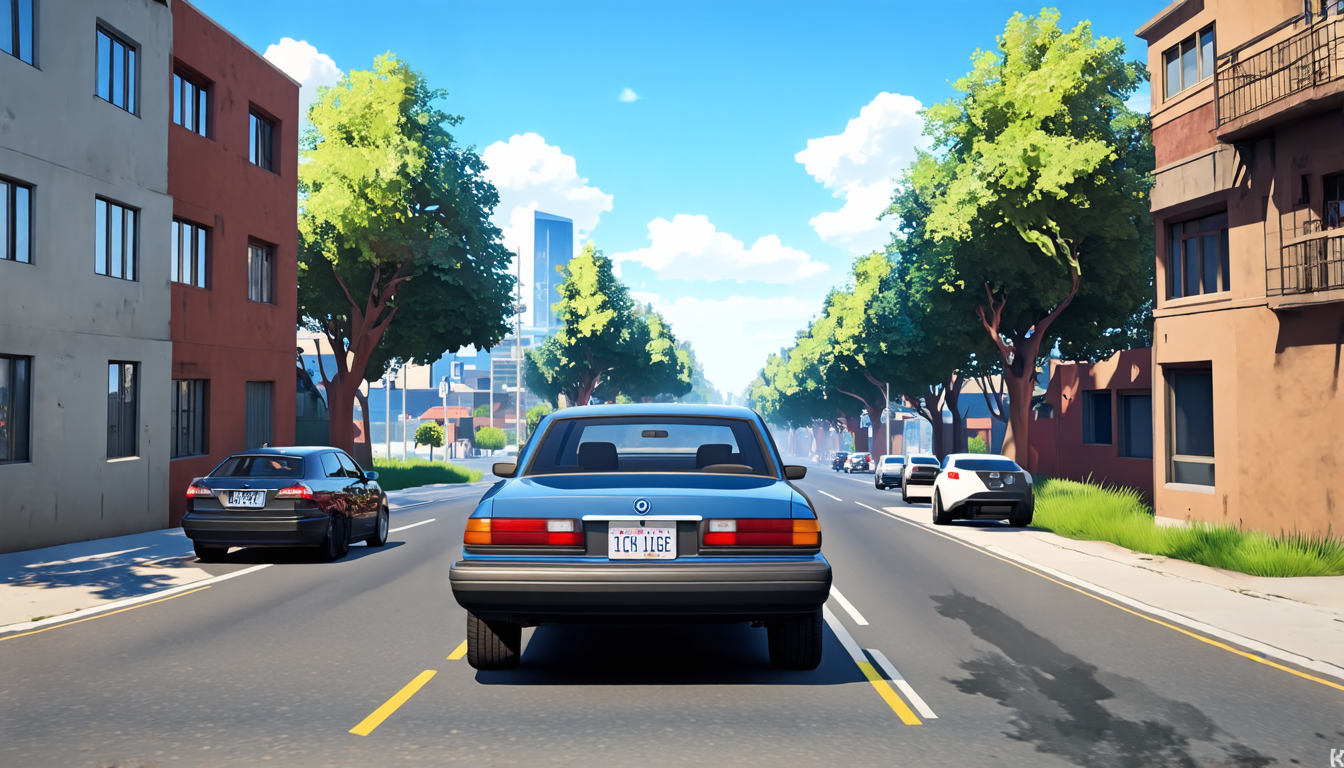
The need for effective image anonymization is more pressing than ever, particularly in the age of self-driving cars. These vehicles rely on street view images to navigate roads, but these images often contain sensitive information like license plates, building addresses, and pedestrians’ identities. To address this issue, researchers have been working on developing techniques that can safely anonymize these images while preserving their utility.
SVIA is a significant improvement over existing methods, which typically sacrifice either image quality or privacy protection in order to achieve the other goal. By combining multiple neural networks, SVIA can generate images that are not only visually indistinguishable from the originals but also stripped of sensitive information.
The framework consists of three main components: a semantic segmenter, an inpainter, and a harmonizer. The semantic segmenter breaks down an input image into functional regions like roads, buildings, and pedestrians. The inpainter then generates alternative versions of these regions to replace the original ones. Finally, the harmonizer combines the modified regions into a single, cohesive image.
The results are impressive: SVIA can anonymize street view images with high accuracy while preserving their utility for self-driving applications. In experiments, the framework outperformed existing methods in terms of both image quality and privacy protection.
One of the key advantages of SVIA is its ability to preserve the context and semantics of the original images. This means that the anonymized images can still be used for tasks like object detection and segmentation, which rely on the presence of specific features like roads and buildings.
Another significant benefit is SVIA’s flexibility: it can be easily adapted to different scenarios and applications. For example, the framework could be modified to prioritize image quality over privacy protection in certain situations or vice versa.
While SVIA represents a major milestone in the development of image anonymization techniques, there are still challenges to overcome before it can be widely adopted. One of these is the need for more efficient algorithms that can process large datasets quickly and effectively.
Despite this challenge, SVIA has significant implications for the future of self-driving cars and other applications that rely on street view images. By providing a powerful tool for anonymizing these images, researchers have taken an important step towards ensuring the privacy and safety of individuals whose identities are at risk of being exposed.
Cite this article: “Breakthrough in Image Anonymization: SVIA Framework Preserves Quality and Privacy”, The Science Archive, 2025.
Image Anonymization, Svia, Neural Networks, Street View Images, Self-Driving Cars, Privacy Protection, Image Quality, Semantic Segmentation, Inpainting, Harmonization





