

Sunday 09 March 2025
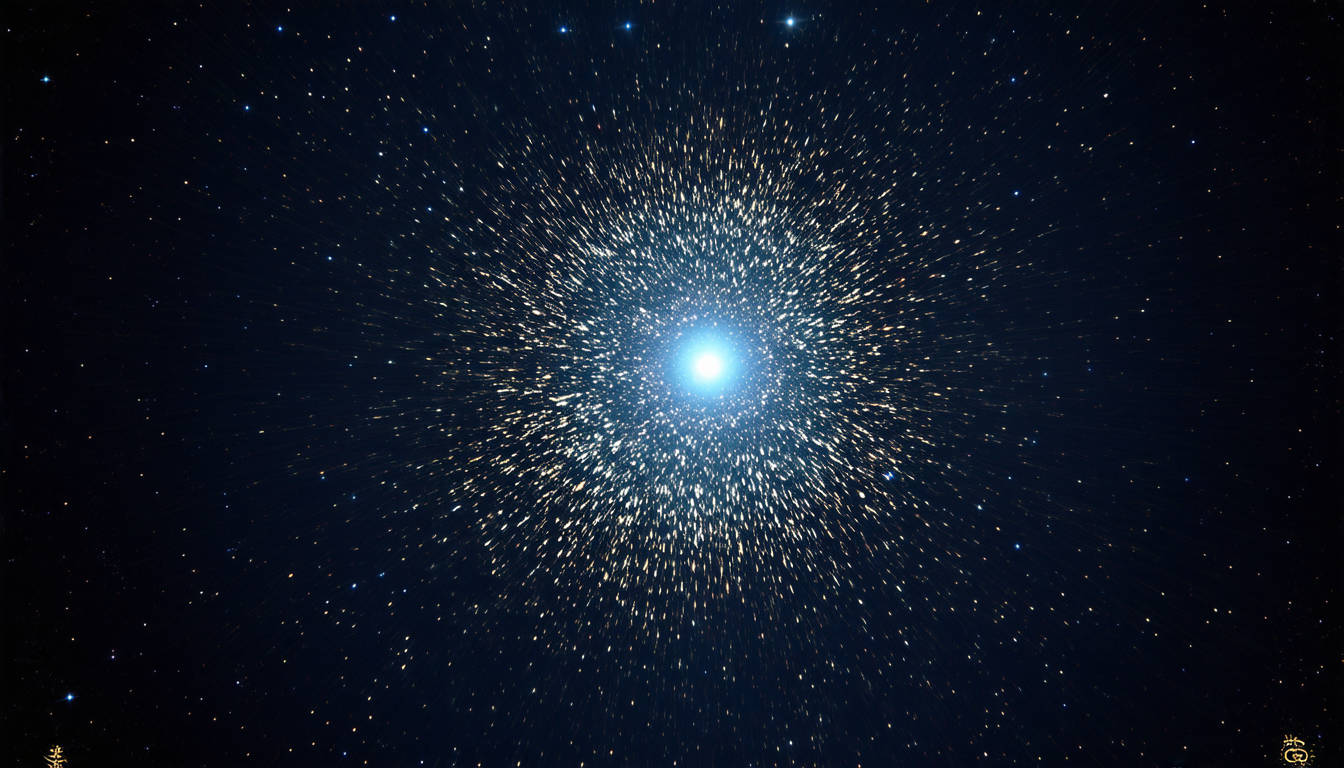
A team of astronomers has made a significant discovery about the formation and evolution of globular clusters, ancient groups of stars that are found in the Milky Way galaxy.
Globular clusters are thought to have formed around 10 billion years ago, during the early days of the universe. They are tightly packed collections of hundreds of thousands of stars, held together by gravity. Despite their age, these clusters still contain many young and massive stars, which suggests that they must have undergone some kind of rejuvenation.
Researchers have long been puzzled by the presence of multiple populations within globular clusters. These populations have different chemical compositions and are thought to have formed at different times. The exact mechanisms behind this process are not well understood, but scientists believe that it may be related to the way in which stars form and die within these clusters.
Using data from the MUSE instrument on the Very Large Telescope in Chile, a team of astronomers has been able to study the properties of individual stars within globular clusters. They have found that the metallicity, or chemical composition, of these stars varies significantly across different regions of each cluster.
The researchers used a technique called chromosome mapping to analyze the data from MUSE. This involves dividing the stars in each cluster into distinct populations based on their colors and brightnesses. By doing this, they were able to identify areas within each cluster where the metallicity was higher or lower than average.
The team found that the metallicity variations are not random, but instead follow a specific pattern. The regions with higher metallicities tend to be found near the centers of the clusters, while those with lower metallicities are more common towards the edges. This suggests that there may have been some kind of mixing process at work within each cluster, where material from one region was able to flow into another.
The findings of this study provide new insights into the formation and evolution of globular clusters. They suggest that these clusters may have undergone a complex sequence of events over their lifetimes, including periods of intense star formation and destruction.
Further research is needed to fully understand the mechanisms behind the metallicity variations within globular clusters. However, the results of this study are an important step forward in our understanding of these enigmatic objects. They also highlight the power of advanced astronomical instruments like MUSE, which are enabling scientists to study the properties of individual stars within distant galaxies.
Cite this article: “Unveiling the Secrets of Globular Clusters Formation and Evolution”, The Science Archive, 2025.
Globular Clusters, Star Formation, Metallicity, Chemical Composition, Very Large Telescope, Muse Instrument, Chromosome Mapping, Astronomical Instruments, Galaxy Evolution, Star Death.





