

Sunday 09 March 2025
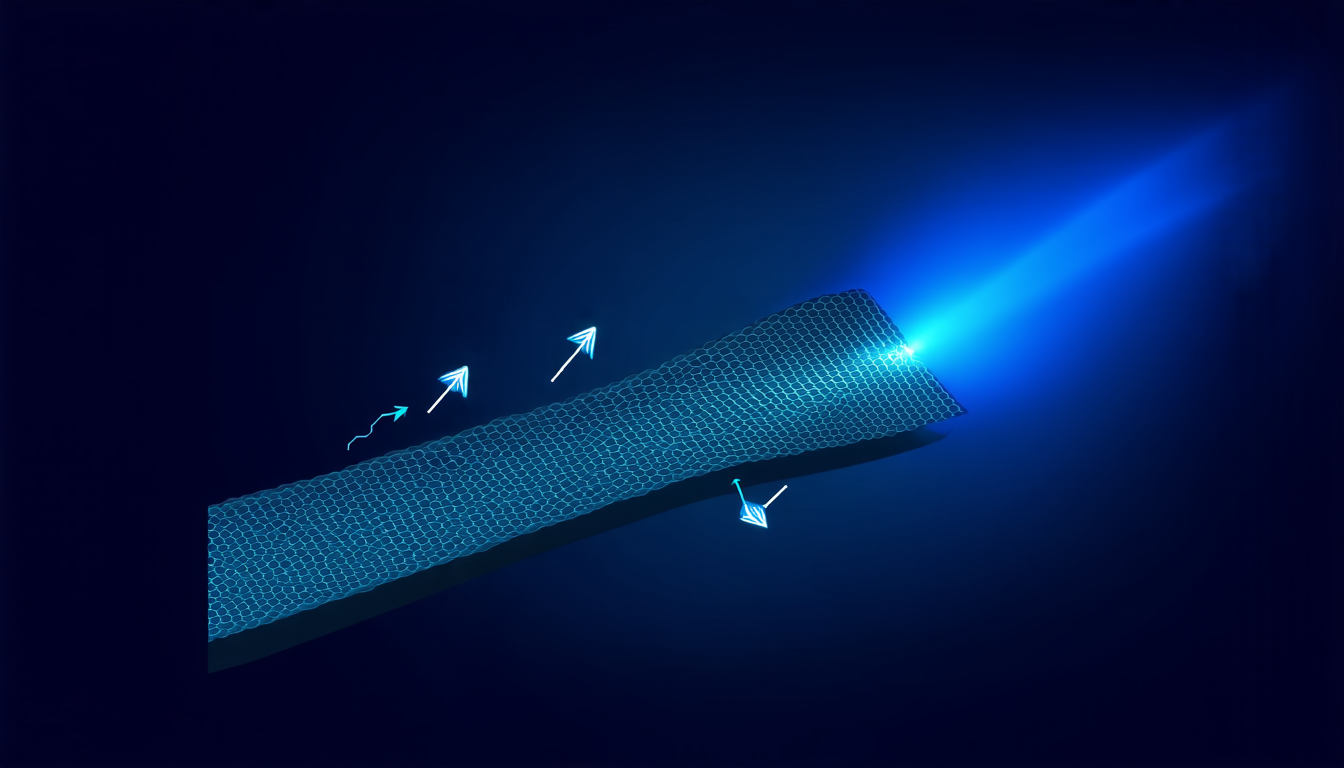
Scientists have made a significant breakthrough in understanding the behavior of twisted bilayer graphene, a material that has been at the forefront of research in recent years. By using a novel technique to induce magnetism in the material, researchers were able to observe a phenomenon known as magnetic injection photocurrents.
Twisted bilayer graphene is a unique material composed of two layers of carbon atoms stacked on top of each other at a specific angle. This twisting creates a moiré pattern, which gives rise to new electronic properties that are not present in individual layers of graphite. Researchers have been fascinated by the potential applications of this material, including its ability to exhibit superconductivity and other exotic behaviors.
In their study, scientists used a technique called valley-polarized current injection to induce magnetism in twisted bilayer graphene. This involved injecting electrons with specific properties into the material, which caused the atoms to align in a particular way, creating a magnetic field.
The researchers then used terahertz photocurrent spectroscopy to measure the response of the material to light. They found that when they shone light on the material, it produced a current that was dependent on the frequency and polarization of the light. This effect is known as magnetic injection photocurrents.
The significance of this discovery lies in its potential applications. Magnetic injection photocurrents could be used to create more efficient solar cells and other optoelectronic devices. Additionally, the ability to control the behavior of twisted bilayer graphene using magnetism opens up new possibilities for studying the material’s properties and developing new technologies.
One of the most exciting aspects of this research is its potential to shed light on some of the fundamental mysteries of quantum mechanics. Twisted bilayer graphene is a complex system that exhibits many unusual behaviors, including superconductivity and other exotic phenomena. By studying the behavior of magnetic injection photocurrents in this material, researchers may be able to gain new insights into the underlying physics that govern these behaviors.
The study also highlights the importance of interdisciplinary research. The scientists involved in this project came from a variety of backgrounds, including materials science, condensed matter physics, and electrical engineering. Their collaboration allowed them to bring together different areas of expertise and tackle complex problems from multiple angles.
As researchers continue to explore the properties of twisted bilayer graphene, they are likely to uncover even more surprising and exciting phenomena.
Cite this article: “Unlocking the Secrets of Twisted Bilayer Graphene: Magnetic Injection Photocurrents and Beyond”, The Science Archive, 2025.
Twisted Bilayer Graphene, Magnetism, Photocurrents, Solar Cells, Optoelectronics, Quantum Mechanics, Superconductivity, Moiré Pattern, Valley-Polarized Current Injection, Terahertz Spectroscopy





