

Monday 10 March 2025
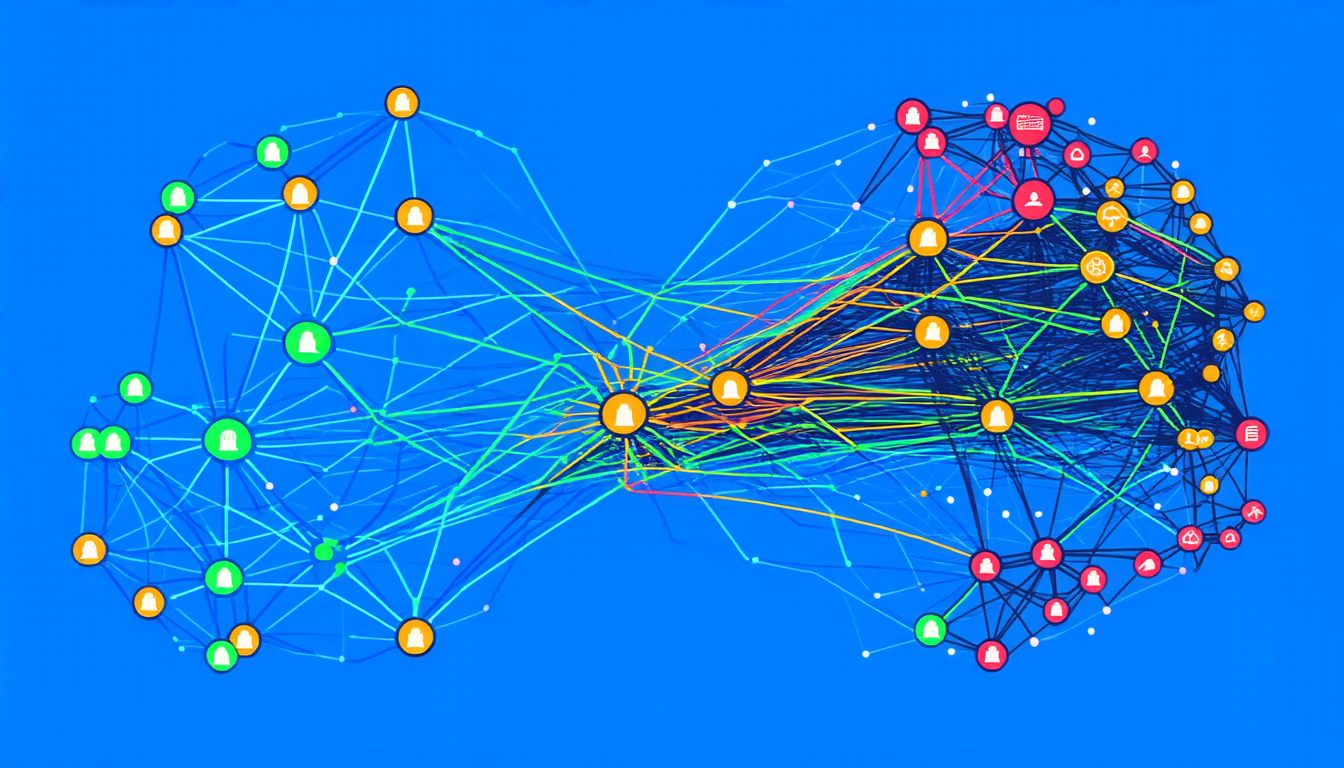
Scientists have made a significant breakthrough in understanding how to accurately model complex networks that evolve over time. These types of networks are ubiquitous in modern life, from social media platforms to communication networks and even biological systems.
The key challenge is that these networks are dynamic, meaning their structure changes over time as new relationships form or existing ones fade away. This makes it difficult to predict how they will behave in the future and understand their underlying properties.
To address this issue, researchers have developed a new algorithm that can efficiently sample synthetic networks that preserve the essential features of real-world temporal networks. These features include not only the overall structure of the network but also the timing and order of events within it.
The algorithm is based on a technique called NeSt (Network Sampling with Temporal Preservation), which uses a combination of static and dynamic randomization to create synthetic networks that mimic the behavior of real-world systems. The approach is flexible enough to be applied to different types of networks, from undirected social networks to directed communication networks.
To test the algorithm’s effectiveness, researchers analyzed its performance on several real-world datasets, including online social media platforms, email communication networks, and biological systems. They found that NeSt was able to accurately preserve key properties such as node centrality, edge persistence, and burstiness – a measure of how unevenly nodes are active over time.
In particular, the algorithm performed well in preserving causal triangles – patterns where three nodes interact with each other in a specific order over time – which are important for understanding how information spreads through networks. It also maintained the integrity of temporal bursts, or periods of intense activity followed by quiet periods, which are common in many biological and communication systems.
The researchers believe that NeSt has significant potential applications in fields such as epidemiology, economics, and social network analysis. By generating synthetic networks that accurately capture the dynamics of real-world systems, they can help scientists better understand how these systems function and make more accurate predictions about their behavior.
For example, in epidemiology, NeSt could be used to generate simulated networks of disease transmission, allowing researchers to test different scenarios and interventions without having to rely on real-world data. In economics, the algorithm could be applied to study the spread of financial information through networks, helping policymakers better understand how markets function and make more informed decisions.
Overall, the development of NeSt represents a significant step forward in understanding complex temporal networks and has the potential to revolutionize our ability to analyze and model these systems.
Cite this article: “Simulating Dynamic Networks with Accuracy: Introducing NeSt”, The Science Archive, 2025.
Complex Networks, Dynamic Networks, Temporal Networks, Network Sampling, Synthetic Networks, Social Media Platforms, Communication Networks, Biological Systems, Epidemiology, Economics, Nest Algorithm





