

Monday 10 March 2025
Scientists have made a significant breakthrough in understanding how composite materials behave under different types of stress. Composites are used in everything from airplanes and cars to sports equipment and even medical devices, but they can be tricky to work with because their properties change depending on how they’re loaded.
Researchers have been studying the behavior of composites by simulating different loading conditions using computer models. These simulations allow them to see how the materials react to stress, strain, and other factors that affect their performance. But until now, these simulations have been limited in their ability to accurately predict how composites will behave under certain conditions.
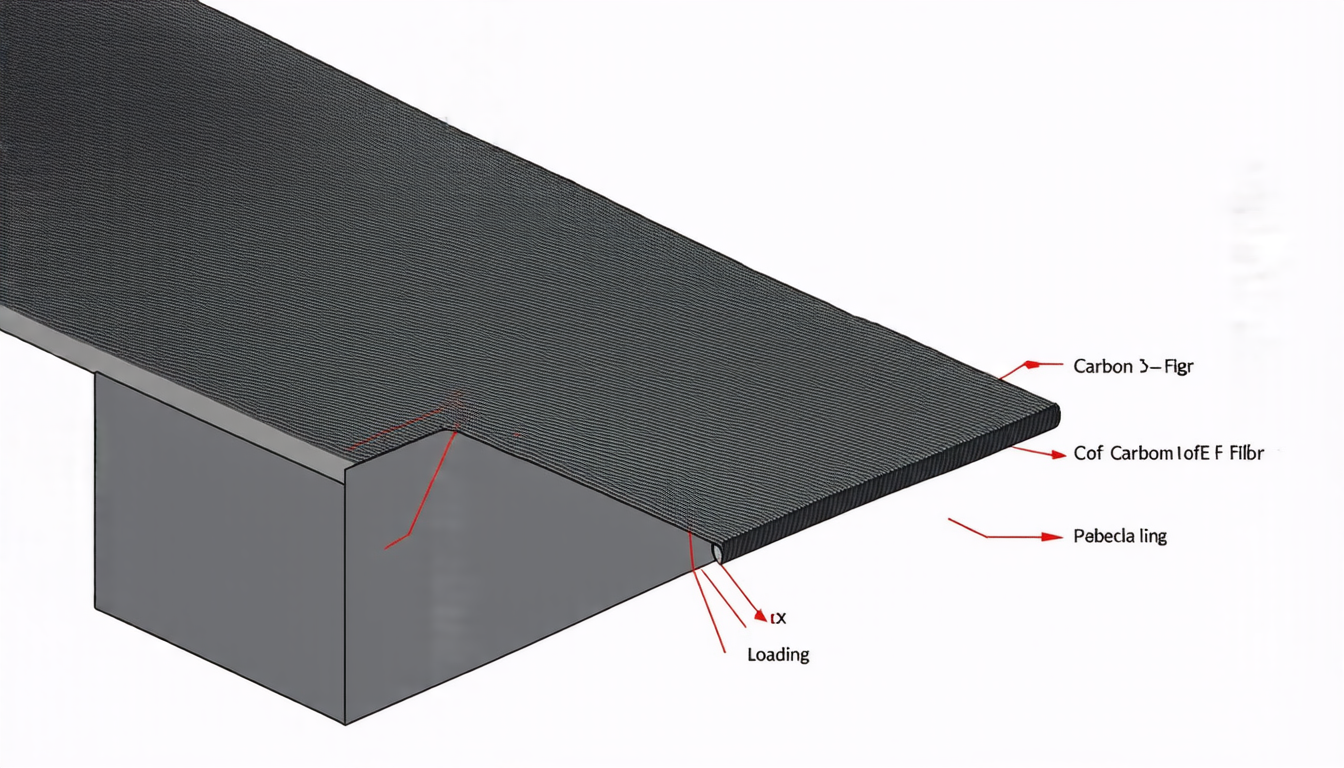
The new study uses a technique called surrogate-based multiscale analysis to simulate the behavior of composites. This method involves creating a simplified model of the material’s behavior using data from experiments and other sources. The model is then used to predict how the material will react to different loading conditions, including off-axis loading, which is when the stress is applied at an angle to the material.
The researchers found that their new technique was able to accurately predict the behavior of composites under off-axis loading. This is important because off-axis loading can cause materials to fail in unexpected ways, leading to costly and time-consuming repairs or even catastrophic failures.
The study also highlights the importance of considering the microscale properties of composite materials when designing them. The researchers found that by taking into account the behavior of individual fibers and other components at the microscale level, they were able to create more accurate predictions of how the material would behave under different loading conditions.
This breakthrough has significant implications for the design and development of new composite materials. By using surrogate-based multiscale analysis, engineers will be able to create more accurate simulations of how composites will behave in real-world applications, leading to better performance, reduced costs, and improved safety.
The research also opens up new possibilities for the use of composites in a wide range of industries, from aerospace to automotive. With the ability to accurately predict how composites will behave under different loading conditions, engineers can design lighter, stronger, and more efficient structures that are better suited to their intended purpose.
Overall, this study marks an important step forward in our understanding of composite materials and their behavior under different types of stress. By combining experimental data with advanced computer simulations, researchers are able to create a more complete picture of how these materials work, leading to breakthroughs like this one that have the potential to transform industries and improve lives.
Cite this article: “Accurate Simulations of Composite Material Behavior Under Different Loading Conditions”, The Science Archive, 2025.
Composite Materials, Multiscale Analysis, Surrogate-Based Modeling, Stress, Strain, Off-Axis Loading, Microscale Properties, Fiber Reinforcement, Material Behavior, Simulation Accuracy





