

Monday 10 March 2025
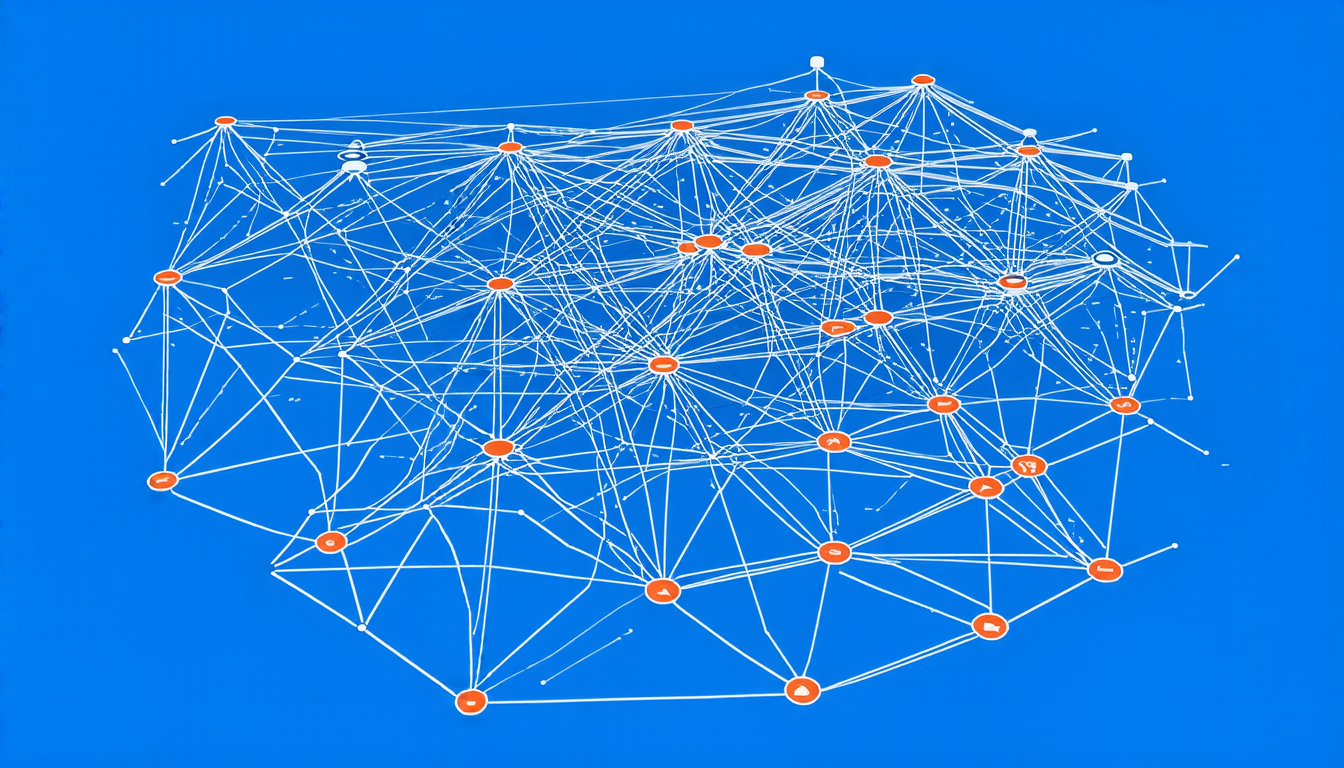
The intricate dance of edges and vertices in a graph can be a mesmerizing sight, but it’s also a complex problem to solve. Researchers have been working tirelessly to crack the code of 1-planarity, a concept that involves drawing these graphs on a flat plane without any edge crossings.
Recently, scientists have made significant progress in understanding the properties of maximal NIC-plane graphs, which are graphs that cannot be further simplified without losing their 1-planar structure. These graphs are particularly interesting because they can be used to model complex systems and networks in various fields, from biology to computer science.
One major breakthrough has been the discovery of a lower bound for the number of edges in these maximal NIC-plane graphs. This means that researchers can now set a minimum threshold for the complexity of these graphs, which will help them identify the most efficient and effective ways to draw them on a plane.
The study also sheds light on the properties of hermits, which are vertices that are not part of any edge in the graph. Hermits play a crucial role in determining the 1-planarity of a graph, and understanding their behavior is essential for developing more accurate algorithms for drawing these graphs.
Another important finding is that there are certain patterns and structures that emerge when analyzing the distribution of edges and vertices in maximal NIC-plane graphs. These patterns can be used to develop new techniques for identifying and avoiding edge crossings, which will make it easier to draw these graphs on a plane without any errors.
The researchers’ work has far-reaching implications for various fields, including computer science, biology, and physics. For instance, their findings could lead to the development of more efficient algorithms for solving complex problems in computer networks, or new ways of modeling biological systems and understanding their behavior.
In addition, the study’s results have sparked new questions and avenues of research, such as exploring the properties of 1-planar graphs with different numbers of vertices and edges. This could lead to a deeper understanding of the underlying mathematics behind these complex structures, and potentially uncover new applications for them in various fields.
Overall, this breakthrough has opened up new possibilities for researchers to explore the fascinating world of 1-planarity, and its implications are sure to be felt across many disciplines.
Cite this article: “Unlocking the Secrets of 1-Planarity: A Breakthrough in Graph Theory”, The Science Archive, 2025.
Graph Theory, Planarity, Edges, Vertices, Nic-Plane Graphs, Hermits, Algorithms, Computer Science, Biology, Physics.
Reference: Zongpeng Ding, Yuanqiu Huang, Fengming Dong, “Maximal NIC-plane graphs” (2025).





