

Monday 10 March 2025
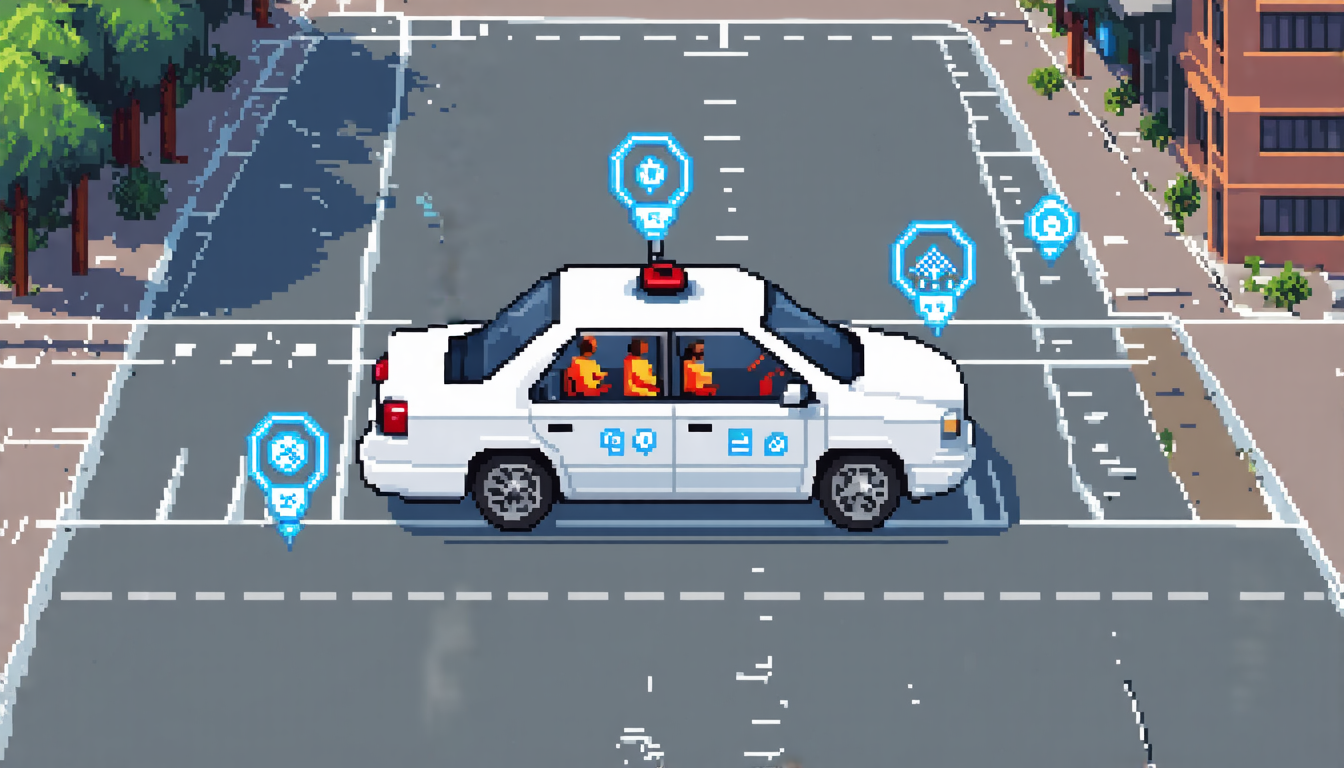
As autonomous vehicles navigate through unknown environments, they rely on sensors to gather information about their surroundings. But what if these sensors could be strategically placed to minimize exposure to hazardous conditions? Researchers have developed a novel approach that combines sensor placement and path planning to optimize navigation.
The system, known as Active Coupled Sensor Configuration and Planning (A-CSCP), uses mutual information to determine the most informative locations for sensors to collect data. This information is then used to plan the optimal path for an autonomous vehicle to take while minimizing exposure to threats such as extreme weather or harmful substances.
In a recent study, scientists tested A-CSCP on a simulated environment with multiple sensors and an autonomous vehicle moving at a constant speed. They found that the system significantly reduced the vehicle’s exposure to hazardous conditions compared to traditional methods.
One of the key advantages of A-CSCP is its ability to adapt to changing environments. As the autonomous vehicle moves through the environment, it can reconfigure sensor placement in real-time to optimize data collection and minimize risk.
The study’s findings have implications for a range of applications, from search and rescue missions to environmental monitoring. By strategically placing sensors and planning optimal routes, A-CSCP could help autonomous vehicles navigate complex environments more efficiently and safely.
In the future, researchers plan to further refine A-CSCP by incorporating additional factors such as communication costs and sensor limitations. They also hope to test the system in real-world scenarios to demonstrate its effectiveness in practical applications.
Overall, A-CSCP represents a significant step forward in the development of autonomous systems that can operate effectively in uncertain environments. By combining sensor placement and path planning, researchers are creating more efficient and safer navigation strategies for vehicles and other robots.
Cite this article: “Optimizing Autonomous Navigation Through Sensor Placement and Path Planning”, The Science Archive, 2025.
Autonomous Vehicles, Sensor Placement, Path Planning, Mutual Information, Hazardous Conditions, Extreme Weather, Environmental Monitoring, Search And Rescue, Real-Time Adaptation, Uncertain Environments





