

Monday 10 March 2025
Researchers have been studying the behavior of particles at the molecular level for decades, trying to understand how they move and interact with their surroundings. But despite significant advances in this field, there’s still much to be learned about the complex dynamics that govern these tiny systems.
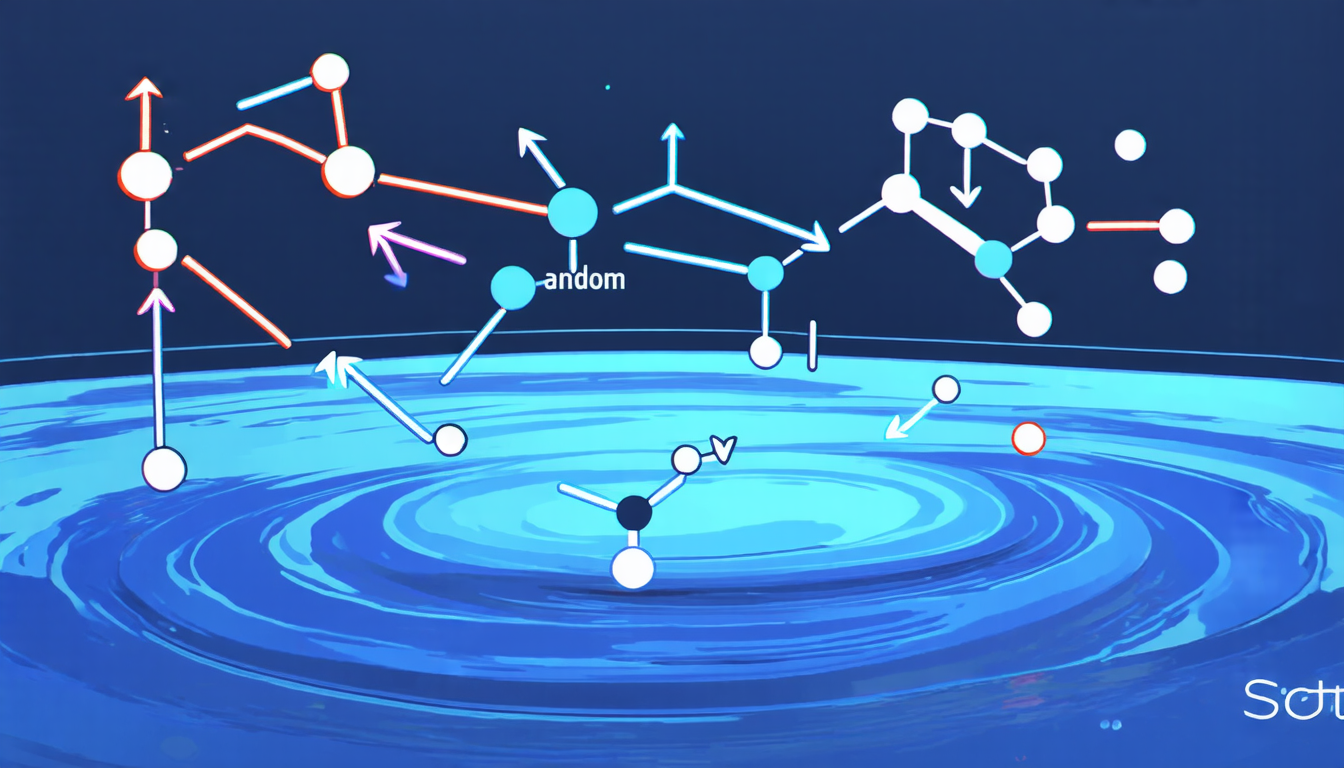
One area where scientists are still struggling to gain a deeper understanding is in the realm of anomalous diffusion, a phenomenon where particles exhibit non-random motion patterns that can’t be explained by traditional models. In other words, instead of moving randomly and uniformly, particles might start speeding up or slowing down at random intervals, making it difficult to predict their future behavior.
A team of researchers from Colorado State University has been working on developing new methods to analyze these complex systems, with a focus on identifying the underlying mechanisms that drive anomalous diffusion. By using advanced mathematical techniques and computer simulations, they’ve managed to shed some light on this mysterious phenomenon and develop more accurate models for predicting particle behavior.
The team’s approach involves analyzing the statistics of particle motion over time, looking for patterns and correlations that might indicate the presence of anomalous diffusion. They use a combination of theoretical models and computational methods to simulate the behavior of particles in different environments, from simple fluids to complex biological systems.
One key finding is that anomalous diffusion can occur even when particles are moving through seemingly uniform environments. For example, researchers have observed anomalous diffusion in the motion of proteins within cells, where the surrounding fluid appears to be homogeneous but the protein molecules exhibit non-random movement patterns.
Another important discovery is that these complex systems often involve multiple scales of behavior, with particles exhibiting different types of motion at different time and spatial scales. This makes it challenging to develop accurate models that can capture all the relevant aspects of particle behavior.
To overcome this challenge, the researchers have developed a new method for analyzing the statistics of particle motion, which involves using advanced mathematical techniques to identify patterns in the data. They’ve also created computer simulations that mimic the behavior of particles in different environments, allowing them to test their models and refine their understanding of anomalous diffusion.
The implications of this research are far-reaching, with potential applications in fields such as biology, chemistry, and materials science. By developing more accurate models for predicting particle behavior, researchers can better understand complex systems and design new materials or therapies that take advantage of these unique properties.
Cite this article: “Unlocking the Secrets of Anomalous Diffusion”, The Science Archive, 2025.
Anomalous Diffusion, Particle Motion, Molecular Level, Statistical Analysis, Computer Simulations, Mathematical Models, Complex Systems, Biomolecules, Materials Science, Fluid Dynamics





