
Monday 10 March 2025
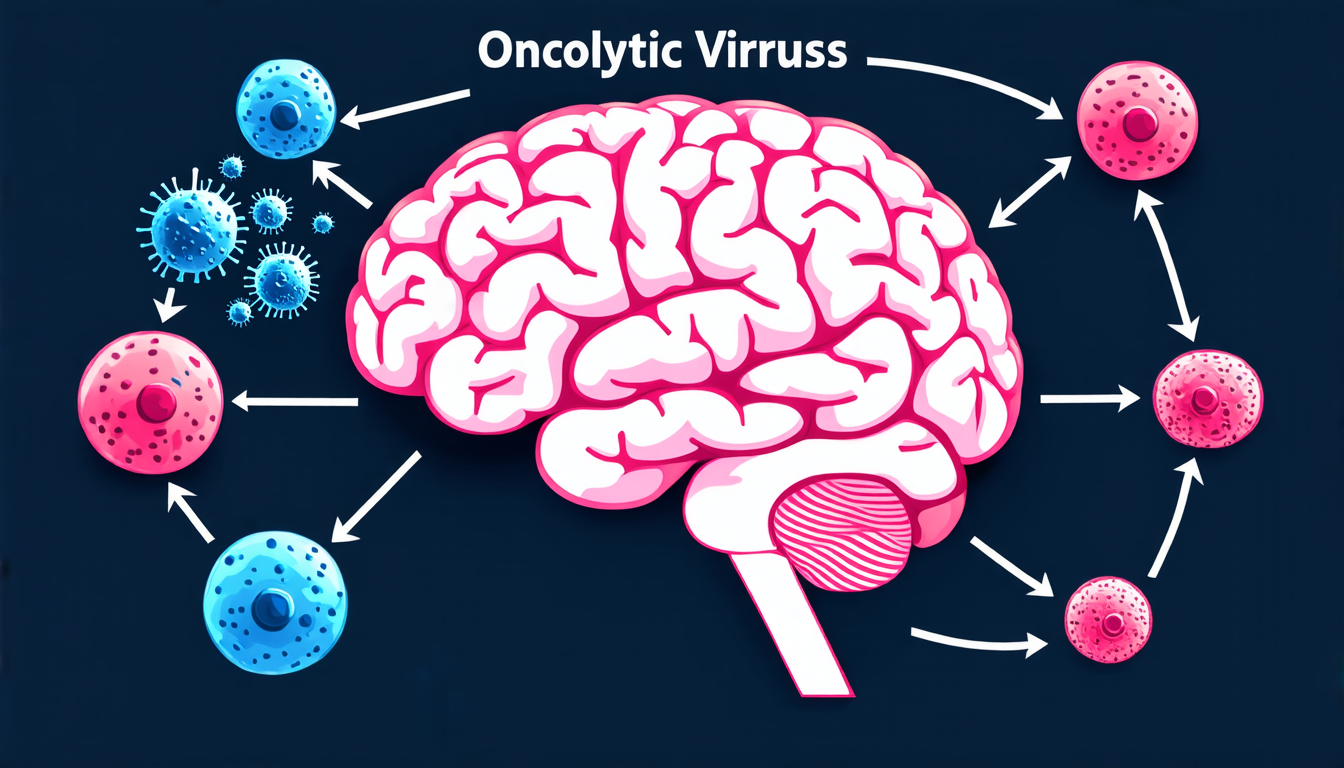
Scientists have made a significant breakthrough in understanding how our immune system responds to cancer treatments, particularly oncolytic viruses that target and destroy tumor cells. By developing a complex mathematical model that combines insights from biology, ecology, and artificial intelligence, researchers have shed light on the intricate dynamics of this process.
The study focused on a type of virus that can selectively infect and kill cancer cells while sparing healthy ones. This approach has shown promise in clinical trials, but there’s still much to be learned about how it works and why some patients respond better than others.
To tackle this challenge, researchers turned to a novel mathematical framework known as the Generalized Lotka-Volterra (GLV) model. This equation-based system allows scientists to simulate and predict the behavior of complex biological systems, such as the interactions between cancer cells, immune cells, and viruses.
The research team used machine learning algorithms to analyze gene expression data from patients with glioblastoma, a type of brain cancer. They identified key genes involved in T-cell regulation, cytokine production, and apoptosis (programmed cell death), which are all critical for the immune response against cancer.
These findings were then integrated into the GLV model, allowing researchers to simulate the dynamics of oncolytic virus therapy in different scenarios. The results showed that the model accurately predicted the outcomes of treatment, including the emergence of resistant tumor cells and the role of specific genes in modulating the immune response.
One of the most significant insights from this study is the recognition of a complex interplay between multiple pathways involved in cancer immunotherapy. The researchers found that certain gene signatures are associated with improved patient responses to oncolytic virus therapy, while others predict poorer outcomes.
For example, genes involved in T-cell differentiation and activation were linked to better treatment responses, whereas genes related to immune suppression and apoptosis were correlated with poor outcomes. These findings have important implications for the development of personalized cancer therapies that target specific molecular pathways.
The study’s authors also used a technique called gene set enrichment analysis to identify biological processes and pathways that are enriched in their dataset. This approach helped them identify key functional categories, such as cytokine signaling and matrix metalloproteinase activity, which are relevant to cancer immunotherapy.
Overall, this research represents a significant step forward in understanding the complex interactions between cancer cells, immune cells, and viruses during oncolytic virus therapy.
Cite this article: “Elucidating the Immune Response to Oncolytic Viruses: A Mathematical Modeling Approach”, The Science Archive, 2025.
Immune System, Cancer Treatments, Oncolytic Viruses, Mathematical Model, Generalized Lotka-Volterra Model, Machine Learning Algorithms, Gene Expression Data, Glioblastoma, Brain Cancer, Personalized Cancer Therapies