

Tuesday 11 March 2025
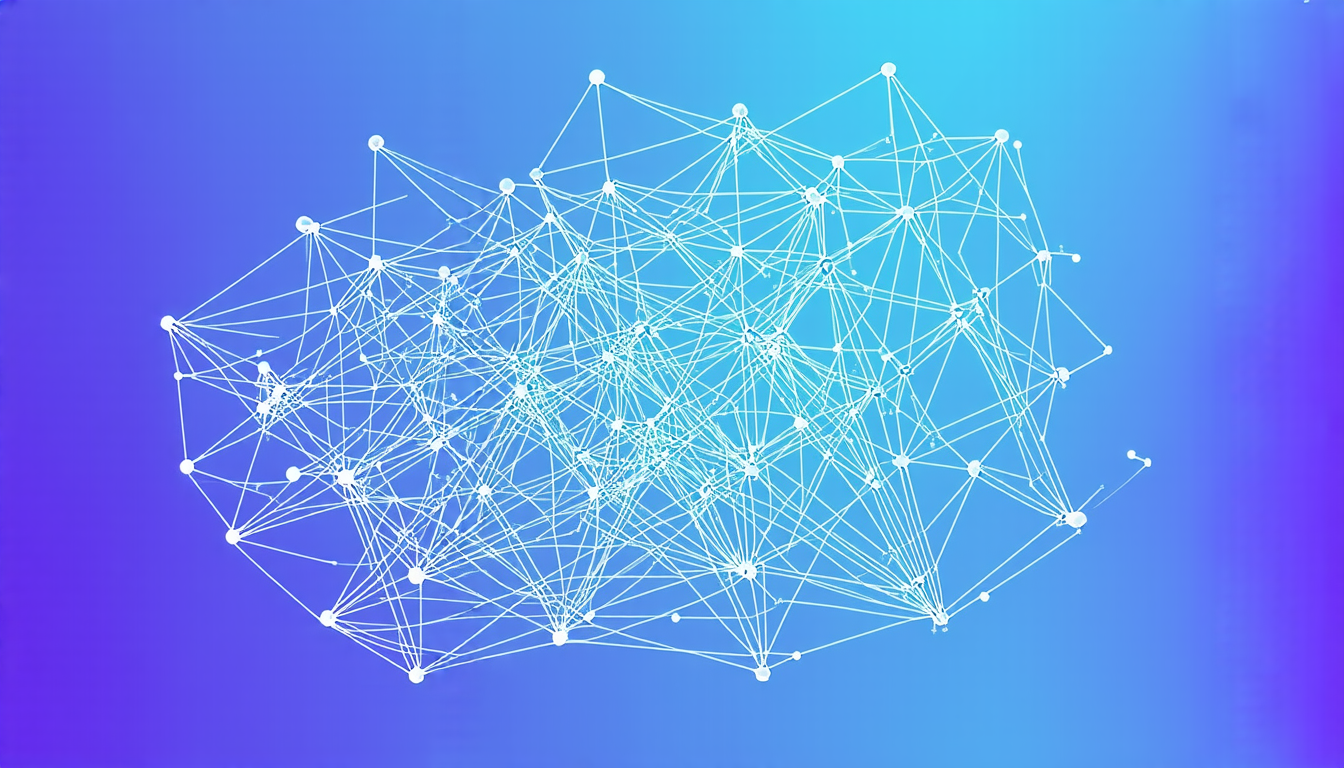
Researchers have made a significant breakthrough in understanding the complex structures of graphs, which are mathematical representations of networks and relationships between objects. By developing new methods for analyzing these graphs, scientists hope to uncover hidden patterns and connections that could reveal important insights into everything from social media networks to biological systems.
Graph theory is a branch of mathematics that studies how nodes or vertices are connected by edges. In the past decade, researchers have been particularly interested in understanding the properties of graphs with bounded treewidth, which refers to the maximum number of nodes in a tree-like subgraph. This property has implications for many real-world applications, such as network optimization and data compression.
One of the key challenges in studying graphs is that they can be extremely complex, with millions or even billions of nodes and edges. To tackle this problem, researchers have developed techniques for simplifying these networks while preserving their essential features. One approach is to identify clusters of nodes that are highly connected to each other, and then treat these clusters as single units.
In a recent study, scientists used this approach to develop new methods for analyzing graphs with bounded treewidth. They showed that by identifying clusters of nodes that are highly connected to each other, they could significantly reduce the complexity of the graph while preserving its essential features. This allowed them to uncover patterns and connections that would have been difficult or impossible to detect using traditional methods.
The researchers also developed new algorithms for computing the treewidth of a graph, which is a measure of how well the graph can be simplified without losing important information. These algorithms are much faster than previous methods, making it possible to analyze large-scale graphs in a reasonable amount of time.
The implications of this research are far-reaching and could have significant impacts on many fields. For example, social media networks could be analyzed more effectively to understand how ideas spread and communities form. In biology, the study of gene regulatory networks could lead to new insights into the mechanisms of disease and the development of novel treatments.
Overall, the researchers’ work represents a major advance in our understanding of complex systems and has significant potential for applications across many fields. By developing more effective methods for analyzing graphs, scientists hope to uncover hidden patterns and connections that will ultimately benefit society as a whole.
Cite this article: “Unlocking Complex Systems: New Methods for Analyzing Graphs”, The Science Archive, 2025.
Graphs, Mathematics, Network Analysis, Social Media, Biology, Gene Regulatory Networks, Complex Systems, Graph Theory, Treewidth, Algorithms
Reference: Robert Hickingbotham, “Graphs quasi-isometric to graphs with bounded treewidth” (2025).





