

Tuesday 11 March 2025
Monitoring innovation is a complex task that requires a deep understanding of the underlying systems and processes. In recent years, researchers have been working on developing a web-based monitoring tool to track the performance of research, technology, and innovation (RTI) in various countries.
The new paper presents a three-tier software architecture for such a tool, comprising data collection, business logic, and user interfaces. The authors focus specifically on the dashboard module, which serves as the primary interface between users and the system.
To develop this monitoring tool, the researchers employed a viewpoint-guided requirements engineering process. This approach involves identifying stakeholders’ needs and expectations through a structured process. In this case, the stakeholders include policymakers, researchers, and industry professionals.
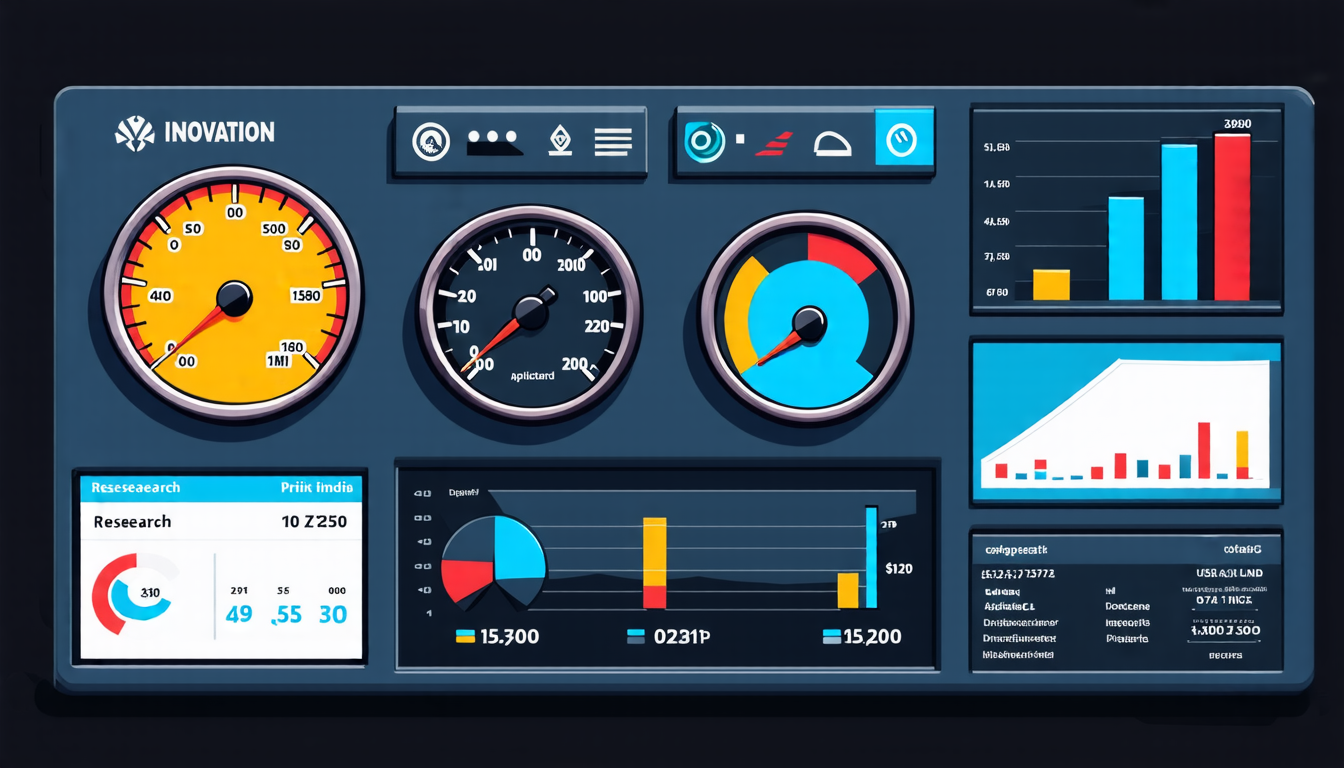
The resulting dashboard module is designed to provide intuitive visualizations of various indicators, including input and output metrics for different areas of RTI. The tool also includes a configuration module that allows administrators to customize the system without requiring extensive coding knowledge.
One of the key features of this monitoring tool is its ability to benchmark countries’ performance in terms of innovation. This involves comparing their rankings on various indicators with those of other countries. The authors argue that such benchmarks can help policymakers identify areas for improvement and develop targeted strategies to boost innovation.
The paper also highlights the importance of user-centered design in developing the dashboard module. By involving stakeholders throughout the development process, the researchers aimed to create a tool that meets their needs and expectations.
To illustrate the effectiveness of this approach, the authors present a case study based on the Austrian RTI monitor. This web-based tool provides real-time data on various indicators, including innovation rankings, research funding, and patent applications. The authors demonstrate how the dashboard module can be customized to provide tailored information for different stakeholders, such as policymakers or industry professionals.
Overall, this paper presents a comprehensive approach to developing a monitoring tool for RTI that is centered around user needs and expectations. By providing intuitive visualizations of various indicators and benchmarking countries’ performance in terms of innovation, the authors aim to support evidence-based policy-making and decision-making in the RTI community.
The development of this monitoring tool has significant implications for policymakers, researchers, and industry professionals alike. By providing a comprehensive overview of RTI performance, the tool can help identify areas for improvement and inform targeted strategies to boost innovation. As such, it is an important step towards creating a more innovative and competitive economy.
Cite this article: “Developing a Web-Based Monitoring Tool for Research, Technology, and Innovation Performance”, The Science Archive, 2025.
Monitoring, Innovation, Research, Technology, Policy-Making, Decision-Making, User-Centered Design, Benchmarking, Dashboard Module, Rti Performance





