

Tuesday 11 March 2025
Scientists have made a significant breakthrough in understanding how complex networks, such as those found in biological systems, evolve over time. The study sheds light on the role of duplication and divergence in shaping these networks, which are crucial for many fundamental biological processes.
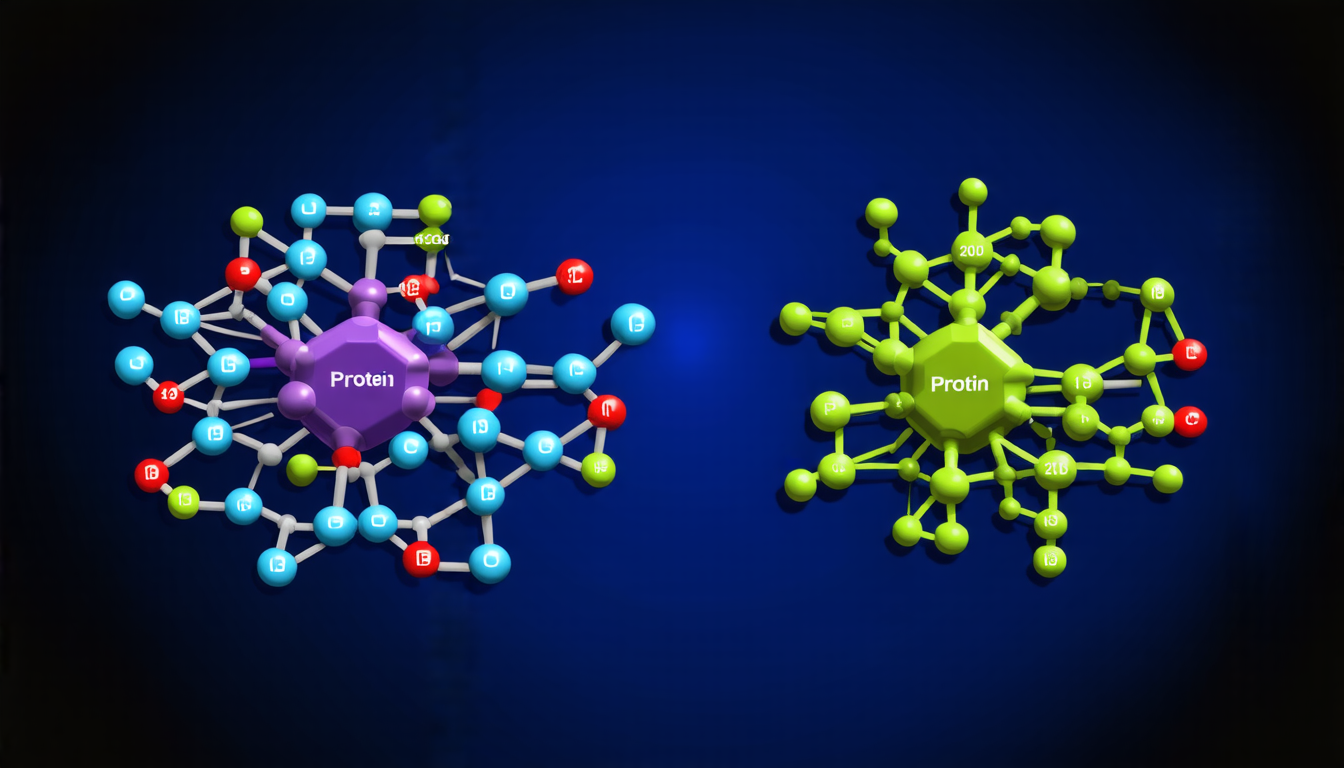
The researchers focused on two specific models that simulate the evolution of protein interaction networks. These networks are composed of proteins that interact with each other to perform various functions within cells. The models, known as Model A and Model B, mimic the process of duplication and divergence, where new proteins are created through duplication and then diverge into different forms.
By analyzing these models, scientists were able to identify key factors that influence the evolution of protein interaction networks. They found that the probability of a protein becoming isolated from the network increases as the number of interactions it has decreases. This is because proteins with fewer interactions are more likely to be disconnected from the network through random events such as edge deletions.
The researchers also discovered that the rate at which new proteins are created affects the overall structure of the network. When this rate is high, the network becomes more densely connected, leading to a higher proportion of isolated proteins. Conversely, when the rate is low, the network becomes less dense and fewer proteins become isolated.
These findings have significant implications for our understanding of biological systems. For example, they suggest that changes in gene expression or protein interactions could lead to the isolation of key proteins, potentially disrupting fundamental biological processes. This knowledge could be used to develop new therapeutic strategies for diseases caused by abnormalities in these networks.
The study also highlights the importance of considering the role of edge deletions in shaping the evolution of complex networks. Edge deletions are a common occurrence in many biological systems, where interactions between proteins or genes are lost over time due to various factors such as mutations or environmental changes.
By combining insights from these models with experimental data, scientists can gain a deeper understanding of how protein interaction networks evolve and how they contribute to the development of complex diseases. This knowledge could ultimately lead to more effective treatments for a range of conditions, including cancer, neurological disorders, and metabolic diseases.
The study’s findings also have broader implications for our understanding of complex systems in general. The researchers’ use of mathematical models to simulate the evolution of protein interaction networks provides a powerful tool for studying the behavior of complex systems in other fields, such as social networks or economic systems.
Cite this article: “Evolutionary Dynamics of Protein Interaction Networks”, The Science Archive, 2025.
Protein Interaction Networks, Biological Systems, Evolution, Duplication, Divergence, Protein Function, Gene Expression, Edge Deletions, Complex Diseases, Mathematical Models.





