

Tuesday 11 March 2025
Scientists have made a significant breakthrough in understanding how hydrogen interacts with metals, shedding light on a phenomenon that has puzzled researchers for decades.
Hydrogen embrittlement is a process where hydrogen gas reacts with metal surfaces, causing them to become brittle and prone to cracking. This can have devastating consequences, particularly in industries such as aerospace and energy, where the failure of critical components can be catastrophic.
Researchers have long struggled to understand why some metals are more susceptible to hydrogen embrittlement than others. The answer lies in the way that hydrogen molecules interact with the metal’s crystal structure.
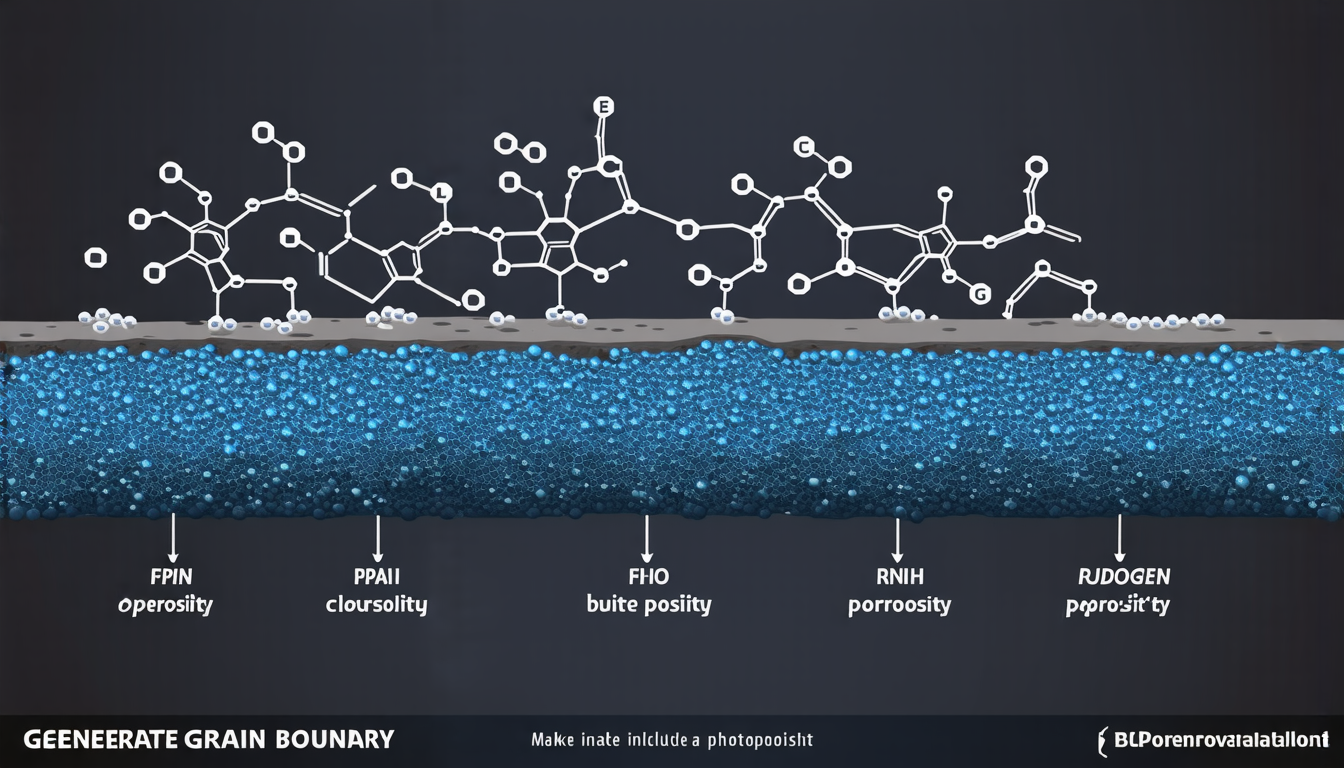
Using advanced computer simulations, scientists have been able to model the behavior of hydrogen molecules as they bond with metal atoms at grain boundaries – the areas where crystals meet and merge. These simulations revealed that the shape and size of the grain boundaries play a crucial role in determining how much hydrogen is absorbed by the metal.
The research shows that certain types of grain boundaries are more porous than others, allowing hydrogen molecules to seep into the metal more easily. This increases the likelihood of embrittlement occurring, leading to a significant reduction in the metal’s strength and durability.
In contrast, other grain boundaries are more dense and impermeable, making it harder for hydrogen molecules to penetrate the metal. These metals are less susceptible to embrittlement, maintaining their strength and integrity even when exposed to high levels of hydrogen.
The findings have significant implications for industries that rely on metals to withstand harsh environments. By selecting materials with grain boundaries that are resistant to hydrogen absorption, engineers can design components that are more durable and reliable.
Moreover, the research highlights the importance of understanding the intricate details of metal crystal structures. As scientists continue to develop new materials and technologies, a deeper appreciation for these fundamental properties will be crucial in ensuring their reliability and performance.
The study’s results also raise questions about the potential applications of this knowledge. Could it be used to create new materials that are more resistant to hydrogen embrittlement? Or perhaps even exploit this phenomenon to create novel materials with unique properties?
As researchers continue to explore the intricacies of metal-hydrogen interactions, one thing is clear: a deeper understanding of these processes will be essential in unlocking the full potential of metals and materials.
Cite this article: “Cracking the Code of Hydrogen Embrittlement”, The Science Archive, 2025.
Hydrogen, Embrittlement, Metal, Grain Boundaries, Crystal Structure, Simulation, Absorption, Porosity, Impermeability, Durability.





