

Tuesday 11 March 2025
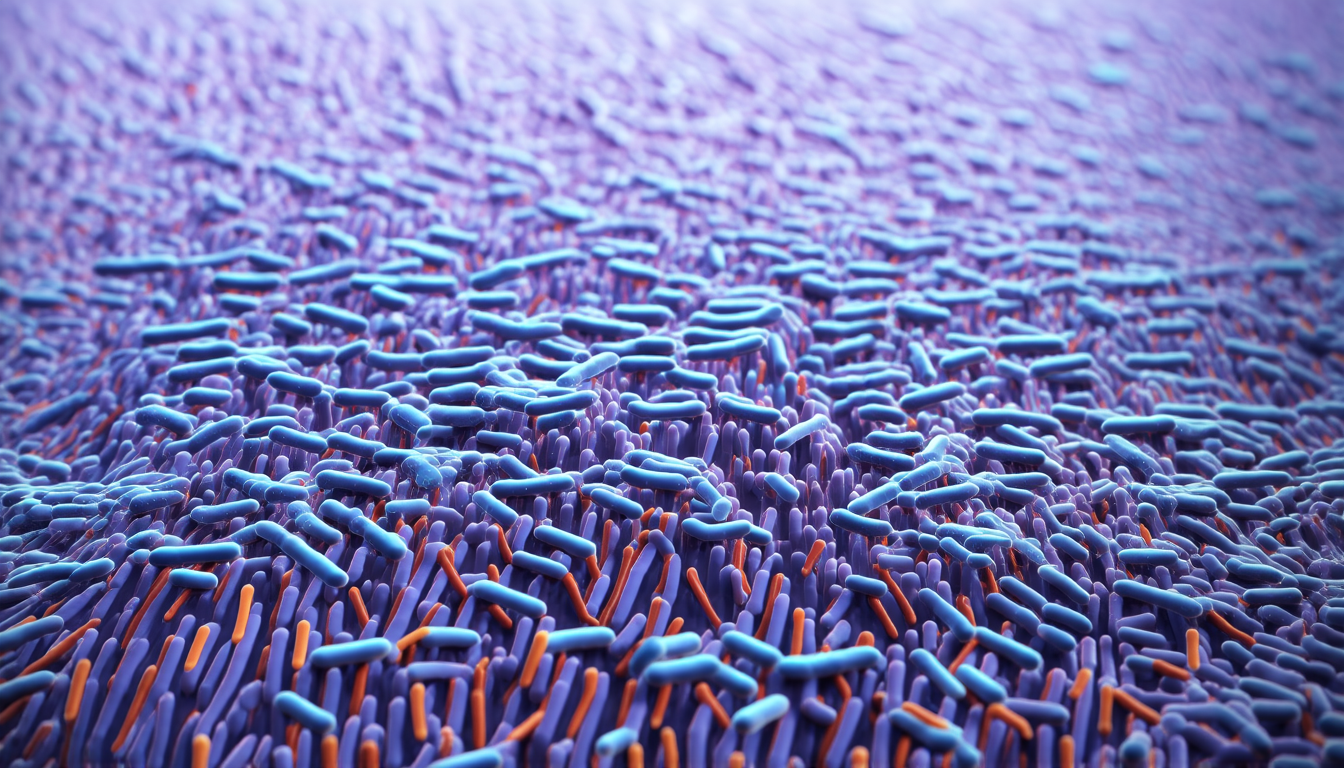
As researchers continue to unravel the intricacies of bacterial behavior, a new study sheds light on how cell shape influences the way bacteria grow and adapt in their environments. By simulating the growth of rod-like bacteria with varying aspect ratios, scientists have discovered that cells with longer shapes are more likely to sort themselves towards the periphery of the colony.
The team behind this research used computational models to simulate the growth of bacterial colonies over time, incorporating factors such as cell division rates and interactions between individual cells. By examining the resulting patterns, they found that cells with longer aspect ratios tended to cluster together at the edge of the colony, while shorter cells remained closer to the center.
This phenomenon is thought to be driven by a combination of mechanical interactions and active mixing dynamics within the colony. As the bacteria grow and divide, their cell walls interact with one another, creating local nematic order – a type of short-range orientational ordering. This ordering allows longer cells to more easily break through the radial microdomains that form near the periphery, allowing them to take advantage of advantageous positions.
In addition to these mechanical factors, the team also observed that active mixing dynamics play a crucial role in shaping the colony’s spatial structure. As shorter cells are swept towards the center by these flows, longer cells are able to anchor themselves tangentially at the periphery, reinforcing their dominance.
The implications of this research are far-reaching, as they suggest that cell shape may be a key factor in determining the success of different bacterial populations in various environments. For example, in situations where nutrients are limited, bacteria with longer shapes may have an advantage due to their ability to access more beneficial locations within the colony.
This study also highlights the importance of considering the role of mechanical interactions and active mixing dynamics in shaping the behavior of bacterial colonies. By incorporating these factors into our understanding of microbial ecology, scientists can gain a deeper appreciation for the complex ways in which bacteria adapt and evolve over time.
As researchers continue to explore the intricacies of bacterial biology, this study serves as a reminder of the importance of considering the interplay between mechanical interactions, active mixing dynamics, and cell shape in shaping the behavior of these microorganisms. By shedding light on the mechanisms driving phenotypic sorting within bacterial colonies, scientists can gain a better understanding of how bacteria adapt and evolve over time.
Cite this article: “Cell Shape Influences Bacterial Colony Structure and Growth Patterns”, The Science Archive, 2025.
Bacterial Growth, Cell Shape, Colony Formation, Mechanical Interactions, Active Mixing Dynamics, Nematic Order, Radial Microdomains, Spatial Structure, Microbial Ecology, Bacterial Behavior





