

Tuesday 11 March 2025
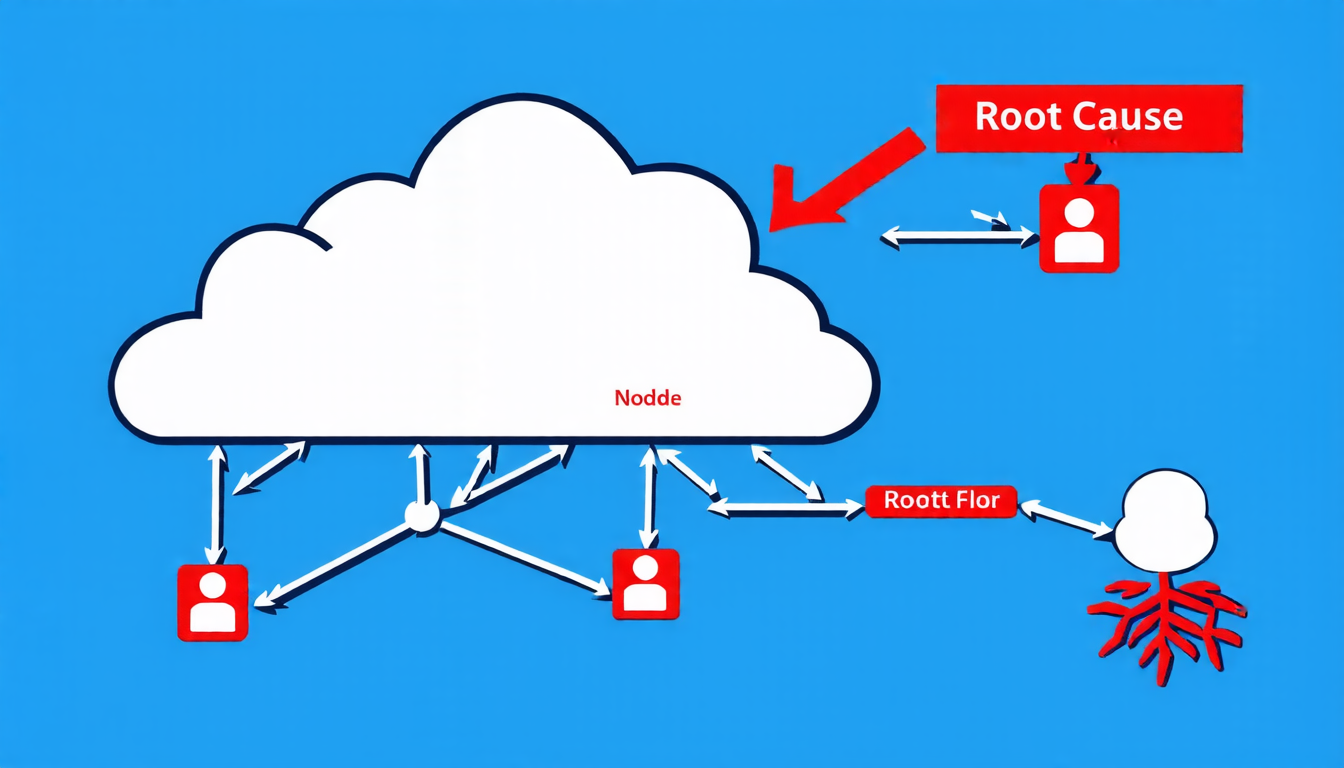
The quest for answers when things go wrong has led researchers to develop a new approach to diagnosing issues in complex systems, like those found in cloud computing and microservices architecture. These systems are made up of many interconnected components, making it challenging to pinpoint the root cause of a problem.
In recent years, data scientists have been working on developing methods to identify causal relationships between different components within these systems. This is crucial for understanding why something went wrong and how to fix it. However, traditional approaches often rely on statistical models that may not accurately capture the complex interactions between system components.
A new paper presents a novel approach that uses machine learning techniques to identify causal relationships in time series data from complex systems. The authors developed an algorithm called RADICE (Root Cause Analysis using Domain Knowledge and Enhanced Causal Discovery) that combines domain knowledge with causal discovery methods to improve diagnosis accuracy.
The key innovation of RADICE is its ability to integrate expert knowledge about the system’s behavior into the diagnostic process. This is achieved by creating a causal graph, which represents the relationships between different components in the system. The algorithm then uses machine learning techniques to identify causal relationships and refine the graph based on the data.
In practical terms, this means that RADICE can analyze large amounts of data from complex systems and identify potential root causes of issues. This is particularly useful for cloud computing and microservices architecture, where understanding the interactions between different components is critical for maintaining system performance and resolving issues quickly.
To test RADICE’s effectiveness, the authors conducted experiments using both simulated and real-world data from a large-scale advertising system. The results showed that RADICE was able to accurately identify root causes of issues in the system, outperforming other approaches.
The implications of this research are significant for industries that rely on complex systems, such as finance, healthcare, and e-commerce. By developing more accurate methods for diagnosing issues, companies can reduce downtime, improve customer satisfaction, and increase overall efficiency.
While there is still much work to be done in this area, the potential benefits of RADICE’s approach are substantial. As data scientists continue to develop new methods for analyzing complex systems, it’s likely that we’ll see even more innovative solutions emerge in the future.
Cite this article: “Unveiling the Root Cause of Complex System Issues with RADICE”, The Science Archive, 2025.
Cloud Computing, Microservices Architecture, Root Cause Analysis, Causal Relationships, Machine Learning, Time Series Data, Domain Knowledge, Causal Discovery, System Performance, Diagnostic Accuracy





