
Tuesday 11 March 2025
For decades, scientists have been searching for ways to improve data transmission rates over wireless networks. One promising solution is faster-than-Nyquist (FTN) signaling, which allows for more efficient use of bandwidth by transmitting data at a rate higher than the traditional Nyquist limit.
Traditional wireless communication systems rely on sampling rates that are limited by the Nyquist theorem, which states that the sampling rate must be at least twice the highest frequency component of the signal. However, this means that there is often wasted bandwidth and inefficient use of resources.
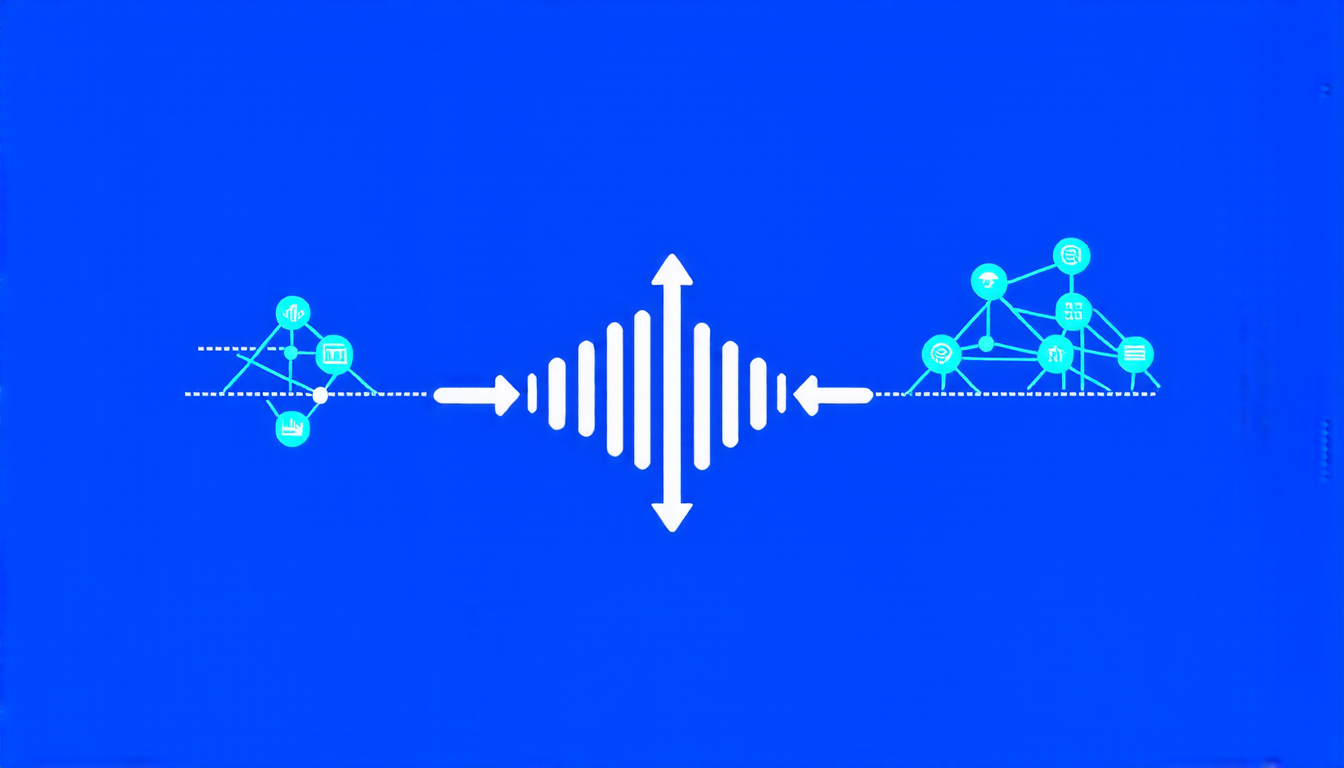
FTN signaling aims to overcome this limitation by using advanced algorithms and receiver designs to equalize the received signal and remove interference caused by intersymbol interference (ISI). This allows for more data to be transmitted over a given frequency band, resulting in faster transmission rates and improved network efficiency.
Recently, researchers have made significant progress in developing FTN receivers that can effectively demodulate signals transmitted at high speeds. One key innovation is the use of deep learning algorithms, which are able to learn complex patterns in the received signal and adapt to changing conditions.
The new approach uses a combination of convolutional neural networks (CNNs) and recurrent neural networks (RNNs) to identify and correct errors caused by ISI. The CNNs are used to extract features from the received signal, while the RNNs are used to model the behavior of the channel and predict the most likely transmitted sequence.
In tests, the new receiver was able to achieve error rates comparable to those in additive white Gaussian noise (AWGN) channels, despite the presence of strong ISI. This is a significant improvement over traditional receivers, which often struggle to accurately demodulate signals in the presence of interference.
The potential impact of FTN signaling and deep learning-based receivers is significant. In addition to improving network efficiency and transmission rates, it could also enable new applications such as high-speed wireless video streaming and secure communication systems.
One area where FTN signaling may have a particularly big impact is in the development of next-generation wireless networks. As more devices become connected to the internet, there will be an increasing demand for faster and more reliable data transmission rates. FTN signaling could help meet this demand by providing a way to increase network capacity without requiring expensive infrastructure upgrades.
Overall, the development of FTN receivers that use deep learning algorithms is an exciting advancement in the field of wireless communication.
Cite this article: “Fast-Than-Nyquist Signaling: A New Approach to Wireless Data Transmission”, The Science Archive, 2025.
Wireless Communication, Faster-Than-Nyquist Signaling, Nyquist Theorem, Intersymbol Interference, Deep Learning, Convolutional Neural Networks, Recurrent Neural Networks, Error Correction, Network Efficiency, Wireless Transmission Rates