
Tuesday 11 March 2025
When it comes to making sense of medical research, there’s a growing recognition that simply ranking treatments based on their average effectiveness can be misleading. That’s because different studies may have different methodologies and patient populations, which can lead to varying results even for the same treatment.
To tackle this issue, researchers have turned to network meta-analysis, a statistical technique that allows them to combine data from multiple studies and estimate the relative effectiveness of different treatments. But while this approach has its advantages, it also raises new challenges when it comes to interpreting the results.
One major problem is that traditional ranking metrics, like SUCRAs or P-scores, don’t always capture the uncertainty associated with each treatment’s ranking. This can lead to false confidence in the hierarchy of treatments, even if there’s significant uncertainty involved.
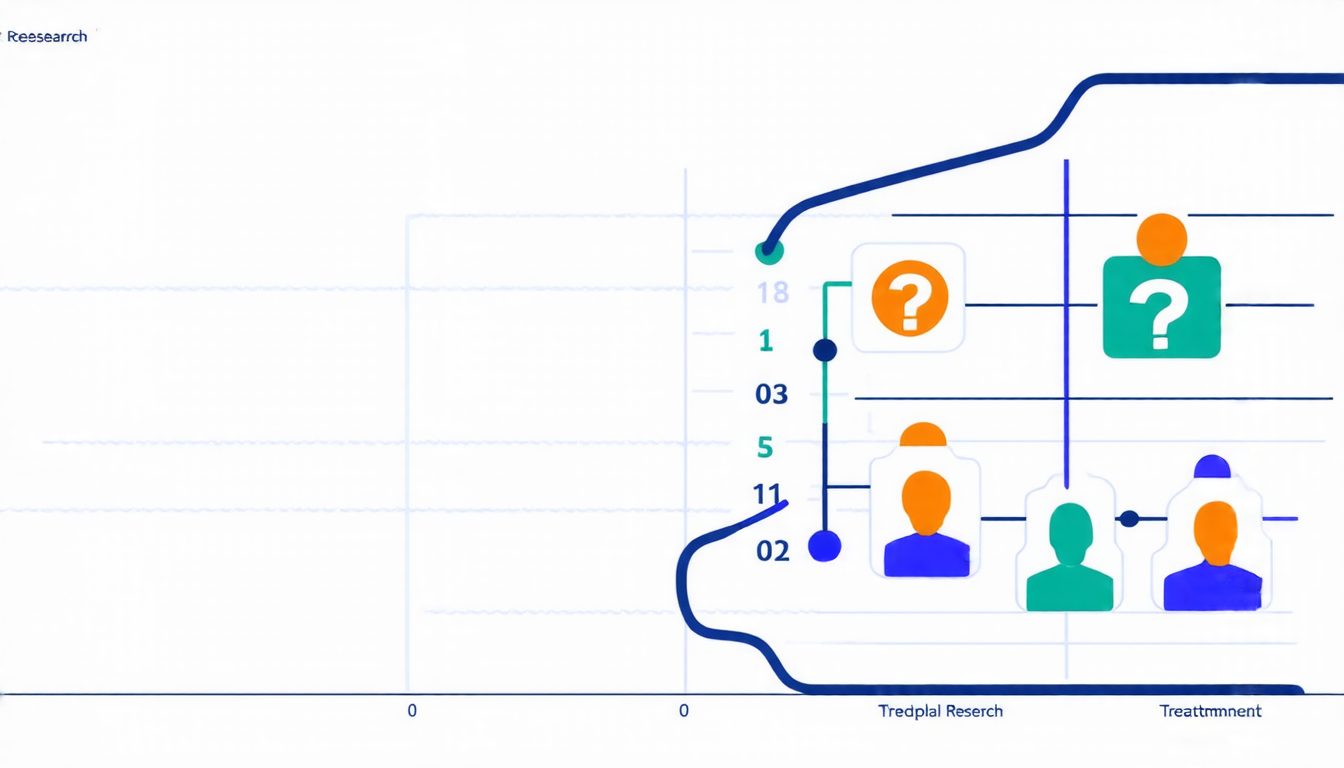
To address this issue, a team of researchers has developed a new metric called Precision of Treatment Hierarchy (POTH). POTH aims to quantify the certainty in producing a treatment hierarchy by considering three key factors: the variance of the SUCRA values, the variance of the mean rank of each treatment, and the average variance of the distribution of individual ranks for each treatment.
The researchers tested POTH on a dataset of 267 network meta-analyses and found that it provided a more accurate estimate of certainty in treatment hierarchies than traditional ranking metrics. They also demonstrated how POTH can be used to identify the treatments that contribute most to uncertainty in the hierarchy, as well as to calculate the cumulative certainty in the top k treatments.
One potential application of POTH is in the field of personalized medicine, where patients may have different preferences and priorities when it comes to treatment options. By providing a more nuanced understanding of the uncertainty associated with each treatment’s ranking, POTH could help clinicians better tailor their recommendations to individual patient needs.
Another area where POTH may be useful is in evaluating the quality of evidence from network meta-analyses. By incorporating measures of certainty into the analysis, researchers can gain a clearer picture of what treatments are supported by strong evidence and which ones are more uncertain.
The development of POTH is an important step forward in the field of network meta-analysis, and its potential applications are significant. As researchers continue to refine their methods for combining data from multiple studies, it’s likely that we’ll see even more innovative approaches emerge to help us make sense of the complex relationships between treatments and outcomes.
Cite this article: “Quantifying Uncertainty in Treatment Hierarchies with Precision of Treatment Hierarchy (POTH)”, The Science Archive, 2025.
Medical Research, Network Meta-Analysis, Treatment Hierarchy, Precision, Uncertainty, Ranking Metrics, Sucra, P-Scores, Personalized Medicine, Evidence Quality