

Tuesday 11 March 2025
As researchers continue to uncover the intricacies of quasirandomness in tournaments, a new study sheds light on the properties that govern these complex systems. By analyzing the interactions between vertices and edges, scientists are gaining a deeper understanding of how quasirandomness arises.
Quasirandomness is a phenomenon that occurs when a sequence of random events or structures exhibits certain predictable patterns. In the context of tournaments, this means that the density of edges between vertices approximates the global edge density as the number of vertices increases. Researchers have long sought to understand what drives this quasirandom behavior, and recent findings suggest that it may be linked to the properties of individual vertices.
One key aspect of vertex structure is the homomorphism density, which measures the likelihood of a given vertex having a certain pattern of edges connected to it. By studying the homomorphism densities of different vertices, researchers have discovered that quasirandomness arises when these densities are evenly distributed across the tournament.
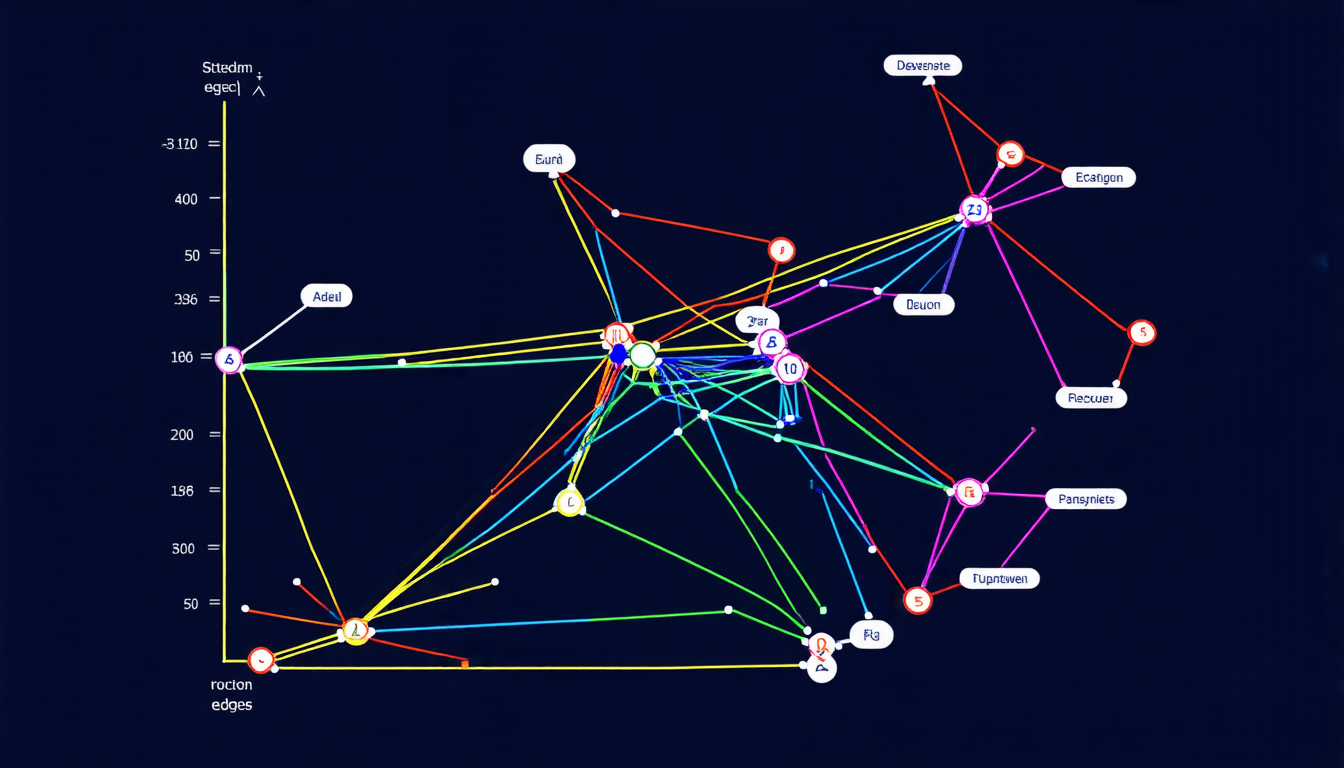
To test this hypothesis, scientists analyzed the properties of 19 specific tournaments, each with varying numbers of vertices and edge densities. By examining the homomorphism densities of individual vertices, they found that those with higher densities were more likely to exhibit quasirandom behavior. This suggests that the distribution of vertex properties plays a critical role in determining whether a tournament is quasirandom.
The study also explored the relationship between vertex structure and edge density. Researchers discovered that tournaments with high edge densities tended to have more evenly distributed homomorphism densities, leading to increased quasirandomness. Conversely, those with lower edge densities exhibited more variability in their vertex properties, resulting in less quasirandom behavior.
These findings have significant implications for our understanding of complex systems and the emergence of quasirandomness. By identifying the key role that vertex structure plays in determining quasirandomness, researchers can better predict and model these phenomena in a wide range of fields, from computer science to biology.
The study’s results also highlight the importance of considering individual properties when analyzing complex systems. Rather than focusing solely on global patterns or averages, scientists must take into account the unique characteristics of each component – in this case, the vertices and edges of a tournament.
As researchers continue to uncover the intricacies of quasirandomness, these findings offer valuable insights into the underlying mechanisms that drive this phenomenon.
Cite this article: “Unraveling the Role of Vertex Structure in Quasirandom Tournaments”, The Science Archive, 2025.
Quasirandomness, Tournaments, Vertex Structure, Homomorphism Density, Edge Density, Complex Systems, Emergence, Prediction, Modeling, Computer Science





