

Wednesday 12 March 2025
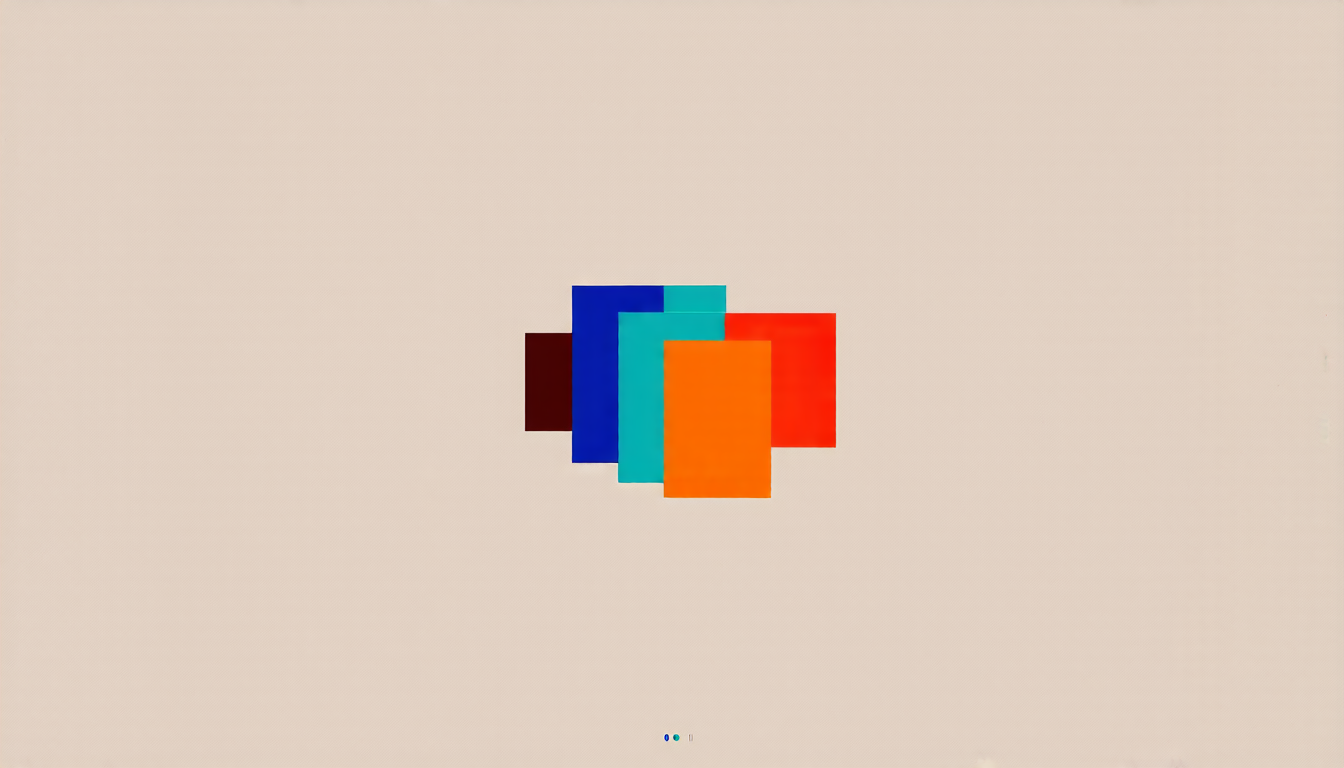
The intricate world of rectangulations has long fascinated mathematicians and computer scientists alike. These geometric structures, formed by breaking down a rectangle into smaller rectangles, seem simple at first glance but hold within them a wealth of complexity.
Researchers have been studying rectangulations for decades, seeking to understand their underlying patterns and properties. Recently, a team of scientists made a significant breakthrough in this field, unveiling a new method for generating these structures that has far-reaching implications for our understanding of geometry and computation.
The key innovation is a novel approach to creating rectangulations, one that combines elements of combinatorics and graph theory. By applying this technique, researchers can generate an astonishing array of rectangulations, each with its own unique properties and characteristics.
One of the most striking aspects of these new rectangulations is their connection to other areas of mathematics. For instance, they have been shown to be intimately linked to permutation patterns, a field that has seen significant advances in recent years.
This link between rectangulations and permutation patterns opens up exciting possibilities for researchers. By studying the properties of these structures, scientists may uncover new insights into the fundamental nature of geometry and computation.
The practical applications of this research are also substantial. Rectangulations have long been used in computer science to represent complex systems, such as floor plans or circuit layouts. The new method for generating these structures could lead to more efficient algorithms and improved designs in a range of fields.
Furthermore, the study of rectangulations has implications for our understanding of the natural world. Geometric patterns are ubiquitous in nature, from the arrangement of leaves on a stem to the branching patterns of trees. By uncovering the underlying rules that govern these patterns, scientists may gain new insights into the evolution and diversity of life on Earth.
As researchers continue to explore the properties of rectangulations, it is clear that this field holds much promise for advancing our understanding of mathematics, computation, and the natural world. The intricate beauty of these geometric structures has captivated mathematicians and computer scientists for decades, and the latest breakthroughs are sure to inspire new generations of researchers to delve deeper into their mysteries.
Cite this article: “Unlocking the Secrets of Rectangulations”, The Science Archive, 2025.
Geometry, Computation, Rectangulations, Mathematics, Graph Theory, Combinatorics, Permutation Patterns, Computer Science, Algorithm Design, Natural World





