
Wednesday 12 March 2025
Scientists have long struggled to detect changes in time series data, a crucial task for understanding complex systems like financial markets and climate patterns. A new approach has been developed that combines two powerful methods to identify these shifts: Hodrick-Prescott filtering and L1 trend filtering.
The Hodrick-Prescott filter is commonly used to extract trends from economic data, but it can be sensitive to the choice of a tuning parameter. The L1 trend filter, on the other hand, is more robust but can be computationally intensive. By combining these two methods, researchers have created a new technique that can detect changes in time series data with high accuracy.
The approach works by first using the Hodrick-Prescott filter to identify potential change points, and then applying the L1 trend filter to refine those detections. The resulting method is able to accurately detect changes in data that are not easily identified by either method alone.
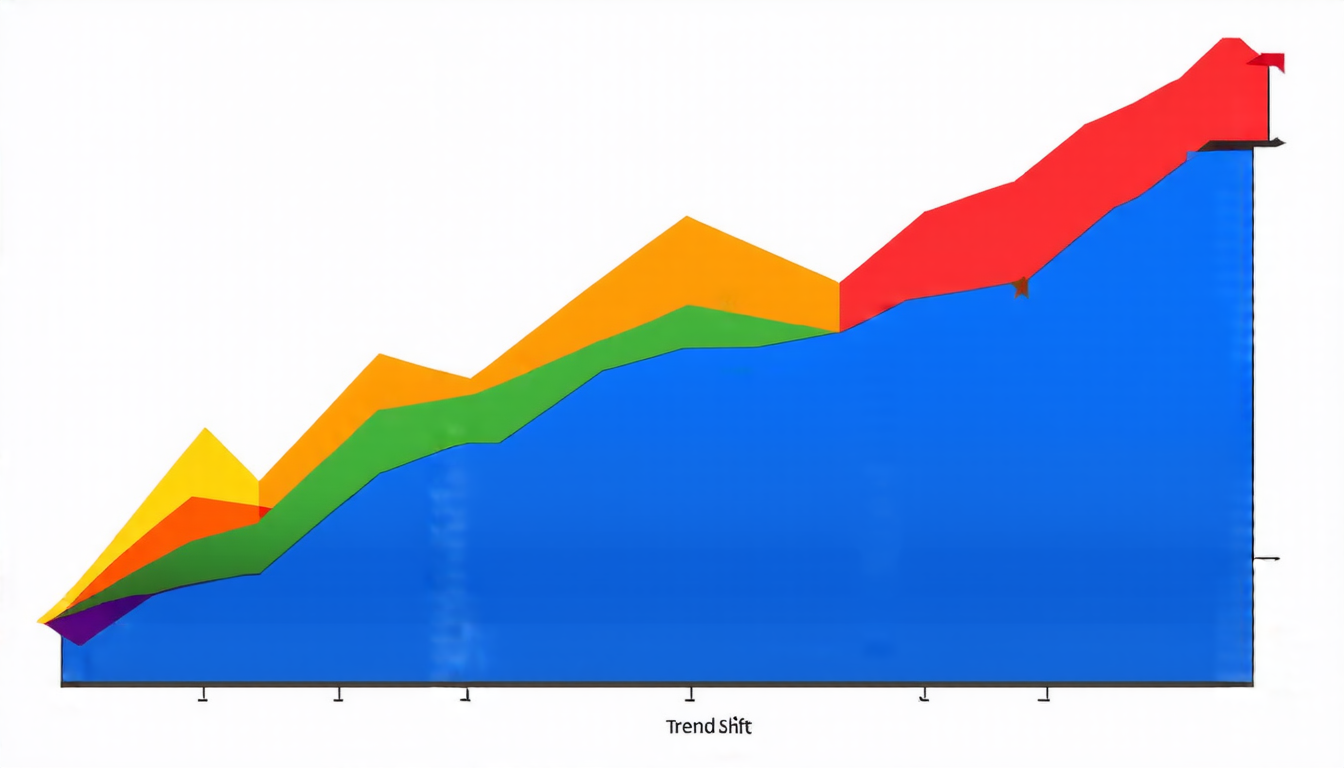
One of the key benefits of this new approach is its ability to handle data with multiple change points. In many real-world applications, such as financial markets or climate patterns, there may be multiple shifts in the underlying trend over time. The combined Hodrick-Prescott-L1 filter is able to identify these multiple changes and provide a more accurate picture of the underlying dynamics.
The researchers tested their new approach using simulated data and found that it outperformed existing methods in detecting change points. They also applied the method to real-world data, including daily stock prices from the S&P 500 index, and were able to identify several significant changes over time.
One of the most interesting applications of this technique is in the analysis of financial markets. By identifying changes in market trends, investors and policymakers can gain valuable insights into the underlying dynamics of the market and make more informed decisions.
In addition to its practical applications, this new approach also has important theoretical implications for our understanding of time series data. The combined Hodrick-Prescott-L1 filter provides a powerful tool for researchers to study complex systems and identify patterns that may not be immediately apparent.
Overall, this new approach represents an important advance in the field of time series analysis and has significant potential applications in fields such as finance, climate science, and more.
Cite this article: “Detecting Changes in Time Series Data with High Accuracy: A New Approach Combining Hodrick-Prescott and L1 Trend Filtering”, The Science Archive, 2025.
Time Series Data, Change Points, Hodrick-Prescott Filter, L1 Trend Filtering, Financial Markets, Climate Patterns, Trend Extraction, Signal Processing, Statistical Analysis, Machine Learning.