

Wednesday 12 March 2025
Deep learning technology has been gaining momentum in recent years, and its applications are becoming increasingly diverse. One of the most promising areas is structural health monitoring, where AI-powered systems can detect and analyze defects in buildings, bridges, and other infrastructure.
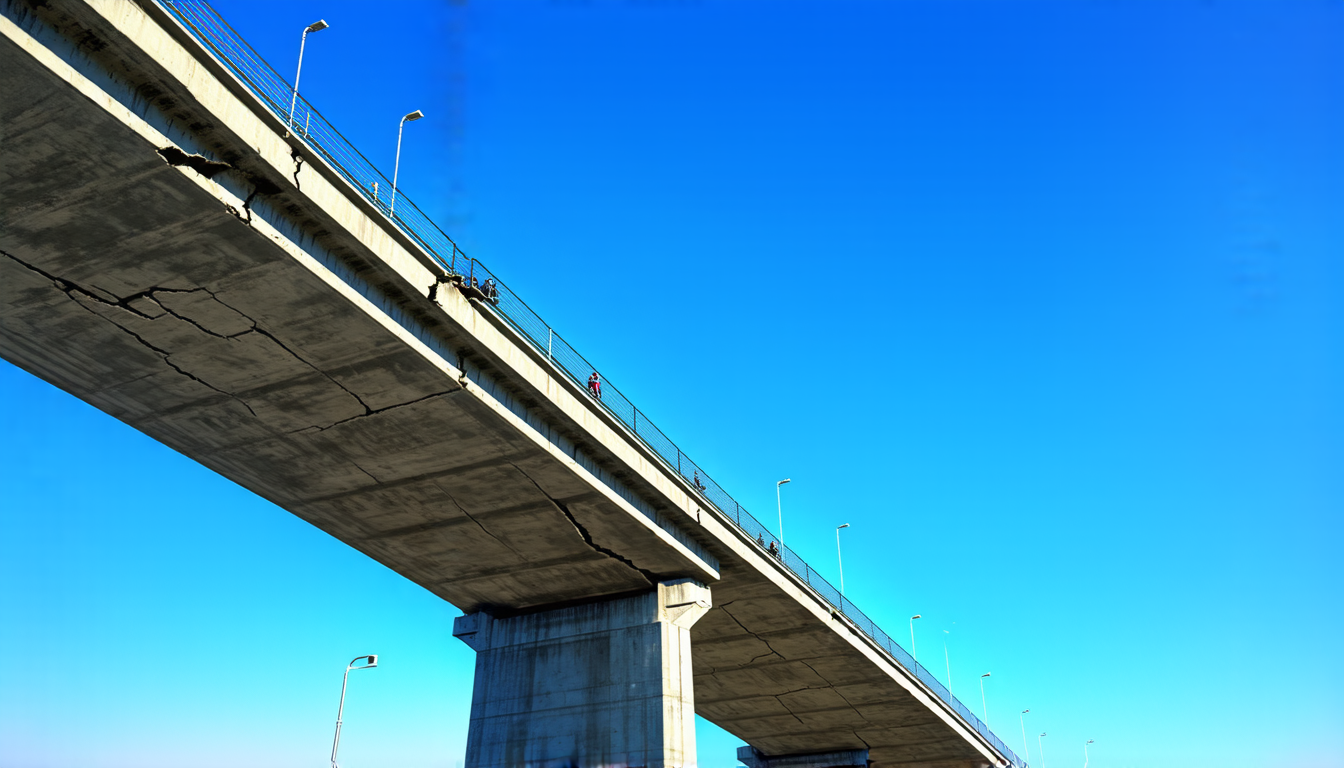
For centuries, human inspectors have been tasked with identifying cracks and damage in concrete structures. This process is not only labor-intensive but also prone to human error. Fortunately, advancements in computer vision and deep learning have made it possible to automate this process, enabling more accurate and efficient inspections.
The latest research has focused on developing instance segmentation models that can identify specific defects within images or videos of infrastructure. These models are trained on large datasets of annotated images, which allows them to learn the characteristics of different types of damage.
One such model is YOLO-7, a real-time instance segmentation algorithm that has been shown to achieve high accuracy in detecting cracks and spalls in concrete structures. This model uses a combination of convolutional neural networks (CNNs) and object detection algorithms to identify defects within images.
In a recent study, researchers tested the performance of YOLO-7 on a dataset of 400 images, augmented to over 10,000 images through geometric and color-based transformations. The results were impressive: YOLO-7 achieved an accuracy of 96.1%, outperforming other models in terms of both precision and recall.
The researchers also evaluated the model’s performance in real-world scenarios, testing it on random images and videos sourced from the internet. The results showed that YOLO-7 was able to detect defects with high accuracy even when presented with novel and diverse data.
These findings have significant implications for the field of structural health monitoring. With AI-powered systems like YOLO-7, inspectors can now focus on higher-level tasks such as analyzing the severity of damage and developing strategies for repair and maintenance.
Moreover, the integration of these models with emerging technologies such as IoT and drones holds great promise for the future of infrastructure inspection. Imagine being able to inspect entire cities or bridges remotely, using AI-powered systems to detect defects before they become major issues.
In addition to its potential applications in structural health monitoring, YOLO-7 has also been shown to be effective in other areas such as autonomous vehicle detection and medical image analysis. Its versatility and accuracy make it a valuable tool for a wide range of industries and applications.
Cite this article: “Automating Structural Health Monitoring with AI-Powered Instance Segmentation”, The Science Archive, 2025.
Deep Learning, Structural Health Monitoring, Computer Vision, Instance Segmentation, Yolo-7, Convolutional Neural Networks, Cnns, Object Detection, Image Analysis, Infrastructure Inspection





