

Wednesday 12 March 2025
The rise of misinformation and disinformation online has become a pressing concern in recent years, with many social media platforms struggling to keep pace with the spread of false information. In an effort to combat this issue, researchers have been exploring new ways to detect and prevent the dissemination of fake news and propaganda.
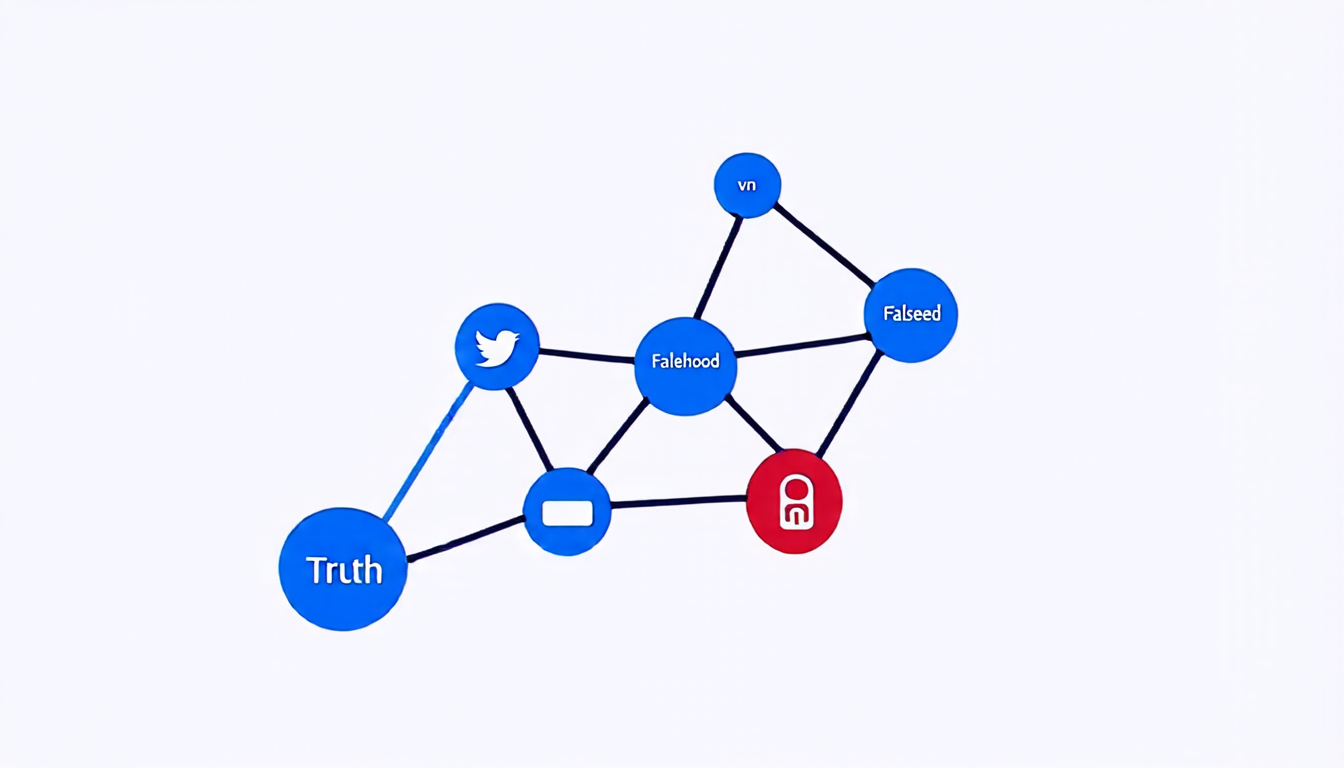
One approach that has shown promise is the use of graph neural networks (GNNs) to analyze social network structures and identify patterns indicative of coordinated disinformation campaigns. However, GNNs require large amounts of labeled training data, which can be difficult to obtain, particularly in cases where the information being spread is deliberately false.
In a new study, researchers have proposed an alternative approach that leverages the power of language models (LLMs) to detect fake news and propaganda without relying on extensive training data. The authors’ framework uses prompt engineering and retrieval-augmented generation (RAG) techniques to encode graph information as text, allowing LLMs to analyze the relationships within a social network.
The researchers tested their approach using a dataset of tweets from the 2016 US presidential election, which contained both real and fake news stories. They found that their framework was able to accurately identify fake news campaigns with high precision and recall, even when presented with imbalanced training data.
One of the key advantages of this approach is its ability to handle class imbalance, a common problem in machine learning where one class (in this case, fake news) dominates the other. By incorporating RAG examples, the framework provides the LLM with relevant instances that help balance the influence of negative samples during inference.
The authors’ approach also has implications for the broader field of natural language processing (NLP). As LLMs become increasingly sophisticated, they are being used in a wide range of applications, from chatbots and virtual assistants to content generation and translation. However, these models are often trained on large datasets that may contain biased or misleading information.
By using prompt engineering and RAG techniques to encode graph information as text, the authors’ framework provides a way to inject domain-specific knowledge into LLMs, allowing them to better understand the context in which they are operating. This could have significant implications for applications such as fact-checking and disinformation detection.
In addition to its technical merits, this study highlights the importance of interdisciplinary collaboration between computer scientists, social scientists, and linguists. By combining insights from these fields, researchers can develop more effective solutions to the complex problems posed by misinformation and disinformation online.
Cite this article: “Detecting Fake News and Propaganda with Language Models”, The Science Archive, 2025.
Misinformation, Disinformation, Graph Neural Networks, Language Models, Fake News, Propaganda, Social Network Analysis, Prompt Engineering, Retrieval-Augmented Generation, Natural Language Processing





