

Wednesday 12 March 2025
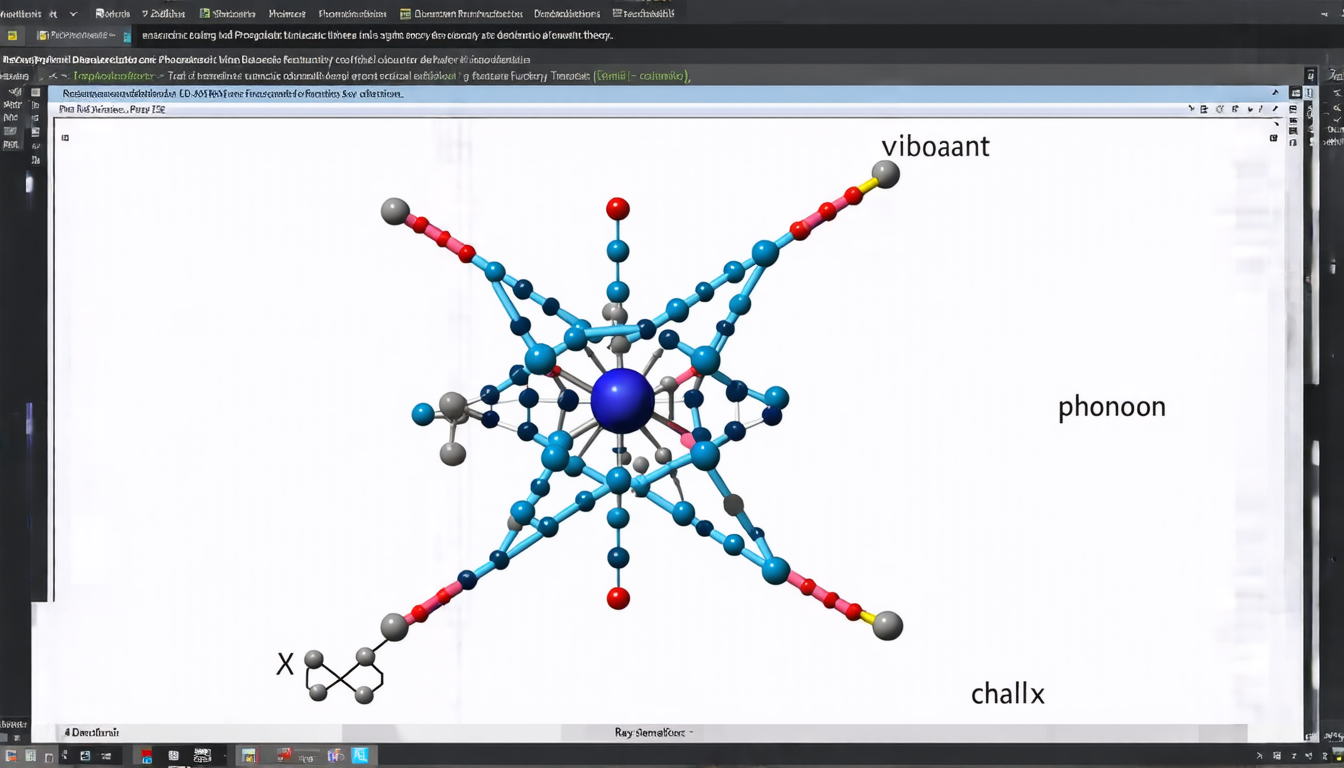
Scientists have made a significant breakthrough in understanding the behavior of phonons, the tiny vibrations that occur in materials at the atomic level. These vibrations are crucial for a wide range of properties, including superconductivity and high-temperature superfluidity.
Phonons are often thought of as simple, predictable waves that propagate through a material. However, recent research has shown that they can exhibit complex behavior, such as quantum fluctuations and collective modes. These phenomena have been difficult to study directly, but scientists have developed new techniques to observe them.
One such technique is resonant inelastic x-ray scattering (RIXS), which uses high-energy x-rays to excite phonons in a material. By analyzing the scattered x-rays, researchers can determine the energy and momentum of the excited phonons.
In this study, scientists used RIXS to investigate the behavior of phonons in cuprate superconductors, a class of materials that exhibit high-temperature superconductivity. They found that the intensity of the phonon peaks in the RIXS spectra varied with the azimuthal angle of the sample, which is the angle between the direction of the x-ray beam and the plane of the material.
This variation was unexpected, as it suggests that the phonons are not simply propagating through the material in a straightforward way. Instead, they appear to be interacting with each other and with the electronic structure of the material in complex ways.
The researchers used two different theoretical approaches to interpret their results: one based on the resonant Fermi-liquid model (RFFM), which assumes that the phonons are interacting with a Fermi sea of electrons; and another based on density functional theory (DFT) combined with the RFFM. Both approaches were able to reproduce the experimental data, but they provided different insights into the behavior of the phonons.
The RFFM approach suggested that the variation in phonon intensity was due to the symmetry of the phonon mode, which is a measure of how the material responds to the vibrations. The DFT-RFFM approach, on the other hand, revealed that the electronic structure of the material played a crucial role in determining the behavior of the phonons.
These findings have important implications for our understanding of superconductivity and high-temperature superfluidity. They suggest that these phenomena may be more complex than previously thought, and that the behavior of phonons is not simply determined by their energy and momentum.
Cite this article: “Unraveling the Complex Behavior of Phonons in Superconductors”, The Science Archive, 2025.
Phonons, Superconductivity, High-Temperature Superfluidity, Resonant Inelastic X-Ray Scattering, Rixs, Cuprate Superconductors, Quantum Fluctuations, Collective Modes, Density Functional Theory, Dft





