

Wednesday 12 March 2025
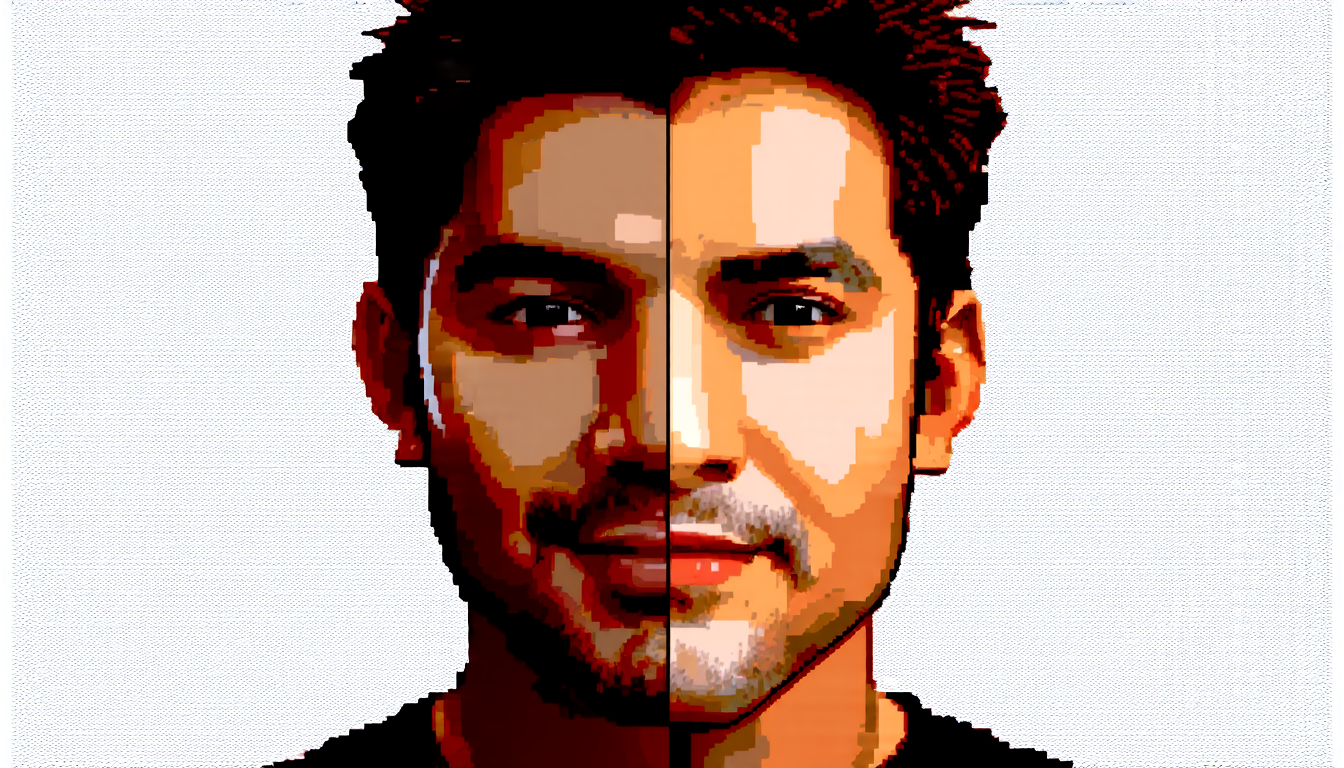
A team of researchers has made a significant breakthrough in the field of image restoration, developing a new method that can accurately predict and remove various types of degradation from images. The technique, called Empirical Likelihood Approximation with Diffusion Prior (ELAD), uses machine learning algorithms to analyze the patterns of noise and distortion present in an image and then applies a series of mathematical operations to restore it to its original state.
The team used a dataset of real-world images, including those from facial recognition databases and social media platforms, to train their model. They found that ELAD was able to accurately predict the level of degradation in each image, taking into account factors such as blur, compression, and noise.
One of the key advantages of ELAD is its ability to adapt to different types of degradation. Unlike traditional image restoration methods, which are often limited to specific types of distortion, ELAD can handle a wide range of degradation patterns. This makes it a versatile tool that can be applied to a variety of applications, from facial recognition and object detection to medical imaging and satellite surveillance.
The researchers also tested their method on a synthetic dataset, generating a set of artificially degraded images using the same algorithms used to predict the level of degradation in real-world images. They found that ELAD was able to accurately restore these synthetic images as well, demonstrating its potential for use in applications where high-quality image restoration is critical.
In addition to its accuracy and versatility, ELAD also offers a number of computational advantages over traditional image restoration methods. Because it uses machine learning algorithms to analyze the patterns of noise and distortion present in an image, ELAD can be trained to operate in real-time, making it suitable for use in applications where fast processing times are critical.
The team’s research has significant implications for a wide range of fields, from computer vision and robotics to medicine and national security. By developing a method that can accurately predict and remove various types of degradation from images, they have created a powerful tool that can be used to improve the accuracy and reliability of image-based applications.
One potential application of ELAD is in facial recognition systems, where it could be used to improve the accuracy of face matching algorithms by removing noise and distortion from images. Another potential application is in medical imaging, where ELAD could be used to restore high-quality images of internal organs and tissues.
Overall, the team’s research has opened up new possibilities for image restoration and analysis, and its potential applications are vast and varied.
Cite this article: “Empirical Likelihood Approximation with Diffusion Prior: A Breakthrough in Image Restoration”, The Science Archive, 2025.
Image Restoration, Machine Learning, Image Analysis, Facial Recognition, Medical Imaging, Satellite Surveillance, Computer Vision, Robotics, National Security, Degradation Patterns





