

Thursday 13 March 2025
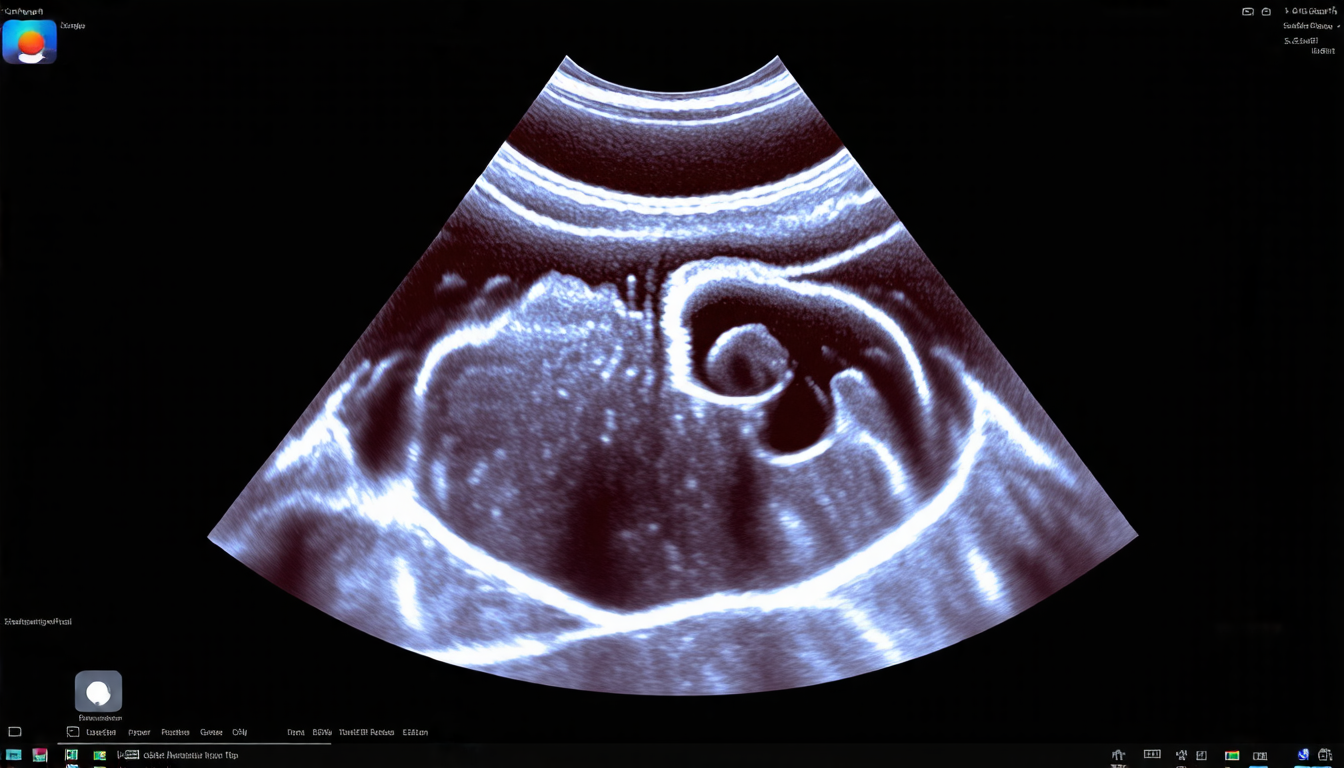
Researchers have made significant strides in improving the performance of deep neural networks when it comes to analyzing ultrasound images. These advancements are crucial for diagnosing and treating various medical conditions, as well as developing personalized treatments.
To achieve this, scientists employed a novel approach called data augmentation, which involves generating new, synthetic ultrasound images from existing ones. This technique helps expand the training dataset, making it more robust and representative of real-world scenarios. The researchers then compared the performance of their augmented dataset with traditional methods, showcasing impressive improvements in accuracy and precision.
The study focused on 14 different ultrasound image analysis tasks, including classification and segmentation problems. Classification involves identifying specific features or patterns within an image, while segmentation involves dividing the image into distinct regions based on certain characteristics.
By applying TrivialAugment, a data augmentation technique specifically designed for medical images, the researchers achieved remarkable results. On average, their approach boosted the performance of the deep neural networks by 3-5% compared to traditional methods. This may seem modest, but it can have a significant impact in real-world applications where even slight improvements in accuracy can lead to better patient outcomes.
The findings also highlight the importance of tailoring data augmentation techniques to specific medical imaging modalities, such as ultrasound. Unlike other image types, ultrasound images often exhibit unique characteristics, such as noise and artifacts, which require specialized handling during the augmentation process.
One of the most significant advantages of TrivialAugment is its ability to generate realistic synthetic images that mimic real-world scenarios. This enables the neural networks to learn from a wider range of possibilities, making them more adaptable and resilient in the face of uncertainty. In practical terms, this means that doctors can rely on these AI-powered systems to provide accurate diagnoses even when dealing with complex or unusual cases.
The study’s results demonstrate the potential for TrivialAugment to revolutionize the field of medical imaging analysis. By expanding the capabilities of deep neural networks and improving their accuracy, researchers can develop more effective diagnostic tools and treatments for a range of diseases and conditions. As the demand for personalized medicine continues to grow, the need for advanced image analysis techniques like TrivialAugment will become increasingly essential.
In the future, scientists plan to further refine TrivialAugment by incorporating additional features and improving its adaptability to different medical imaging modalities. This ongoing research will help bridge the gap between AI-powered diagnosis and real-world clinical practice, ultimately benefiting patients and healthcare providers alike.
Cite this article: “Improving Medical Imaging Analysis with Deep Neural Networks”, The Science Archive, 2025.
Deep Neural Networks, Ultrasound Images, Data Augmentation, Medical Imaging, Trivialaugment, Accuracy, Precision, Classification, Segmentation, Personalized Medicine.
Reference: Adam Tupper, Christian Gagné, “Revisiting Data Augmentation for Ultrasound Images” (2025).





