

Thursday 13 March 2025
The quest for fairness in AI has long been a pressing concern, as biases and prejudices can seep into machine learning models and perpetuate existing social injustices. Researchers have proposed various approaches to mitigate these issues, but few have tackled the challenge of addressing multiple fairness concerns simultaneously.
A new study published recently aims to bridge this gap by introducing an approach that optimizes for multiple demographic attributes at once, ensuring a more equitable distribution of fairness improvements across all considered attributes.
The researchers designed an algorithm that uses a two-phase strategy: first, it optimizes for predictive performance, and then fine-tunes the model to achieve fairness across multiple sensitive attributes. This sequential approach is contrasted with a simultaneous optimization method, which attempts to balance fairness objectives from the outset.
The study’s authors used two real-world datasets—Substance Use Disorder treatment completion prediction and sepsis mortality prediction—to evaluate their method. The results showed that the sequential strategy achieved better predictive performance while still improving fairness across multiple attributes. In contrast, the simultaneous approach led to a more balanced distribution of fairness improvements but at the cost of slightly lower accuracy.
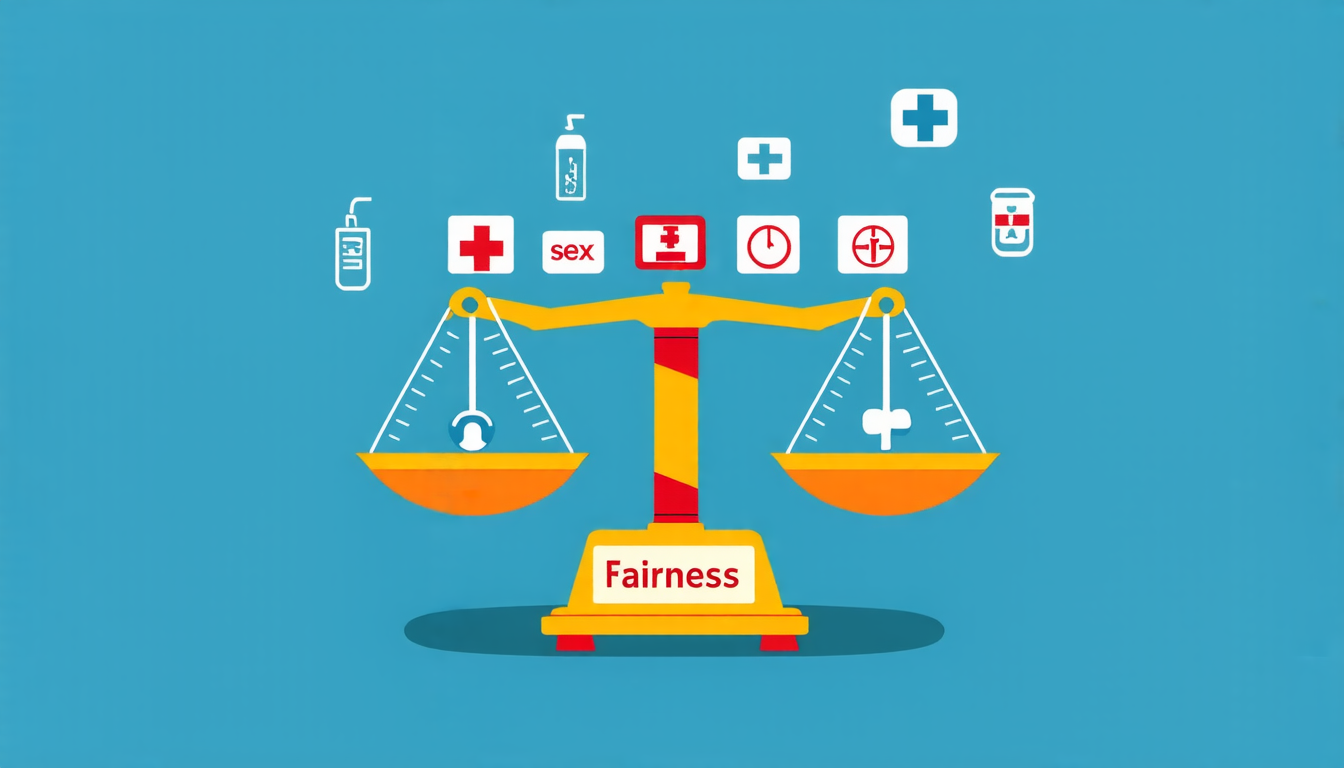
One of the key findings is that single-attribute fairness optimization methods can inadvertently increase disparities in other sensitive attributes. For instance, optimizing for race fairness might lead to decreased fairness regarding sex differences. The authors’ approach aims to mitigate this issue by considering multiple attributes simultaneously, ensuring a more comprehensive and equitable improvement in fairness.
The study’s implications are significant, as it highlights the need for AI systems to consider the complex interplay between demographic attributes when aiming to promote fairness. In healthcare settings, where accuracy is paramount, the ability to balance predictive performance with fairness concerns can be a critical factor in determining the success of AI-based decision-making tools.
Furthermore, this research underscores the importance of transparency and accountability in machine learning development. By acknowledging the potential biases inherent in AI systems and actively working to mitigate them, developers can create more trustworthy models that better serve diverse populations.
As the field of AI continues to evolve, it is essential to prioritize fairness and equity considerations in all aspects of model design and deployment. This study’s innovative approach offers a promising step towards achieving this goal, and its findings will likely influence the development of future fairness-optimized machine learning algorithms.
Cite this article: “Simultaneous Optimization for Fairness in Machine Learning Models”, The Science Archive, 2025.
Ai, Fairness, Machine Learning, Bias, Prejudice, Demographic Attributes, Predictive Performance, Sensitive Attributes, Sequential Optimization, Simultaneous Optimization





