
Thursday 13 March 2025
The quest for a more accurate moving average has been a longstanding one in the world of economics and finance. A moving average is a statistical technique used to smooth out fluctuations in data, providing a clearer picture of trends and patterns. However, traditional methods have limitations, such as being overly influenced by recent events or failing to capture subtle changes.
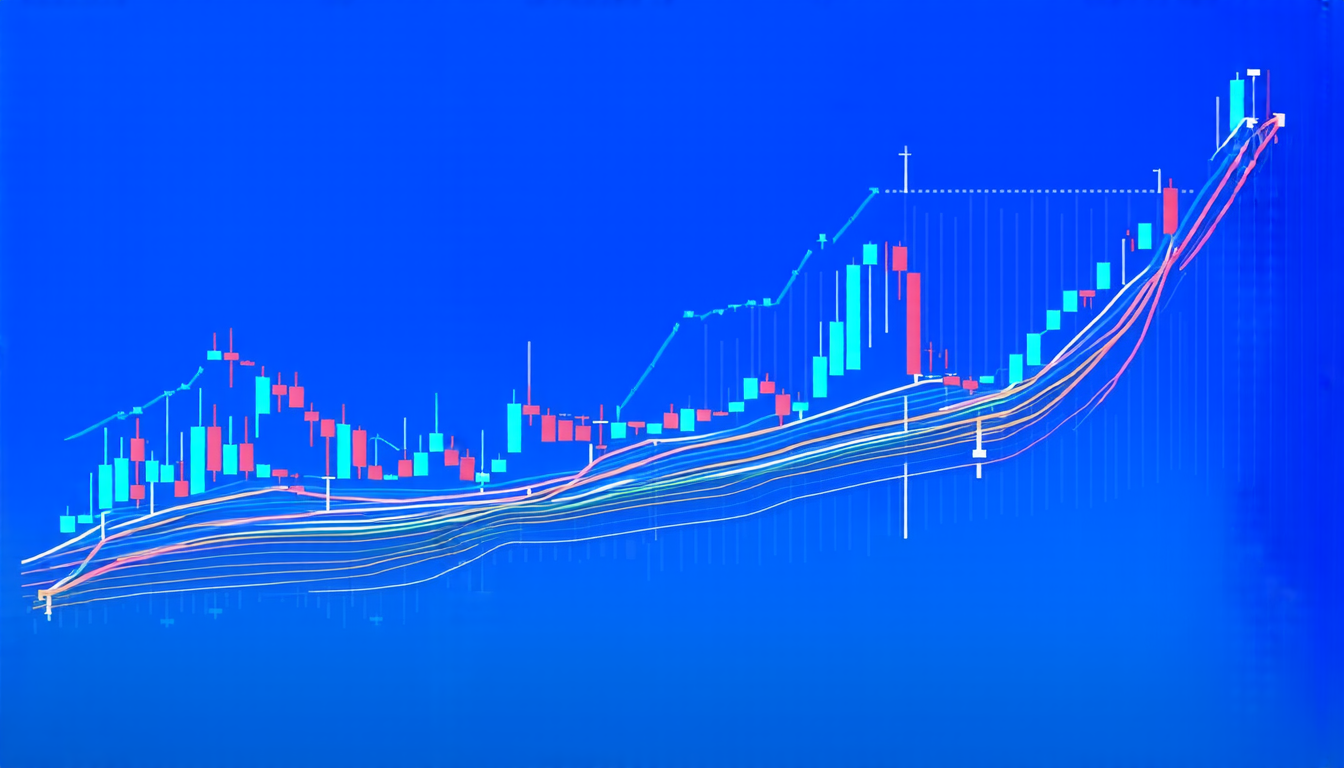
Enter the Adaptive Moving Average (AlbaMA), a new approach that seeks to overcome these shortcomings. By using a machine learning algorithm called Random Forest, AlbaMA is able to adapt to changing economic conditions and provide more accurate estimates of inflation, industrial production, and unemployment rates.
The researchers behind AlbaMA tested their method against traditional moving averages and other advanced techniques, such as the Savitzky-Golay filter and exponential smoothing. The results were impressive: AlbaMA outperformed its competitors in terms of accuracy and adaptability, particularly during times of rapid change or uncertainty.
One key advantage of AlbaMA is its ability to capture subtle changes in the data that may be missed by traditional methods. This is because the Random Forest algorithm is able to identify patterns and relationships in the data that would not be apparent through a simple moving average. For example, during the 2008 financial crisis, AlbaMA was able to accurately predict the sharp decline in industrial production, while traditional methods underestimated the extent of the downturn.
Another benefit of AlbaMA is its ability to adapt to changing economic conditions. Unlike traditional moving averages, which are based on fixed window sizes or weights, AlbaMA can adjust its parameters in real-time to reflect shifting trends and patterns. This allows it to provide more accurate estimates even during times of rapid change or uncertainty.
AlbaMA’s performance was tested across a range of macroeconomic indicators, including inflation, industrial production, unemployment rates, and PMI (purchasing managers’ index). In each case, the results were impressive: AlbaMA outperformed its competitors in terms of accuracy and adaptability, particularly during times of rapid change or uncertainty.
The implications of AlbaMA are significant. By providing more accurate estimates of economic trends and patterns, it could help policymakers make better decisions about monetary policy, fiscal stimulus, and other interventions. It could also be used by investors and analysts to gain a more nuanced understanding of market trends and potential risks.
Of course, like any new approach, AlbaMA is not without its limitations.
Cite this article: “Adaptive Moving Average: A Game-Changer in Economic Forecasting?”, The Science Archive, 2025.
Machine Learning, Adaptive Moving Average, Random Forest, Economic Trends, Inflation, Industrial Production, Unemployment Rates, Pmi, Savitzky-Golay Filter, Exponential Smoothing