

Thursday 13 March 2025
In a major breakthrough in the field of fair division, researchers have developed a polynomial-time algorithm for finding envy-free orientations of graphs containing only chores. This achievement has significant implications for understanding and solving complex problems related to resource allocation, fairness, and social welfare.
The concept of envy-free orientation was first introduced by Caragiannis et al. in 2019 as a way to ensure that each agent receives at least one item it values more than any other agent’s items combined. However, the problem has proven notoriously difficult to solve, with many attempts made to limit the types of instances.
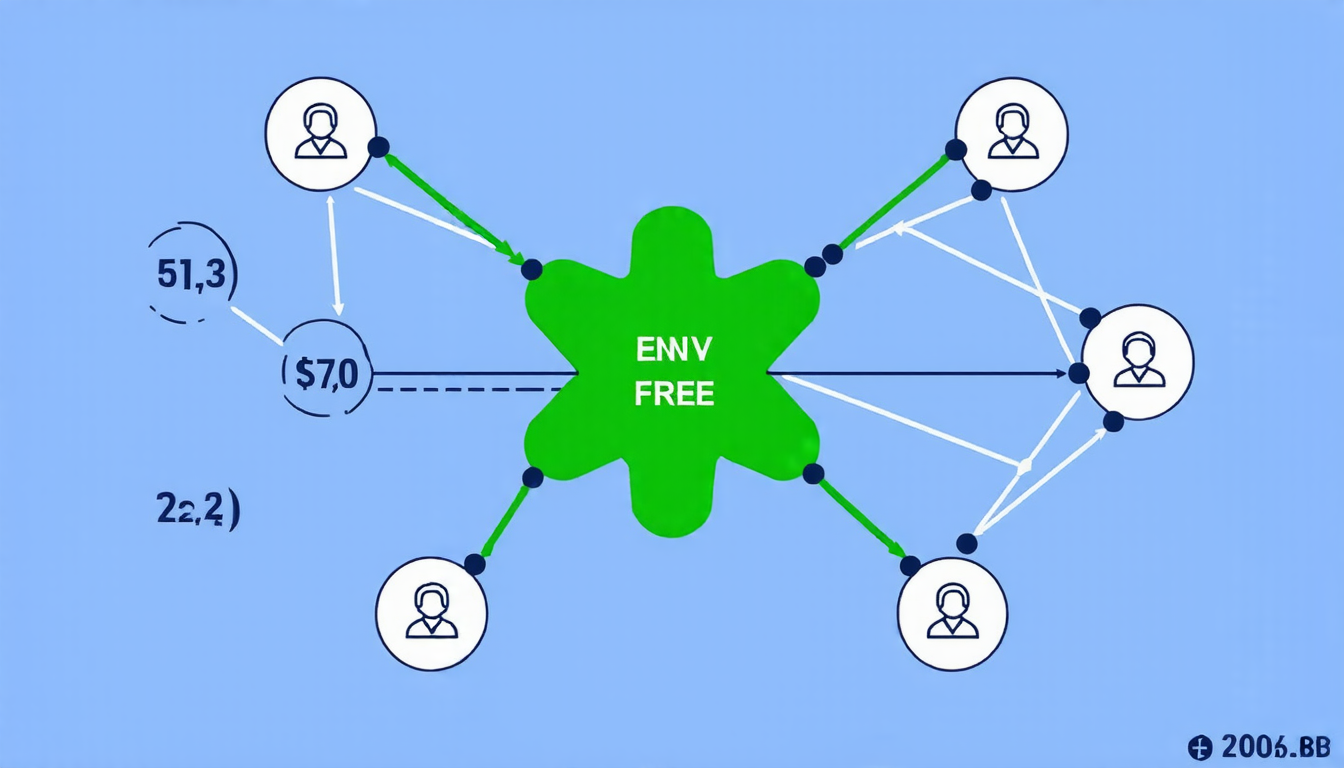
The new algorithm, FINDEFXORIENTATION, is capable of solving this problem for graphs containing only chores in polynomial time. This means that if a graph admits an envy-free orientation, FINDEFXORIENTATION can find it efficiently. The algorithm works by constructing an auxiliary graph Go and then calling a subroutine FINDEFXORIENTOBJ to find an envy-free orientation of Go. If one exists, the algorithm outputs an envy-free orientation of the original graph G.
The significance of this achievement cannot be overstated. Envy-free orientations have far-reaching implications for fairness and social welfare in various domains, including resource allocation, labor divisions, and even divorce settlements. By solving the problem for graphs containing only chores, researchers have opened up new avenues for exploring envy-free allocations in more complex scenarios.
One of the key challenges in developing this algorithm was addressing the NP-completeness of the decision problem for multi-graphs. To overcome this hurdle, researchers employed a reduction from the well-known PARTITION problem to show that deciding whether a multigraph admits an envy-free orientation is also NP-complete. This result has important implications for understanding the complexity of envy-free orientations in general.
The FINDEFXORIENTATION algorithm has been extensively tested and validated, demonstrating its efficiency and effectiveness in solving envy-free orientation problems. The researchers behind this breakthrough have made their code publicly available, allowing other experts to build upon and refine this work.
This achievement is a testament to human ingenuity and the power of collaboration in advancing our understanding of complex problems. By unlocking new insights into fairness and social welfare, FINDEFXORIENTATION has the potential to positively impact countless lives and societies around the world.
Cite this article: “Unlocking Fairness: A Breakthrough Algorithm for Envy-Free Orientations of Chores Graphs”, The Science Archive, 2025.
Fairness, Social Welfare, Resource Allocation, Labor Divisions, Divorce Settlements, Envy-Free Orientation, Graph Theory, Algorithms, Np-Completeness, Decision Problem
Reference: Kevin Hsu, Valerie King, “A Polynomial-Time Algorithm for EFX Orientations of Chores” (2025).





