

Thursday 13 March 2025
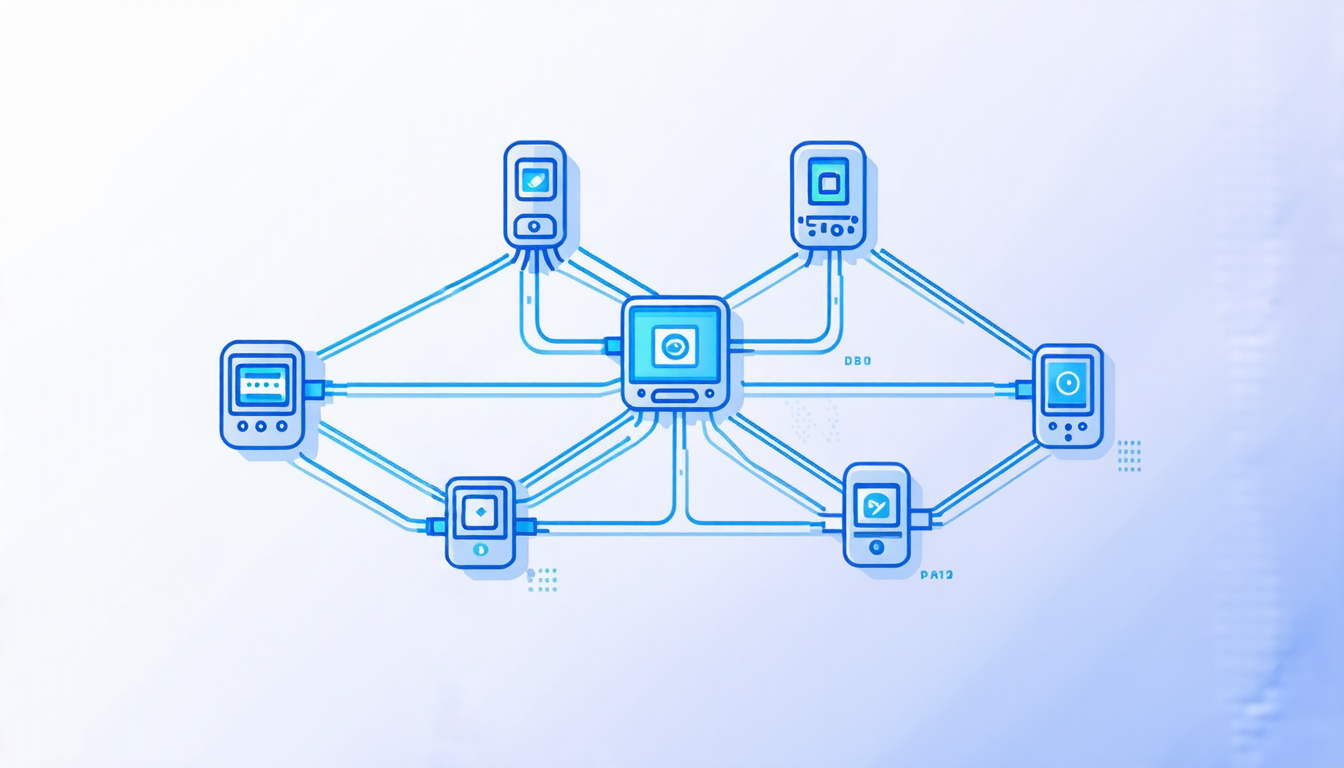
The world of distributed learning, where machines and devices work together to solve complex problems, has taken a significant leap forward. Researchers have developed a new algorithm that tackles the challenges of training large-scale models on decentralized data, making it possible for devices to learn from each other without relying on a central hub.
The key issue in distributed learning is communication efficiency. When devices need to exchange information with each other, it can become a bottleneck, slowing down the entire process. To overcome this hurdle, scientists have designed an algorithm that allows devices to take multiple local training steps between each round of communications. This approach not only reduces the amount of data transferred but also enables devices to learn from their own experiences.
The new algorithm, called Local Training with Adaptive Momentum (LT-ADMM), uses a combination of two techniques: stochastic gradients and variance reduction. Stochastic gradients enable devices to make decisions based on a subset of the available data, reducing the computational overhead. Variance reduction helps to smooth out the noise in the gradients, making it easier for devices to converge towards an optimal solution.
LT-ADMM is particularly effective when dealing with non-convex optimization problems, which are common in machine learning. By using local training steps and adaptive momentum, the algorithm can escape from local optima and find a better solution.
The researchers tested LT-ADMM on several real-world datasets, including images and text data. The results showed that the algorithm outperformed existing methods in terms of communication efficiency and convergence speed. In one experiment, LT-ADMM reduced the number of communication rounds by 75% compared to traditional distributed learning algorithms.
LT-ADMM has far-reaching implications for various fields, from autonomous vehicles to personalized medicine. As devices become increasingly connected, this algorithm can enable them to learn from each other in a more efficient and effective manner. For instance, in healthcare, LT-ADMM could be used to analyze medical images from different hospitals, allowing doctors to share knowledge and expertise without having to physically move the data.
In summary, LT-ADMM represents a significant breakthrough in distributed learning, enabling devices to collaborate more efficiently and effectively. By reducing communication overhead and improving convergence speed, this algorithm has the potential to transform various industries and applications.
Cite this article: “Breakthrough in Distributed Learning Enables Efficient Device Collaboration”, The Science Archive, 2025.
Distributed Learning, Machine Learning, Decentralized Data, Communication Efficiency, Local Training Steps, Adaptive Momentum, Stochastic Gradients, Variance Reduction, Non-Convex Optimization Problems, Autonomous Vehicles.





