
Thursday 13 March 2025
The quest for a more efficient way to analyze high-dimensional data has led researchers to develop new methods that can tease out meaningful patterns from vast amounts of information. In recent years, machine learning techniques have been particularly effective in this regard, but they often require large amounts of training data and can be computationally expensive.
In contrast, statistical methods are generally more straightforward and easier to implement, but they can struggle with high-dimensional data due to the curse of dimensionality. This phenomenon occurs when the number of features (or variables) in a dataset increases exponentially, making it difficult for traditional statistical techniques to identify meaningful patterns.
To tackle this challenge, researchers have been exploring ways to incorporate machine learning and statistical methods together. One approach is to use dimension reduction techniques, such as principal component analysis (PCA), to reduce the dimensionality of high-dimensional data before applying statistical models.
However, a new study has proposed an alternative method that combines the strengths of both machine learning and statistical approaches without requiring dimension reduction. The researchers developed a novel statistical model that can directly analyze high-dimensional data using a technique called matrix factorization.
Matrix factorization is a popular approach in machine learning that involves decomposing a matrix into two lower-dimensional matrices, which can then be used to reconstruct the original matrix. In this study, the researchers adapted this technique to create a statistical model that can identify patterns and relationships within high-dimensional data.
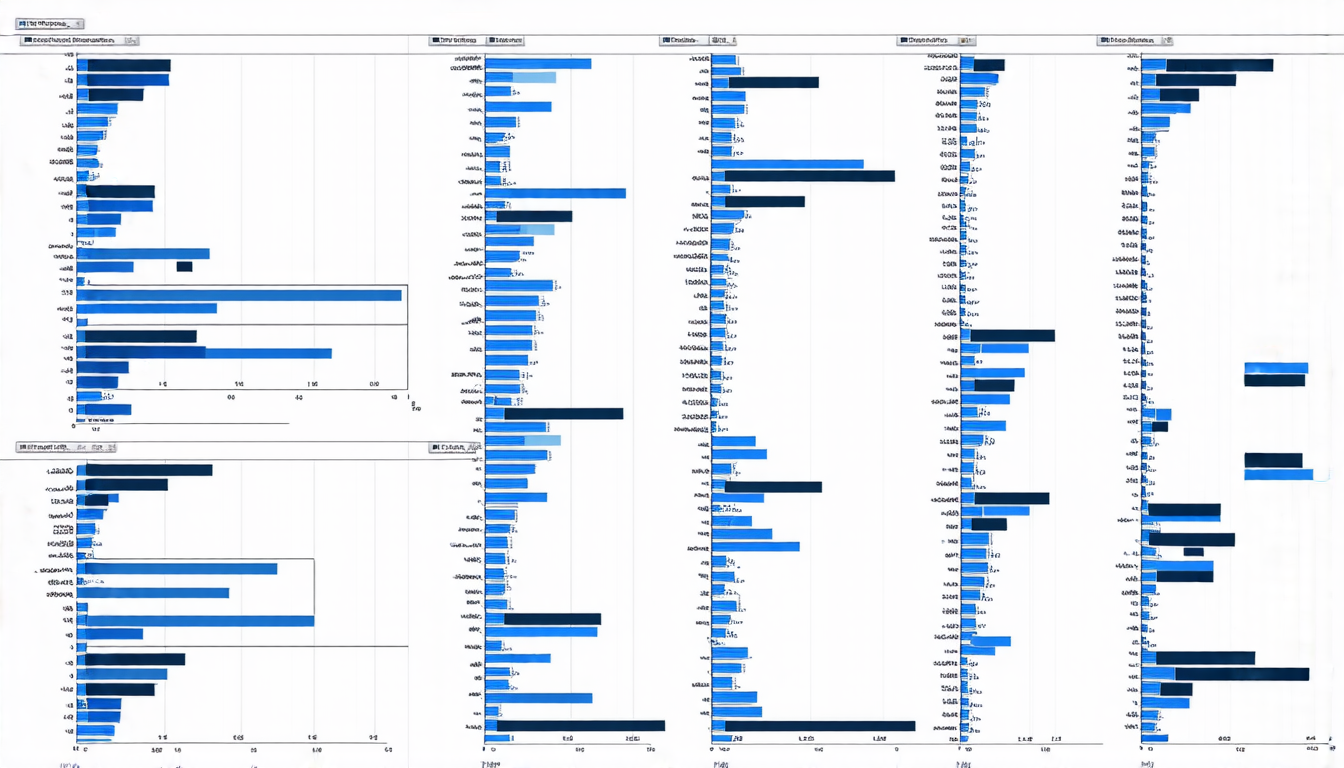
The new method was tested on several real-world datasets, including financial and genomic data, and was found to outperform traditional statistical models in terms of accuracy and computational efficiency. The results suggest that this approach could be a valuable tool for analyzing complex data sets in fields such as finance, biology, and medicine.
One of the key advantages of this new method is its ability to handle missing values, which are common in many real-world datasets. Traditional statistical methods often require complete data, but the matrix factorization approach can fill in missing values using a clever algorithm that takes into account the relationships between different variables.
The study’s findings have significant implications for researchers and practitioners working with high-dimensional data. By combining the strengths of machine learning and statistical approaches, this new method offers a powerful tool for uncovering insights from complex data sets. As data continues to grow in size and complexity, it is likely that this approach will play an increasingly important role in various fields.
The next step for researchers is to further develop and refine the method, potentially incorporating additional techniques such as regularization and feature selection.
Cite this article: “Combining Machine Learning and Statistical Methods for High-Dimensional Data Analysis”, The Science Archive, 2025.
High-Dimensional Data, Machine Learning, Statistical Methods, Dimensionality Reduction, Principal Component Analysis, Matrix Factorization, Missing Values, Computational Efficiency, Accuracy, Regularization, Feature Selection