

Thursday 13 March 2025
The researchers have made significant progress in understanding the behavior of high-dimensional time series models, which are used to analyze complex data sets that exhibit both cross-sectional and temporal dependence. These models are commonly used in various fields such as economics, finance, biology, and medicine.
The study focuses on a specific type of high-dimensional time series model known as the stochastic regression model, which is widely used in many applications. The researchers have derived a single-letter formula for the normalized mutual information between observations and the signal, which provides valuable insights into the behavior of these models.
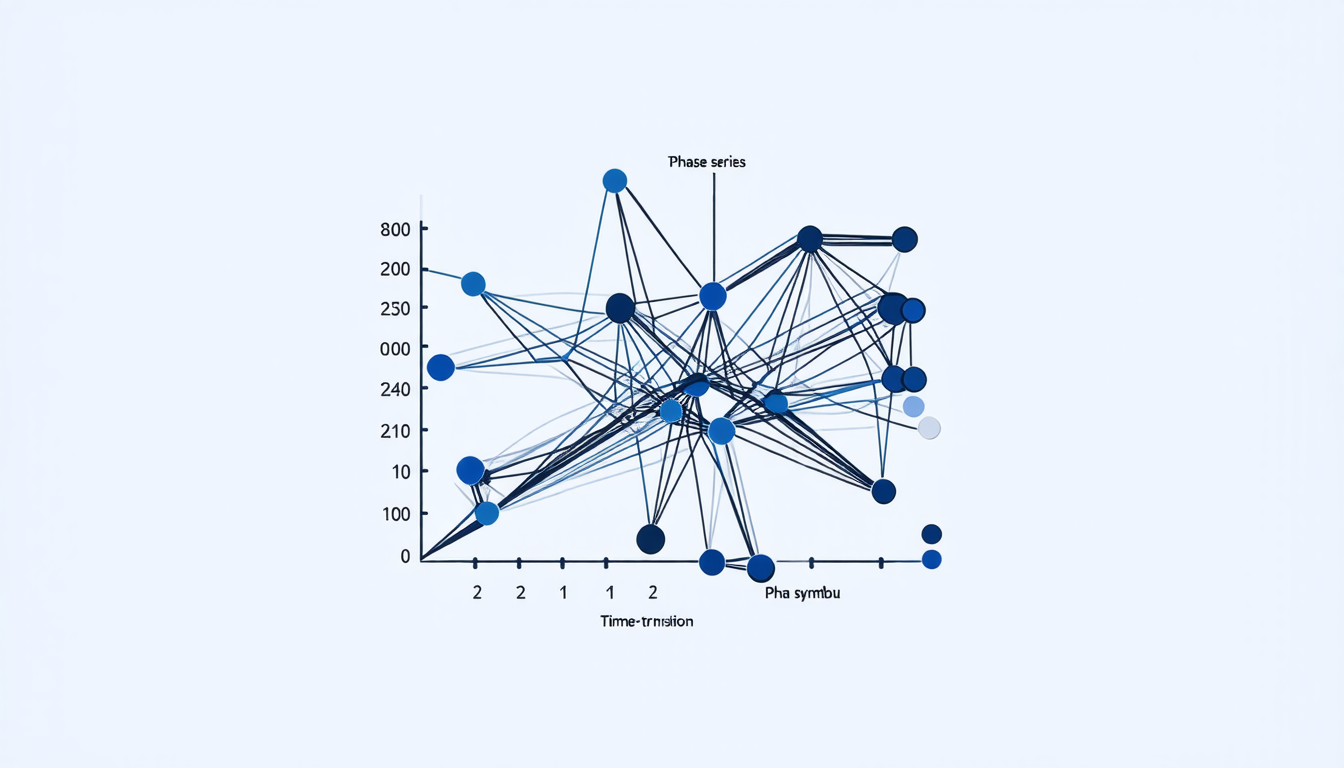
One of the key findings of the study is that the measurement MMSE (minimum mean squared error) exhibits a phase transition as the ratio of the number of samples to the number of features increases. This means that the accuracy of the model improves rapidly as the size of the data set grows, but only up to a certain point.
The researchers have also shown that the vector approximate message passing algorithm (VAMP), which is commonly used in compressed sensing and information theory, can be applied to high-dimensional time series models with surprising robustness. This means that VAMP can accurately estimate the signal even when the model does not satisfy stringent assumptions about the design matrix.
The study’s findings have important implications for various applications where high-dimensional time series models are used. For example, in finance, these models can be used to analyze and predict stock prices, while in biology, they can be used to understand gene expression patterns.
The researchers’ approach is based on a statistical physics framework that combines elements of information theory and random matrix theory. This framework provides a powerful tool for analyzing the behavior of high-dimensional time series models and has far-reaching implications for many fields.
In addition to its theoretical significance, the study’s findings have practical applications in various areas such as signal processing, machine learning, and data analysis. The researchers’ work provides new insights into the behavior of high-dimensional time series models and highlights the importance of considering the underlying dependence structure when analyzing complex data sets.
The study’s results demonstrate that even in the absence of stringent assumptions about the design matrix, VAMP can accurately estimate the signal. This has important implications for many applications where high-dimensional time series models are used.
Overall, the researchers’ work provides a deeper understanding of the behavior of high-dimensional time series models and highlights the importance of considering the underlying dependence structure when analyzing complex data sets.
Cite this article: “Unraveling High-Dimensional Time Series Models: Insights into Behavior and Applications”, The Science Archive, 2025.
High-Dimensional Time Series, Stochastic Regression Model, Normalized Mutual Information, Phase Transition, Mmse, Vamp, Compressed Sensing, Information Theory, Random Matrix Theory, Signal Processing.





